Diabetes insipidus
On this page
Background
Diabetes insipidus (DI) is a condition caused by hyposecretion of antidiuretic hormone (cranial DI) or insensitivity to antidiuretic hormone (nephrogenic DI).Antidiuretic hormone (ADH) is also known as arginine vasopressin (AVP). It is synthesised in the hypothalamus and secreted from the posterior pituitary.
The typical biochemical disturbances seen in DI are:
- Elevated plasma osmolality (> 300 mOsm/kg)
- Low urine osmolality (< 300 mOsm/kg )
- Polyuria ( urine volume > 3 L in 24 hours)
- Hypernatraemia (but Na+ can be normal)
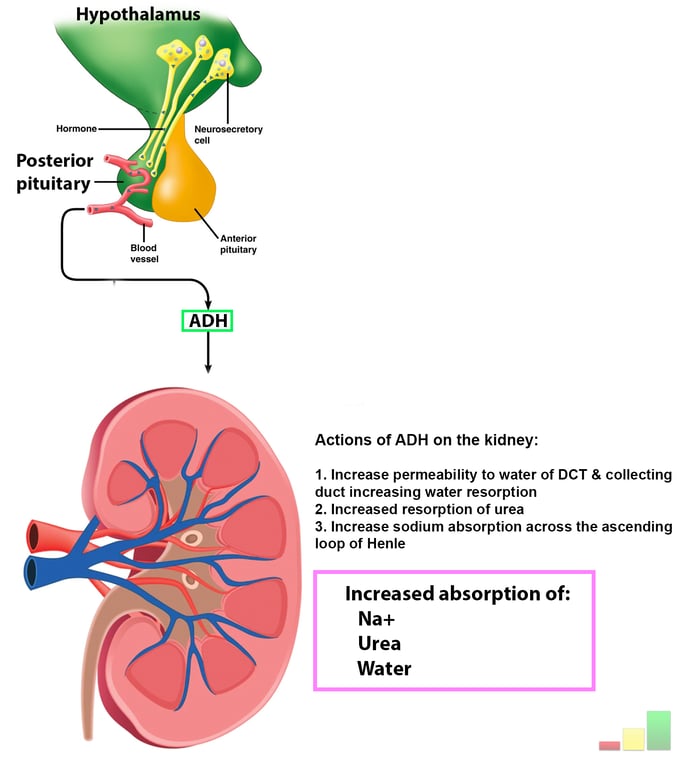 | |
As the name suggests the primary action of antidiuretic hormone is to prevent diuresis. It achieves this by increasing sodium and water resorption. Click on image to enlarge
Causes of cranial DI
- Idiopathic
- Head injury
- CNS infections
- Pituitary tumours & pituitary surgery
- Craniopharyngiomas
- Histiocytosis
- Vascular disorders including haemorrhage, thrombosis, aneurysms, sickle cell disease, & Sheehan's syndrome (postpartum pituitary necrosis)
- Wolfram's syndrome (AKA DIDMOAD) is the association of cranial diabetes insipidus, diabetes mellitus, optic atrophy and deafness.
Causes of nephrogenic DI
- Genetic: the more common form affects the vasopression (ADH) receptor, the less common form results from a mutation in the gene that encodes the aquaporin 2 channel
- Electrolyte disturbances: hypercalcaemia, hypokalaemia
- Drugs e.g. demeclocycline, lithium, ofloxacin, orlistat
- Renal tubulointerstitial disease: partial obstruction, pyelonephritis, cystic diseases, granulomatous diseases, sickle cell disease
Features
- Polyuria
- Polydipsia
- Nocturia
- Signs dehydration (hypotension, poor skin turgor, tachycardia)
- In children irritability, failure to thrive, crying, fever, anorexia and fatigue
Investigations
- 24 hours urine collection to confirm polyuria (urine volume >3 litres/24 hours)
- U&E's will typically show hypernatraemia
- High plasma osmolality with low urine osmolality
- MRI of the pituitary, hypothalamus and surrounding tissues
- Fluid (water) deprivation test: fluid restriction followed by evaluation of response to desmopressin (DDAVPµ)
- Renal tract ultrasound or intravenous pyelogram (IVP) may be used to assess for obstructive complications caused by the high urinary back-pressure
Fluid deprivation test
The fluid deprivation test involves depriving the patient of oral fluids for up to 8 hours (or until up to 3% or 4kg of body mass lost) then taking samples for urine osmolality before and after administering desmopressin (DDAVPµ).
| Urine osmolality after fluid deprivation | Urine osmolality after DDAVPµ | Likely diagnosis |
|---|---|---|
| <300 mOsm/kg | >800 mOsm/kg | Cranial DI |
| <300 mOsm/kg | <300 mOsm/kg | Nephrogenic DI |
| >800 mOsm/kg | >800 mOsm/kg | Primary/psychogenic polydipsia |
Management
Cranial DI Cranial DI (sometimes called central DI) is managed via desmopressin supplementation. Desmopressin is a synthetic form of arginine vasopressin (antidiuretic hormone - ADH). Hyponatraemia is a common side effect and requires monitoring.
Nephrogenic DI In nephrogenic DI it is the renal response to ADH which is defective so desmopressin supplementation is usually not effective (if there is some renal response then high dose desmopressin may have some beneficial effect). Management is typically via ensuring adequate fluid intake to offset water loss and electrolyte monitoring with correction of metabolic disturbance. Causative drugs need to be stopped. Note patients are at risk of developing hydroureteronephrosis and over distended bladder.
Osmolality abnormalities & underlying causes
| Serum osmolality | Urine osmolality | Causes |
|---|---|---|
| Normal or increased | Increased | Dehydration Renal disease and uraemia Congestive heart failure Addison's disease Hypercalcaemia Diabetes mellitus/hyperglycaemia Hypernatraemia Alcohol ingestion Mannitol therapy |
| Normal or increased | Decreased | Diabetes insipidus |
| Decreased | Increased | SIADH |
| Decreased | Decreased (with no increase in fluid intake) | Overhydration Hyponatraemia Adrenocortical insufficiency Sodium loss (diuretic or a low-salt diet) |