Respiratory physiology: Epithelial function
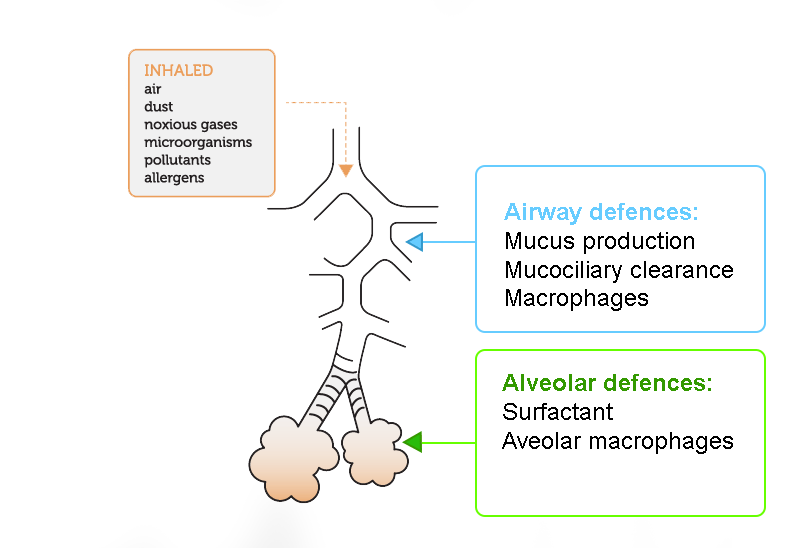
The epithelium of the airways contain a number of host defences to protect against noxious substances that may enter the respiratory tract.
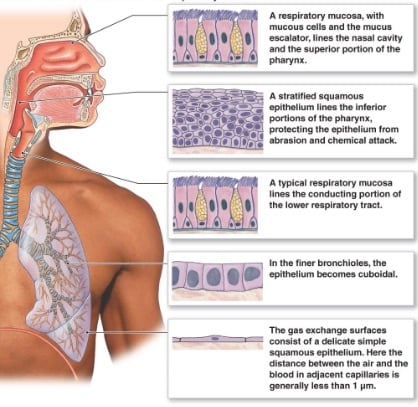
The epithelium of the respiratory tract from the trachea to the bronchioles is lined with ciliated pseudostratified columnar epithelium. the cilia on these cells beat synchronously moving mucus and debris to the mouth. This process is termed mucociliary clearance or sometimes the mucociliary escalator.
Alveolar defences
The alveoli do not contain ciliated epithelial cells. They are made up predominantly of type 1 and type 2 pneumocytes.
Type 1 pneumocytes are involved in gas exchange. Type 2 pneumocytes secrete surfactant. In addition to these cells alveolar macrophages clear debris via phagocytosis.
The role of surfactant is primarily to reduce surface tension and prevent alveolar collapse but it also contains proteins that binds to foreign material and opsonizes them for phagocytosis.
Mucus & mucociliary clearance
Mucus is an important defence mechanism of the respiratory tract. It is secreted by goblet cells and submucosal glands of the epithelium. The viscous and sticky nature of mucus allows it to trap pathogens and foreign particles. Within mucus there are a number of enzymes that aid digestion of foreign material such as:- Antitrypsin
- Lysozyme
- Immunoglobulin A
The epithelium of the respiratory tract from the trachea to the bronchioles is lined with ciliated pseudostratified columnar epithelium. the cilia on these cells beat synchronously moving mucus and debris to the mouth. This process is termed mucociliary clearance or sometimes the mucociliary escalator.
Impaired mucus production or mucociliary clearance
Changes to the cilia and/or mucus composition can result in recurrent infection or lung disease.
Reduced cilia:
Changes to the cilia and/or mucus composition can result in recurrent infection or lung disease.
Reduced cilia:
- Smoking
- Inhalation injury in burns
- Cystic fibrosis
- Asthma
- Alpha 1 antitrypsin deficiency (α1AT is a protease inhibitor, in deficiency proteases are uninhibited and cause damage to respiratory tissues)
 | |
Alveolar defences
The alveoli do not contain ciliated epithelial cells. They are made up predominantly of type 1 and type 2 pneumocytes.
Type 1 pneumocytes are involved in gas exchange. Type 2 pneumocytes secrete surfactant. In addition to these cells alveolar macrophages clear debris via phagocytosis.
The role of surfactant is primarily to reduce surface tension and prevent alveolar collapse but it also contains proteins that binds to foreign material and opsonizes them for phagocytosis.
 | |
| Wikipedia | |