Gastrointestinal physiology: Swallowing
On this page
Phases of swallowing
Swallowing is typically divided into 3 phases named according to the part of the digestive tract food is transiting through.. The first phase is the oral or buccal phase and is the only voluntary phase of swallowing. The involuntary or reflex part of swallowing is divided into pharyngeal and oesophageal phases. These are summarised in the table below:| Phase | Type | Description |
|---|---|---|
| Oral | Voluntary | Food bolus is pushed by the tongue into pharynx |
| Pharyngeal | Involuntary | Mechanoreceptors in the pharynx are stimulated by food bolus and send impulses. Impulses reach swallowing centre in medulla and pons via CN IX and X The swallowing centre initiates the following:
The soft palate is elevated closing the nasopharynx & allowing passage of food bolus. The true vocal cords also close to prevent aspiration. Pharyngeal constrictor muscles constrict pushing the bolus towards the oesophagus via peristalsis. Food pushes the epiglottis over the tracheal opening preventing aspiration. |
| Oesophageal | Involuntary |
Peristalsis is facilitated by systematic contraction and relaxation of both circular and logitudinal muscles. This pushes the bolus by a 'wave' of contraction behind the bolus. The food bolus typically takes 5-9 seconds to transit to the stomach. The lower oesophageal sphincter relaxes as the peristaltic wave reaches it. The sphincters and peristaltic wave are primarily controlled by the vagus nerve aided by enteric nerve plexuses within the GI tract itself. |
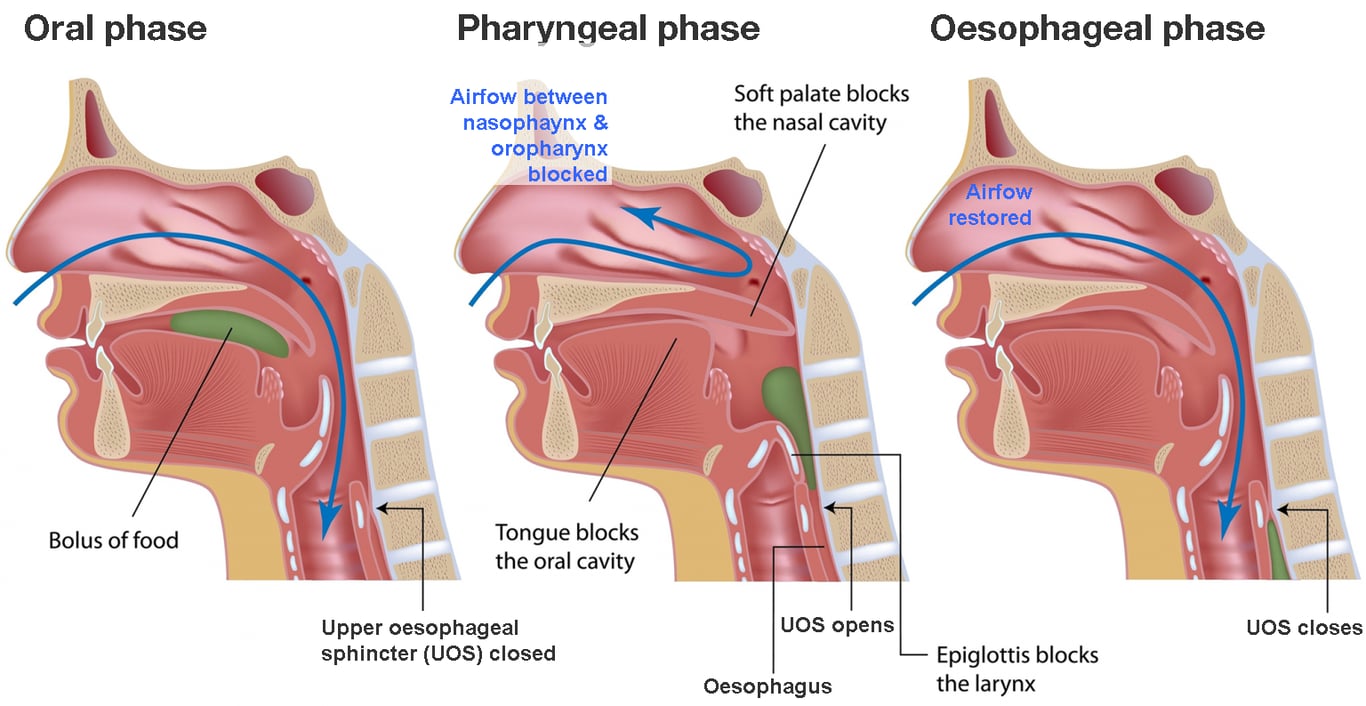 | |
Overview of phases of swallowing. Click on image to enlarge
Swallowing is co-ordinated by the swallowing centre in the pons and medulla.
Afferents from the glossopharyngeal and vagus relay sensory information from the pharynx.
Afferents from the glossopharyngeal and vagus relay sensory information from the pharynx.
Oesophageal sphincters
The upper oesophageal sphincter is a ring of skeletal muscle at the pharyngeal end of the oesophagus. It typically remains closed to prevent air entering the GI tract but relaxes during swallowing to allow the food bolus to pass into the oesophagus.The lower oesophageal sphincter is a ring of smooth muscle at the junction of the oesophagus and stomach. It typically remains closed to prevent acid refluxing into the oesophagus. The LOS relaxes as the peristaltic wave pushing the food bolus reaches it permitting the food bolus to pass into the stomach.
The sphincters and the peristaltic wave are primarily controlled by the vagus nerve and enteric nerve plexuses within the upper GI tract.