Gastrointestinal physiology: Exocrine pancreas
Pancreas: endocrine and exocrine function
The pancreas is composed of both endocrine and exocrine components. Greater than 95% of the pancreas is exocrine tissue that produces pancreatic enzymes for digestion. The exocrine cells are called acinar cells and release their digestive enzymes via ducts. These ducts eventually join the main pancreatic duct which merges with the common bile duct as it opens into the duodenum.
The remaining tissue consists of endocrine cells called islets of Langerhans that produce a number of hormones that are secreted into the bloodstream. These hormones include glucagon (produced by alpha islet cells), insulin (produced by beta cells) producing) and somatostain (produced by delta cells).
Pancreatic juice
The digestive enzyme mixture produced by the exocrine portion of the pancreas is often referred to as pancreatic juice. It is composed of the following:
Neural:
Hormones:
The role of cholecystokinin (CCK)
CCK is released into the bloodstream by duodenal cells (enteroendocrine cells - specifically I cells) in response to the presence of amino acids and fatty acids in chyme.
Secretin helps regulate the pH of the duodenum by inhibiting the secretion of gastric acid from the parietal cells of the stomach and stimulating the production of bicarbonate from the ductal cells of the pancreas.
The pancreas is composed of both endocrine and exocrine components. Greater than 95% of the pancreas is exocrine tissue that produces pancreatic enzymes for digestion. The exocrine cells are called acinar cells and release their digestive enzymes via ducts. These ducts eventually join the main pancreatic duct which merges with the common bile duct as it opens into the duodenum.
The remaining tissue consists of endocrine cells called islets of Langerhans that produce a number of hormones that are secreted into the bloodstream. These hormones include glucagon (produced by alpha islet cells), insulin (produced by beta cells) producing) and somatostain (produced by delta cells).
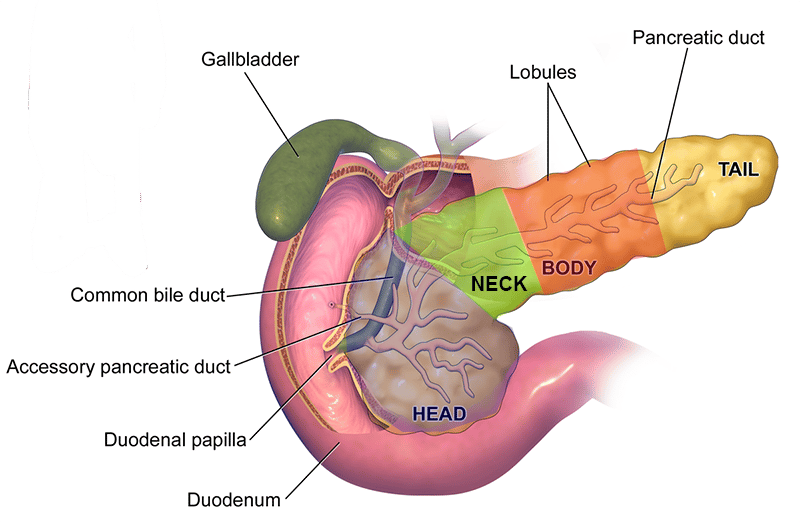 | |
Illustration of the pancreas and pancreatic duct. Click on image to enlarge
Pancreatic juice
The digestive enzyme mixture produced by the exocrine portion of the pancreas is often referred to as pancreatic juice. It is composed of the following:
- Pancreatic amylase
- Pancreatic lipase
- Ribonuclease
- Deoxyribonuclease
- Proteolytic enzymes* (trypsin, chemotrypsin. elastase and carboxypeptidase)
- Water
- Bicarbonate
Pancreas inactive precursor activation
*To prevent auto-digestion the pancreas produces inactive precursors of its proteolytic enzymes which are then activated in the small intestine, for example:
Trypsinogen is converted to trypsin by enteropeptidase in the intestinal mucosa, once activated typsin can autoactivate trypsinogen to form more trypsin molecules.
Chymotrypsinogen is converted to chymotrypsin by trypsin.
Control of pancreatic exocrine secretion
Pancreatic exocrine secretion is controlled by neural and hormonal mechanims.Neural:
- Parasympathetic stimulation via the vagus nerve enhances secretion of both enzyme and aqueous components of pancreatic juice
- Sympathetic stimulation inhibits pancreatic secretion
Hormones:
- Secretin stimulates secretion of alkaline-rich part of pancreatic juice from ductal cells
- Cholecystokinin stimulates secretion of enzyme-rich fluid from acinar cells & gallbladder contraction
- Somatostatin inhibits secretion from both acinar and ductal cells
The role of cholecystokinin (CCK)
CCK is released into the bloodstream by duodenal cells (enteroendocrine cells - specifically I cells) in response to the presence of amino acids and fatty acids in chyme.
CCK stimulates the acinar cells to secrete digestive enzymes.
The role of secretin
Secretin is released by duodenal S-cells (another type of enteroendocrine cell in the duodenum) primarily in response to the duodenal walls coming into contact with acid.Secretin helps regulate the pH of the duodenum by inhibiting the secretion of gastric acid from the parietal cells of the stomach and stimulating the production of bicarbonate from the ductal cells of the pancreas.
Secretin stimulates the production of bicarbonate and water by the pancreas specifically the epithelial cells lining the pancreatic ducts.
Secretin also stimulates bile production in the liver and inhibits gastric acid production by the parietal cells of the stomach.
Secretin also stimulates bile production in the liver and inhibits gastric acid production by the parietal cells of the stomach.
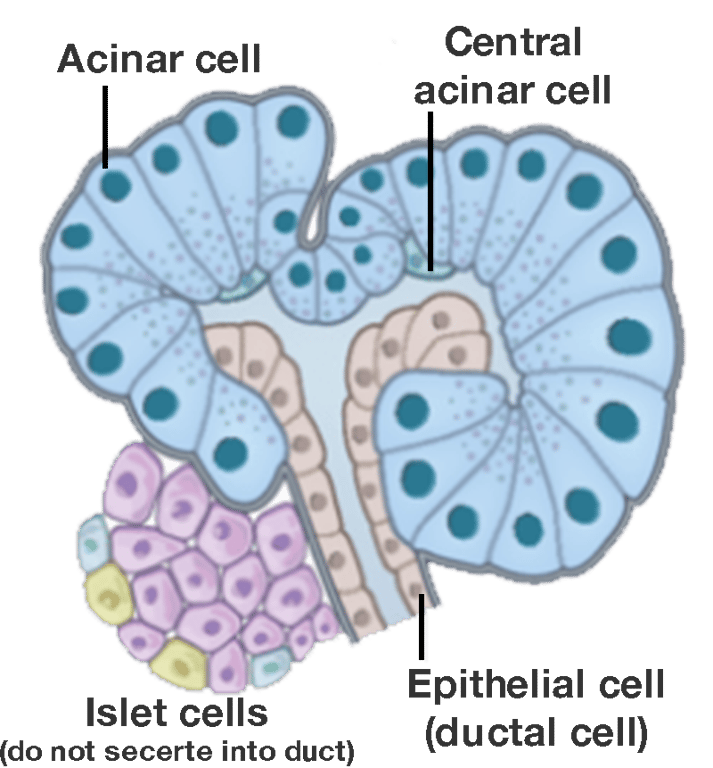 | |
Illustration showing main cell types of pancreas. Note the endocrine islet cells secrete their hormones directly into the bloodstream. The acinar cells secrete digestive enzymes which are secreted via ducts. The epithelial (ductal) cells lining the duct secrete bicarbonate and water. Click on image to enlarge