Gonorrhoea (Neisseria gonorrhoeae)
On this page
Definition & background
Gonorrhoea is a sexually transmitted infection (STI) caused by the Gram-negative diplococcus bacterium Neisseria gonorrhoeae. It primarily affects mucous membranes of the urethra, endocervix, rectum, pharynx, and conjunctiva. The bacteria adhere to epithelial cells through surface proteins like pili (fimbriae), opa proteins, and LOS. This adherence is followed by cellular invasion, where the bacteria enter host cells and multiplyEpidemiology in the UK
In England, there were 82,592 diagnoses of gonorrhoea in 2022. Risk groups for gonorrhoea infection include men who have sex with men (48% of all diagnoses) and people of black Caribbean ethnicity. Approximately 1/3 of cases were in the 15–24 years age group.Transmission
Gonorrhoea is transmitted through sexual contact with an infected person, including vaginal, anal, and oral sex. It can also be transmitted from a mother to her baby during childbirth.Incubation Period
The incubation period for gonorrhoea is typically 2 to 7 days after exposure, but symptoms can appear as late as 30 days post-exposure.Clinical Features
In men:- Urethral discharge
- Dysuria (painful urination)
- Testicular pain or swelling
In women:
- Increased vaginal discharge
- Dysuria
- Intermenstrual bleeding
- Pelvic pain
Extragenital infections:
- Rectal: Discharge, anal itching, soreness, bleeding, or painful bowel movements
- Pharyngeal: Usually asymptomatic but can cause sore throat
- Conjunctival: Eye pain, discharge, and swelling
Asymptomatic infection is common in women but atyical in men:
- Up to 50% of cases of gonorrhoea are asymptomatic in women
- In men, urethral gonorrhoea is asymptomatic in less than 10% of cases
Diagnosis
Diagnosis is primarily through nucleic acid amplification tests (NAATs) on urine samples or swabs from potentially infected sites (urethra, cervix, rectum, or pharynx). Cultures may also be used, which provide information on antibiotic susceptibility.
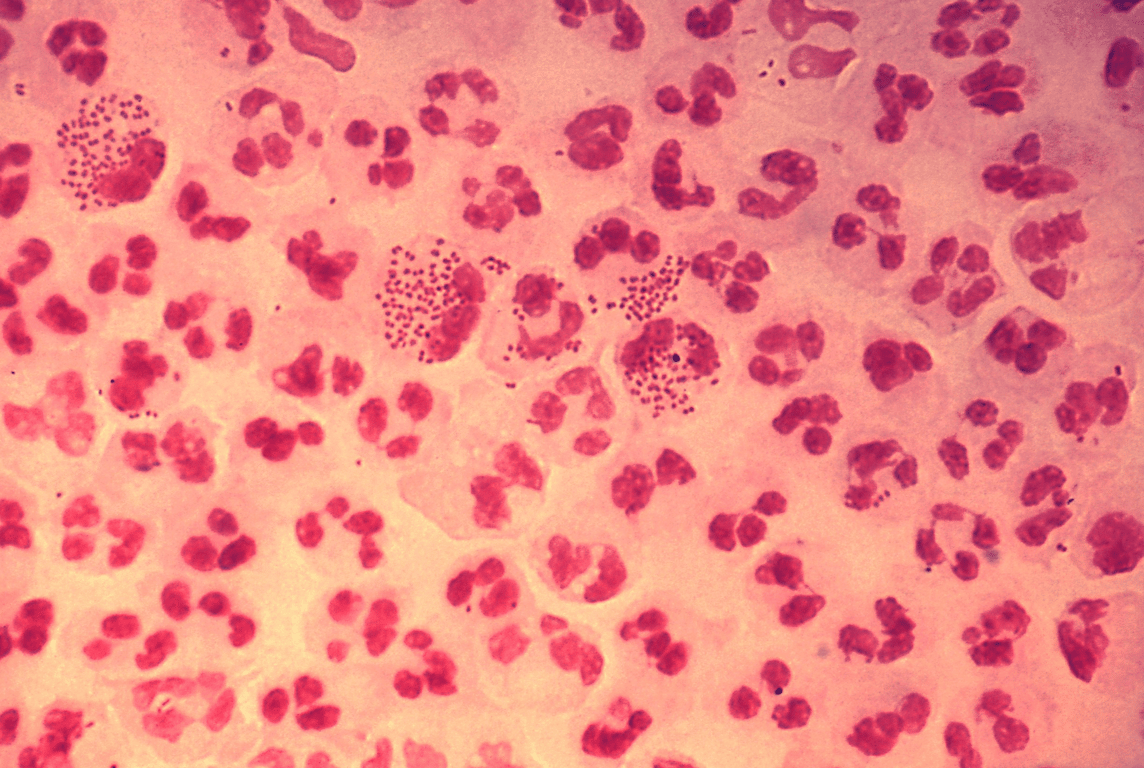 | |
Microscopy of fluid sample of acute case of gonococcal urethritis using Gram-stain technique. Note Gram-negative bacteria stain pink or red whilst Gram-negative bacteria stain purple. Click on image to enlarge
Management
Gonorrhoea infections should be treated with appropriate antibiotics (see below) as well as encouraging the patient to be screened for other STIs and participate in patient-led partner notification. Patients should be advised to abstain from sex until 7 days after they and their partner(s) have completed treatment and undergo test of cure following completion of treatment. All patients should be referred to a GUM clinic.Antibiotic choice for treatment of gonorhoea
Uncomplicated anogenital or pharyngeal infection:
Uncomplicated anogenital or pharyngeal infection:
- Ciprofloxacin 500mg orally as a single dose (if antibiotic sensitivities known and not resistant. Should not be used in pregnant women)
- Ceftriaxone 1g intramuscular (IM) injection as a single dose (if antibiotic sensitivities unknown)
- Ceftriaxone 1g intramuscular (IM) injection as a single dose
- Alternatively azithromycin 2g as a single oral dose
Complications
In women:
- Pelvic inflammatory disease (PID)
- Infertility
- Ectopic pregnancy
- Chronic pelvic pain
- Epididymitis
- Infertility
- Disseminated gonococcal infection (DGI), leading to arthritis, tenosynovitis, or dermatitis
- Increased susceptibility to HIV
In neonates:
- Ophthalmia neonatorum, a severe eye infection that can lead to blindness if untreated
Ophthalmia neonatorum
The two main pathogens causing ophthalmia neonatorum (neonatal conjunctivitis) are chlamydia and gonorrhoea. Gonococcal ophthalmia neonatorum typically develops within 5 days of delivery and causes rapid, severe, and often bilateral purulent discharge and inflammation. Chlamydial ophthalmia neonatorum typically devlops 5-14 days after delivery and is often unilateral and less severe.
The two main pathogens causing ophthalmia neonatorum (neonatal conjunctivitis) are chlamydia and gonorrhoea. Gonococcal ophthalmia neonatorum typically develops within 5 days of delivery and causes rapid, severe, and often bilateral purulent discharge and inflammation. Chlamydial ophthalmia neonatorum typically devlops 5-14 days after delivery and is often unilateral and less severe.
Prevention
- Consistent and correct use of condoms
- Regular screening for sexually active individuals, especially those under 25 or with new/multiple partners
- Prompt treatment of infected individuals and their partners
- Abstaining from sexual activity until treatment is completed and symptoms have resolved