Na-K-ATPase
Background
The Naº/Kº-ATPase, Naº/Kº pump, Na-K-ATPase or sodium-potassium ATPase is vital for maintaining the concentration gradient between the main cations of the intracellular and extracellular space.The Naº/Kº-ATPase is an active pump that consumes energy obtained from the conversion of ATP to ADP.
The main function of the Naº/Kº-ATPase is to maintain cell resting potential. Cells achieve this by keeping large sodium and potassium concentration gradients between the intracellular and extracellular fluid. Typical concentrations are shown in the table below:
| Ion | Intracellular concentration | Extracellular concentration |
|---|---|---|
| Sodium (Na+) | 10mmol/l | 140mmol |
| Potassium (K+) | 140 mmol/l | 4mmol/l |
Sodium and potassium ions will move between the intracellular and extracellular space through ion channels in the cell membrane via passive diffusion along their concentration gradients. If left unopposed this would result in the eventual equalisation of sodium and potassium concentrations in and outside of cells which would be catastrophic for cell electrical signalling. The Naº/Kº-ATPase works antagonistically to the natural movement of these ions by actively pumping Na+ and K+ against their concentration gradients.
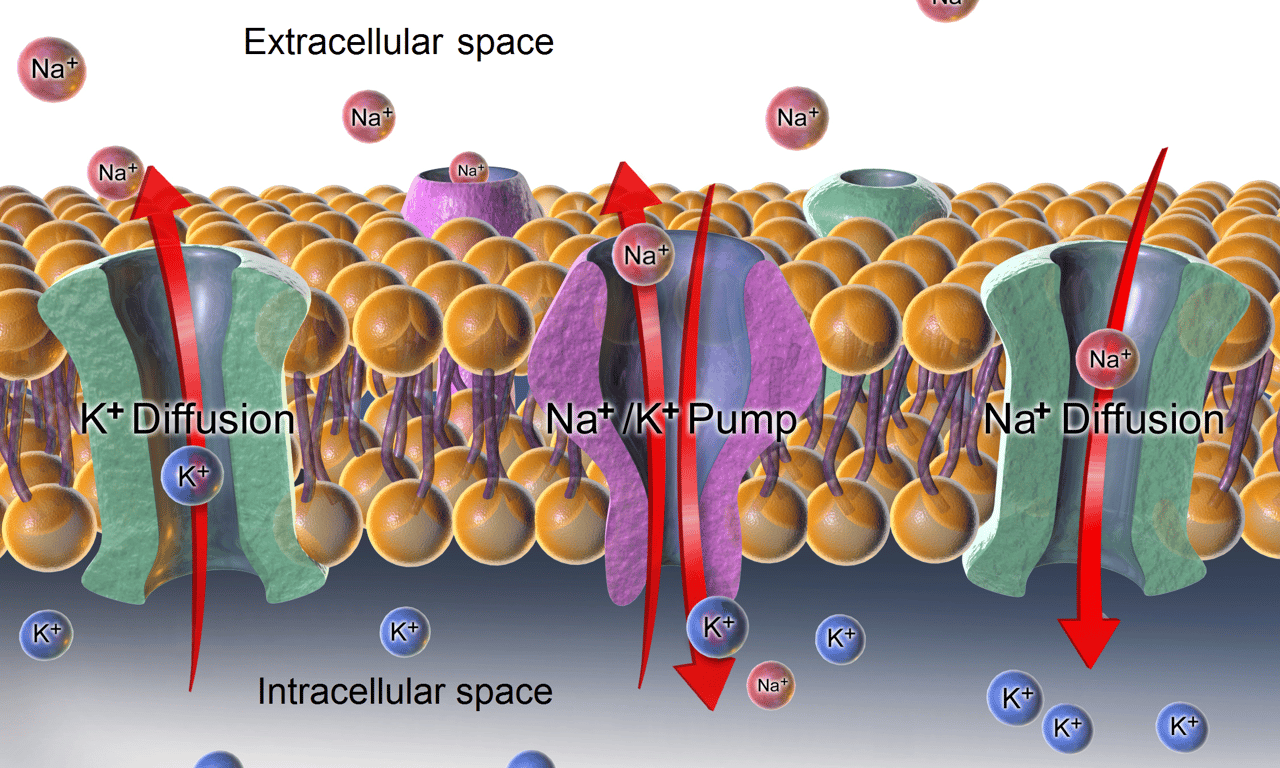 | |
The Naº/Kº-ATPase pumps 3 sodium ions from the intracellular space into the extracellular space in exchange for 2 potassium ions which move in the reverse direction. Both ions are moved against their concentration gradients. click on image to enlarge
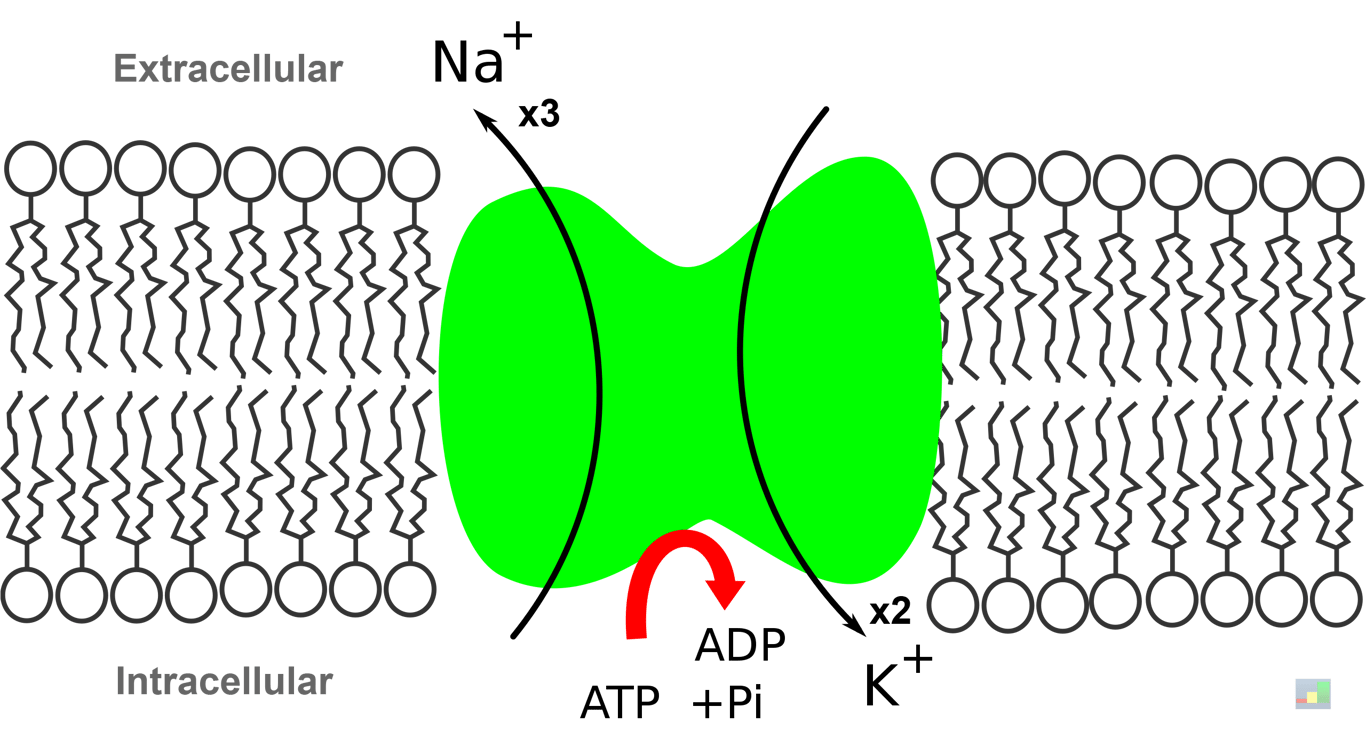 | |
Schematic representation of the Naº/Kº-ATPase pump. click on image to enlarge
Key Points
- The Naº/Kº-ATPase pump is vital for maintaining the concentration gradient of the major intracellular and extracellular cations potassium and sodium
- The Naº/Kº-ATPase pump moves ions against their concentration gradient.
- This is an active process requiring energy released from the hydrolysis and phosphorylation of ATP to ADP.
- The pump binds 3 sodium ions for 2 potassium ions for each ATP hydrolysis.