Influenza
On this page
Background
Influenza is an acute viral infection of the respiratory tract caused by RNA viruses of the family orthomyxoviridae. Illness is primarily caused by influenza A and B virus strains. A third variant, influenza C, typically causes a mild or asymptomatic infection similar to the common cold.Epidemiology
Influenza viruses circulate globally, with seasonal epidemics occurring mainly during winter months in temperate regions. Minor antigenic changes, known as antigenic drift, occur progressively from season to season. Major changes, termed antigenic shift, result in new subtypes with different haemagglutinin proteins, potentially leading to widespread epidemics or pandemics due to the population's lack of immunity. Notably, three influenza pandemics occurred in the last century (1918, 1957, and 1968), with the most recent in 2009 caused by the influenza A(H1N1)v virus.Transmission
Influenza virus spreads rapidly through droplets, aerosols, or direct contact with respiratory secretions.Clinical Features
Influenza typically presents with sudden onset:- Fever and chills
- Headache
- Myalgia
- Fatigue
- Dry cough
- Sore throat
- Rhinitis
- In children gastrointestinal symptoms such as vomiting and diarrhoea may also occur.
Duration of illness is typically 3 days (range 2 to 7 days)
Uncomplicated and complicated influenza
| Type | description |
|---|---|
| Uncomplicated influenza | Influenza presenting with fever, coryza, generalised symptoms (headache, malaise, myalgia, arthralgia) and sometimes gastrointestinal symptoms, but without any features of complicated influenza |
| Complicated influenza | Influenza requiring hospital admission and/or with symptoms and signs of lower respiratory tract infection (hypoxaemia, dyspnoea, lung infiltrate), central nervous system involvement and/or a significant exacerbation of an underlying medical condition |
Incubation period
The incubation period for influenza is usually 1 to 3 days.Complications
Influenza is usually self-limiting in healthy individuals, but can lead to severe complications, especially in vulnerable populations. Complications of influenza include:- Bronchitis
- Secondary bacterial pneumonia
- Otitis media in children
- Meningitis, encephalitis, or meningoencephalitis (rarely)
- Cardiac complications: myocarditis, pericarditis, exacerbation of underlying cardiac disease.
- Myalgia, myositis and rhabdomyolysis.
- Neurological complications: Reye's syndrome, encephalomyelitis, transverse myelitis, Guillain-Barré syndrome, aseptic meningitis, and encephalitis.
- Toxic shock syndrome.
- Pregnancy complications: preterm labour, increased morbidity and mortality
The risk of serious illness is higher among children under 6 months, older people, those with underlying health conditions (e.g., respiratory or cardiac disease, chronic neurological conditions, immunosuppression), and pregnant women.
Diagnosis
Diagnosis is primarily clinical, based on symptomatology and epidemiological context.If laboratory conformation is required rapid molecular assays, reverse-transcription polymerase chain reaction (RT-PCR), and other nucleic acid amplification tests (NAATs) may be used on nasopharyngeal samples. Antigen detection tests are an alternative. NAATs are the preferred method due to superior diagnostic sensitivity compared to rapid antigen tests.
Management
Management of influenza includes:- Supportive care: Rest, hydration, and analgesics for symptom relief.
- Antiviral therapy: Antivirals (neuraminidase inhibitors) like oseltamivir and zanamivir are recommended for treating suspected or confirmed influenza in patients who are hospitalised, have severe or complicated illness, or are at higher risk of complications (see algorithm below)
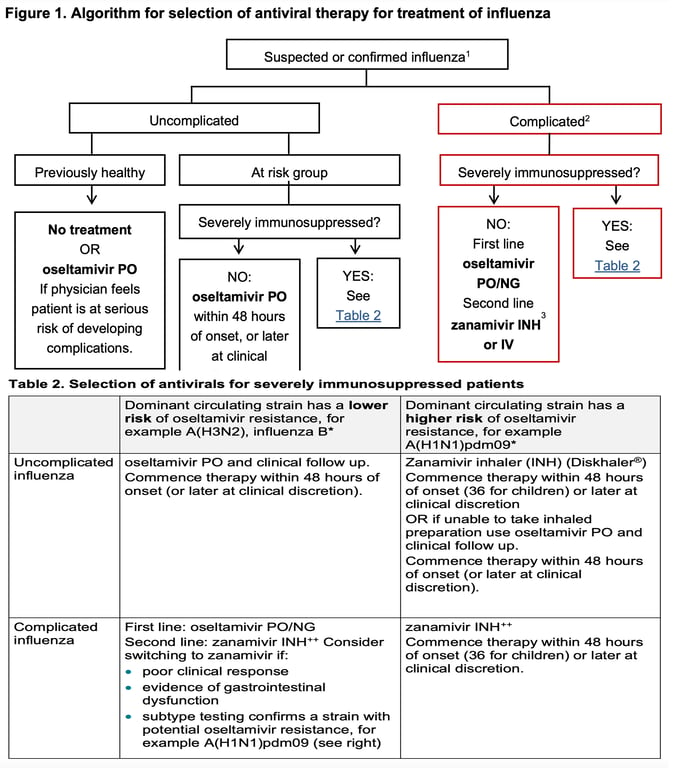 | |
Antiviral therapy for influenza. Click on image to enlarge
Influenza vaccine in the UK
In the UK, influenza vaccination is offered annually to high risk groups with the aim of reducing serious illness, hospitalisations, and mortality. Eligible groups are:
- Pregnant women
- All children aged 2 or 3 years
- Primary school aged children
- Secondary school aged children (from Year 7 to Year 11)
- All children in clinical risk groups aged from 6 months to less than 18 years
- Those aged 65 years and over
- Those aged 18 years to under 65 years in clinical risk groups (as defined by the Green Book, Influenza chapter 19)
- Those in long-stay residential care homes
- Carers in receipt of carer’s allowance, or those who are the main carer of an elderly or disabled person
- Close contacts of immunocompromised individuals
- Frontline health and social care workers
The vaccine composition is adjusted annually to try and best match circulating strains. Annual vaccination is considered the most effective method to prevent influenza infection and its complications.
Flu Key Points
- Changing antigen expression is the cause of epidemics and pandemics.
- Incubation period of influenza is 1 to 4 days (parainfluenza is 3 to 6 days)
- Typically symptoms of fever,myalgia and headache last 3 days.
- Diagnosis is usually made clinically.
- Viral pnuemonia and secondary bacterial pneumonia are rare complications typically affecting immunosuppressed or elderly patients.