Hepatitis C
On this page
Background
Hepatitis C infection is a slow, progressive disease of the liver caused by infection with the hepatitis C virus (HCV). HCV is a highly infectious, blood-borne virus of the Flaviviridae family. Hepatitis C may cause acute or chronic infection.Chronic HCV infection follows acute infection in 55–85% of people, and refers to the continued presence of HCV 6 months or more after acquiring infection.
Epidemiology
Hepatitis C has been considered a significant public health problem in the UK for many years but the advent of effective antiviral therapy on the NHS in 2014 has corresponded to a significant reduction in the rates of chronic HCV infection. It is thought around 60,000 people are chronically infected with the virus in England as of March 2024. The most recent seroprevalence rate is estimated at 0.14%. It is estimated that 85% of the population of people with chronic HCV are current or prior injecting drug users.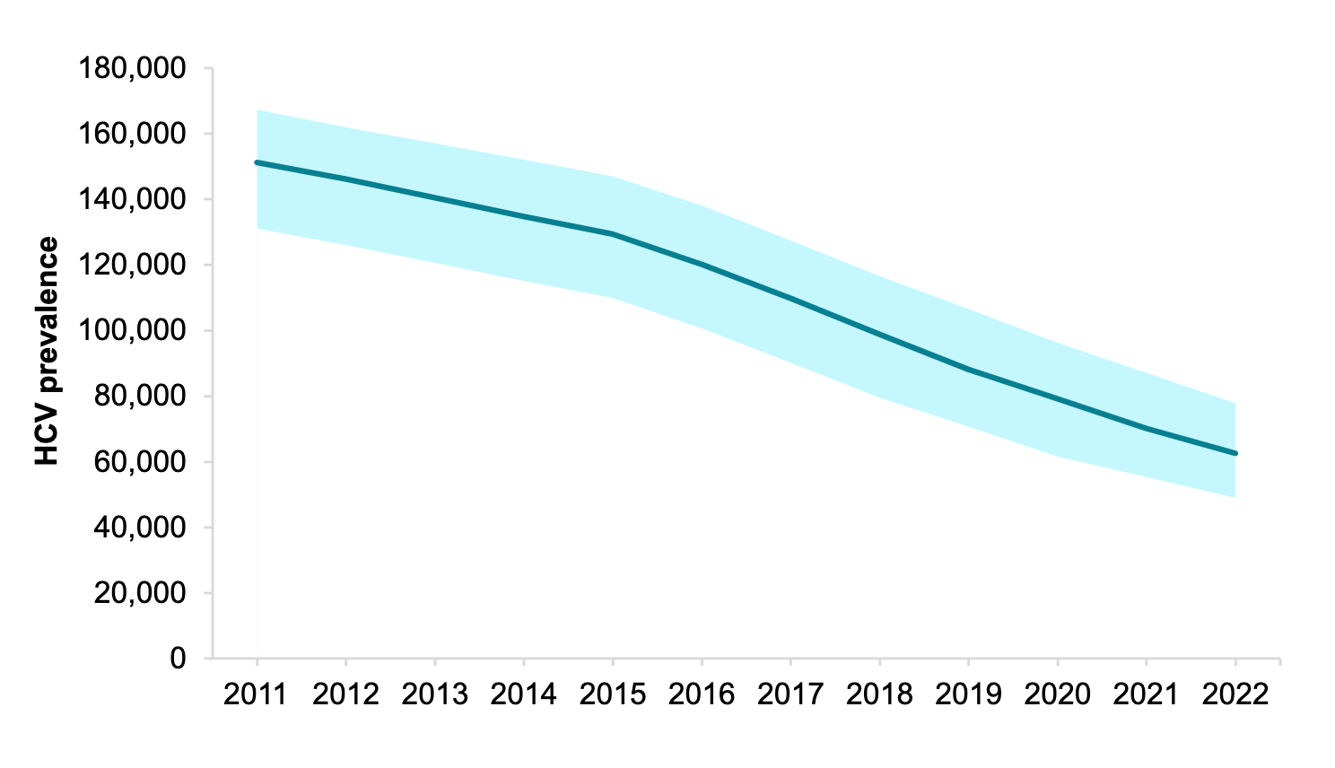 | |
Seroprevalence of hepatitis C in the UK. Antiviral therapy to treat hepatitis C became available on the NHS in 2014. Click on image to enlarge
Pathophysiology
- hepatitis C is a RNA flavivirus
- incubation period: Range 2 weeks to 6 months (average 6-7 weeks)
Transmission
- Spread by contact with infected blood or blood-derived products
- Parenteral spread is the primary route of transmission
- Risk of transmission during a needle stick injury is 2-3%
- Vertical transmission rate from mother to child is about 6%. The risk is higher if there is coexistent HIV at around 15%.
- Breast feeding is not contraindicated in mothers with hepatitis C
- Risk of transmitting the virus during sexual intercourse is very low.
Clinical features
- 60-80% are asymptomatic
- 20-30% of people spontaneously clear the infection via natural immune response without treatment
- If acute hepatitis does occur the average time from exposure to symptoms developing is 7 weeks and lasts for 2-12 weeks
If symptomatic, clinical features include:
- Jaundice
- Myalgia
- Low-grade fever
- Right upper quadrant pain
- Nausea
- Derranged liver enzymes
Diagnosis
- Anti-HCV IgG: if positive indicates current or past infection
- HCV RNA and genotyping (tested if anti-HCV positive or if patient immunocompromised as anti-HCV testing unreliable in this group)
Complications
- chronic infection (approximately 80%): only around 20% of patients will clear the virus after an acute infection and hence the majority will develop chronic hepatitis C
- cirrhosis (20-30% of those with chronic disease)
- hepatocellular cancer
- cryoglobulinaemia
- porphyria cutanea tarda (PCT): it is increasingly recognised that PCT may develop in patients with hepatitis C, especially if there are other factors such as alcohol abuse
Management of chronic infection
- Treatment depends on genotype, viral load and previous treatment
- Interferon-based treatment regimens are no longer recommended for HCV infection, as direct-acting antivirals (DAAs) are now considered first-line treatment
- Treatment is typically a once daily, oral tablet regimen for either 8 or 12 weeks
- Cure rates with DAAs are greater then 90%
- The aim of treatment is sustained virological response (SVR), defined as undetectable HCV RNA in the blood 12 weeks after treatment completion. SVR is considered equivalent to a cure
Hepatitis C is a notifiable disease.
Complications of treatment
- DAAs are well tolerated with minimal adverse effects
- Ribavirin (not used alone, but often combined with other DAAs): side-effects: haemolytic anaemia, cough. Women should not become pregnant within 6 months of stopping ribavirin as it is teratogenic
- Other common DAA combinations include Elbasvir/Grazoprevir, Glecaprevir/Pibrentasvir, Sofosbuvir/Ledipasvir and Sofosbuvir/Velpatasvir. With all of these drugs the common side effects include headache, fatigue and GI upset.