Parkinson's disease: features
Parkinson's disease is a progressive neurodegenerative condition caused by degeneration of dopaminergic neurons in the substantia nigra. This results in a classic triad of features: bradykinesia, tremor and rigidity. The symptoms of Parkinson's disease are characteristically asymmetrical.
Epidemiology
Bradykinesia
Tremor
Rigidity
Other characteristic features
Drug-induced parkinsonism has slightly different features to Parkinson's disease:
Epidemiology
- around twice as common in men
- mean age of diagnosis is 65 years
Bradykinesia
- poverty of movement also seen, sometimes referred to as hypokinesia
- short, shuffling steps with reduced arm swinging
- difficulty in initiating movement
Tremor
- most marked at rest, 3-5 Hz
- worse when stressed or tired
- typically 'pill-rolling', i.e. in the thumb and index finger
Rigidity
- lead pipe
- cogwheel: due to superimposed tremor
Other characteristic features
- mask-like facies
- flexed posture
- micrographia
- drooling of saliva
- psychiatric features: depression is the most common feature (affects about 40%); dementia, psychosis and sleep disturbances may also occur
- impaired olfaction
- REM sleep behaviour disorder
Drug-induced parkinsonism has slightly different features to Parkinson's disease:
- motor symptoms are generally rapid onset and bilateral
- rigidity and rest tremor are uncommon
 | |
| Wikipedia | |
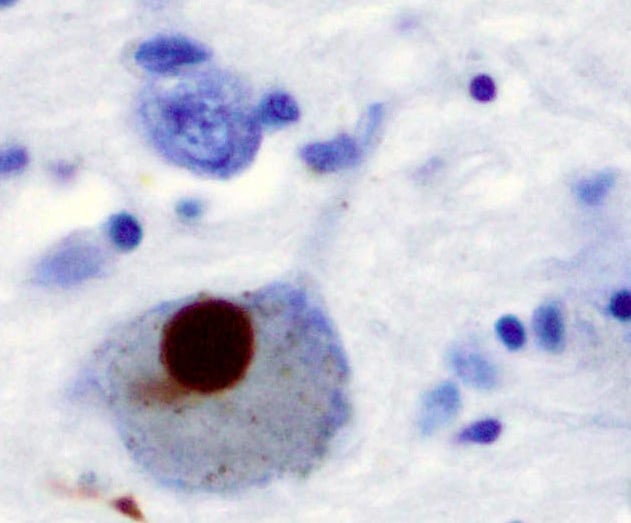
A Lewy body (stained brown) in a brain cell of the substantia nigra in Parkinson's disease. The brown colour is positive immunohistochemistry staining for alpha-synuclein.
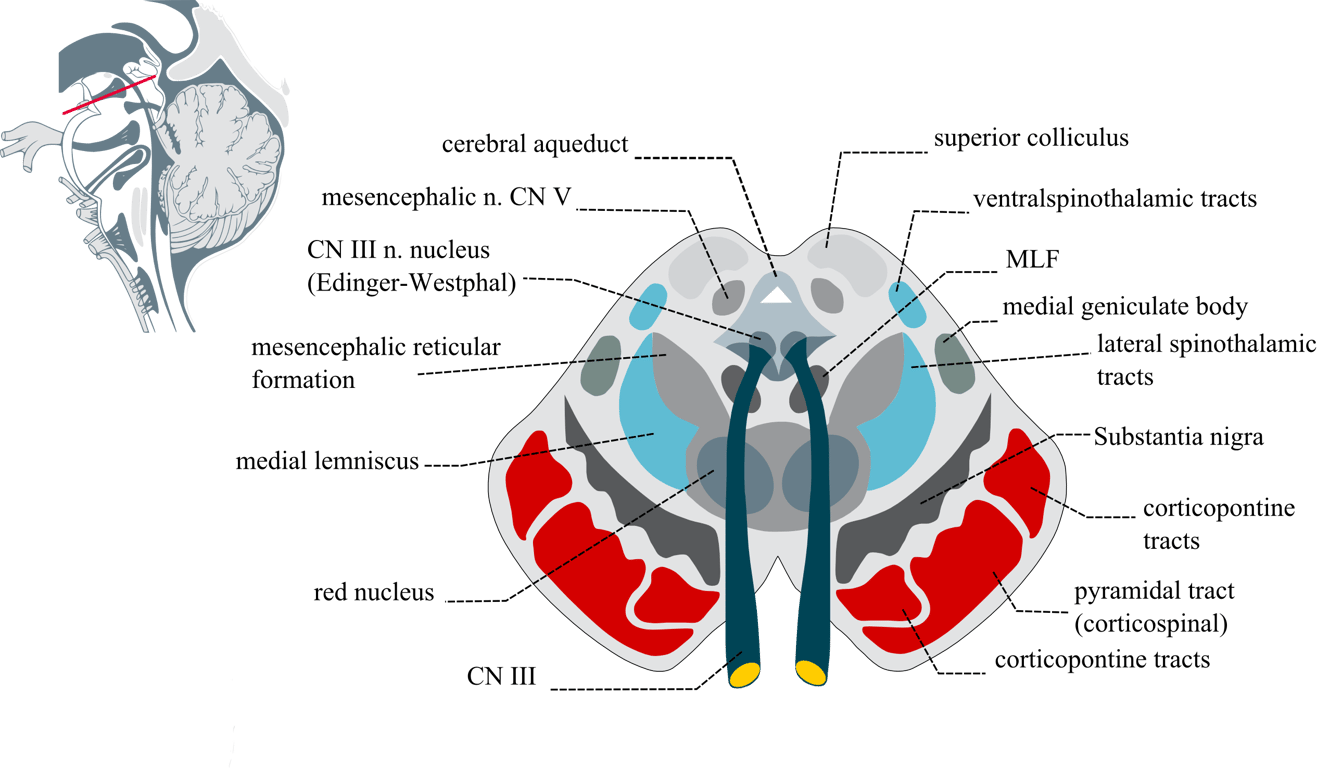 | |
Anatomy of the midbrain. Note the position of the substantia nigra.