Rheumatic fever: criteria
Rheumatic fever develops following an immunological reaction to recent (2-6 weeks ago) Streptococcus pyogenes infection. Diagnosis is based on evidence of recent streptococcal infection accompanied by:
Evidence of recent streptococcal infection
Major criteria
Minor criteria
- 2 major criteria
- 1 major with 2 minor criteria
Evidence of recent streptococcal infection
- ASOT > 200iu/mL
- history of scarlet fever
- positive throat swab
- increase in DNase B titre
Major criteria
- erythema marginatum
- Sydenham's chorea
- polyarthritis
- carditis (endo-, myo- or peri-)
- subcutaneous nodules
Minor criteria
- raised ESR or CRP
- pyrexia
- arthralgia (not if arthritis a major criteria)
- prolonged PR interval
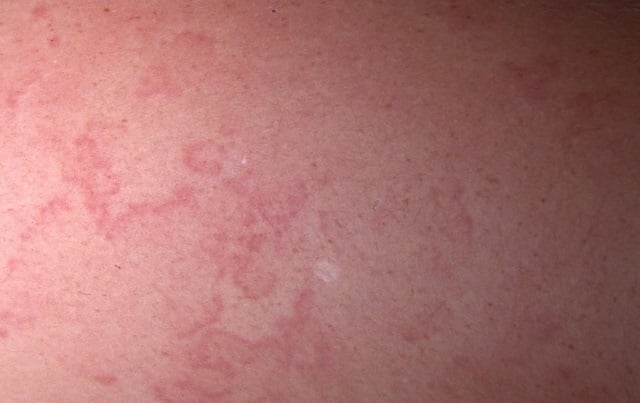 | |
| © Image used on license from DermNet NZ | |
Erythema marginatum is seen in around 10% of children with rheumatic fever. It is rare in adults