Staphylococci: overview
Staphylococci are a common type of bacteria which are often found normal commensal organisms but may also cause invasive disease. Some basic facts include:
The two main types of Staphylococci you need to know about are Staphylococcus aureus and Staphylococcus epidermidis. These are summarised in the table below
- Gram-positive cocci
- facultative anaerobes
- produce catalase
The two main types of Staphylococci you need to know about are Staphylococcus aureus and Staphylococcus epidermidis. These are summarised in the table below
| Staphylococcus aureus | Staphylococcus epidermidis |
|---|---|
| • Coagulase-positive • Beta-haemolytic • Causes skin infections (e.g. cellulitis), abscesses, osteomyelitis, toxic shock syndrome | • Coagulase-negative • Non-haemolytic • Cause of central line infections and infective endocarditis |
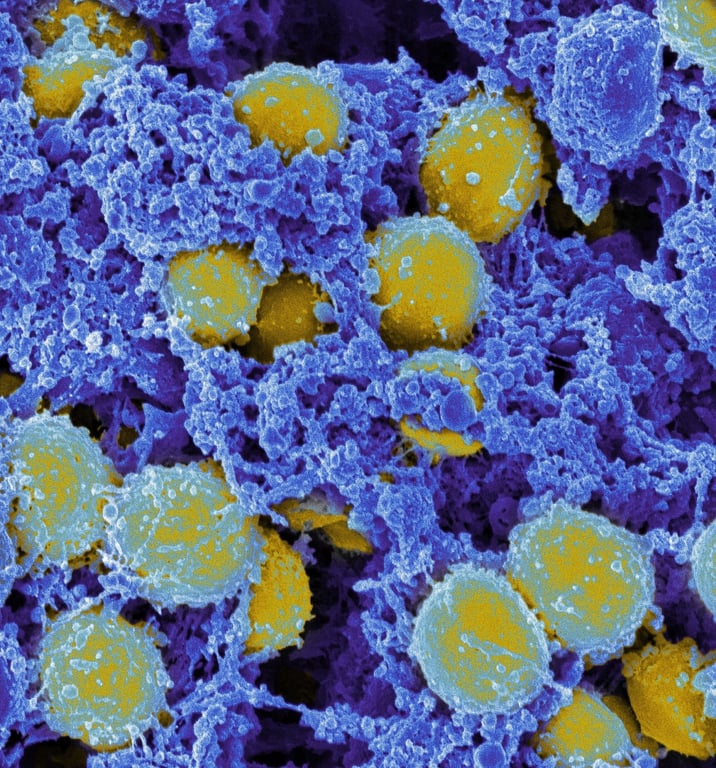 | |
Scanning electromicrograph of Staphylococcus aureus bacteria. Credit: NIAID