Phenylketonuria
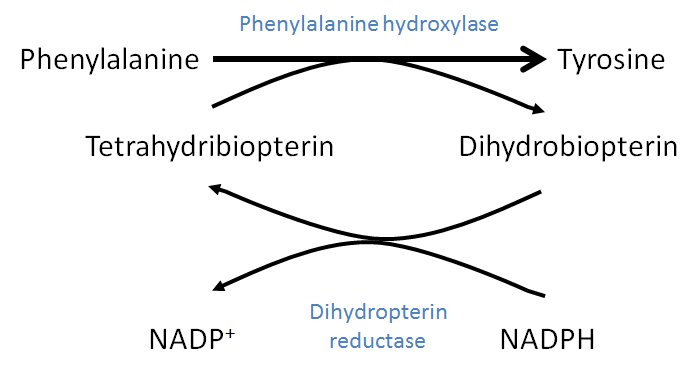
Phenylketonuria (PKU) is an autosomal recessive condition caused by a disorder of phenylalanine metabolism. This is usually due to defect in phenylalanine hydroxylase, an enzyme which converts phenylalanine to tyrosine. In a small number of cases the underlying defect is a deficiency of the tetrahydrobiopterin-deficient cofactor, e.g. secondary to defective dihydrobiopterin reductase. High levels of phenylalanine lead to problems such as learning difficulties and seizures. The gene for phenylalanine hydroxylase is located on chromosome 12. The incidence of PKU is around 1 in 10,000 live births.
Features
Diagnosis
Management
*secondary to phenylacetate, a phenylketone
 | |
Features
- usually presents by 6 months e.g. with developmental delay
- child classically has fair hair and blue eyes
- learning difficulties
- seizures, typically infantile spasms
- eczema
- 'musty' odour to urine and sweat*
Diagnosis
- Guthrie test: the 'heel-prick' test done at 5-9 days of life - also looks for other biochemical disorders such as hypothyroidism
- hyperphenylalaninaemia
- phenylpyruvic acid in urine
Management
- poor evidence base to suggest strict diet prevents learning disabilities
- dietary restrictions are however important during pregnancy as genetically normal fetuses may be affected by high maternal phenylalanine levels
*secondary to phenylacetate, a phenylketone