Wernicke's encephalopathy
Wernicke's encephalopathy is a neuropsychiatric disorder caused by thiamine deficiency which is most commonly seen in alcoholics. Rarer causes include: persistent vomiting, stomach cancer, dietary deficiency. A classic triad of ophthalmoplegia/nystagmus, ataxia and confusion may occur. In Wernicke's encephalopathy petechial haemorrhages occur in a variety of structures in the brain including the mamillary bodies and ventricle walls
Features
Investigations
Treatment is with urgent replacement of thiamine
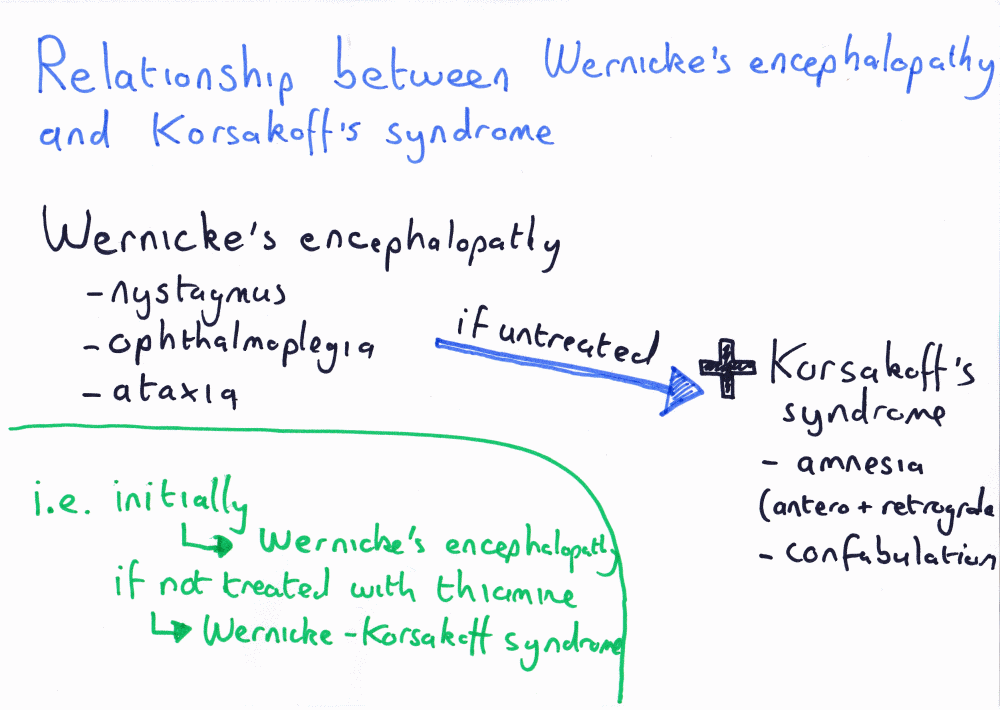
Relationship with Korsakoff syndrome
If not treated Korsakoff's syndrome may develop as well. This is termed Wernicke-Korsakoff syndrome and is characterised by the addition of antero- and retrograde amnesia and confabulation in addition to the above symptoms.
Features
- nystagmus (the most common ocular sign)
- ophthalmoplegia
- ataxia
- confusion, altered GCS
- peripheral sensory neuropathy
Investigations
- decreased red cell transketolase
- MRI
Treatment is with urgent replacement of thiamine
Relationship with Korsakoff syndrome
If not treated Korsakoff's syndrome may develop as well. This is termed Wernicke-Korsakoff syndrome and is characterised by the addition of antero- and retrograde amnesia and confabulation in addition to the above symptoms.
 | |