Renin-angiotensin-aldosterone system
Adrenal cortex (mnemonic GFR - ACD)
Renin
Angiotensin II
Aldosterone
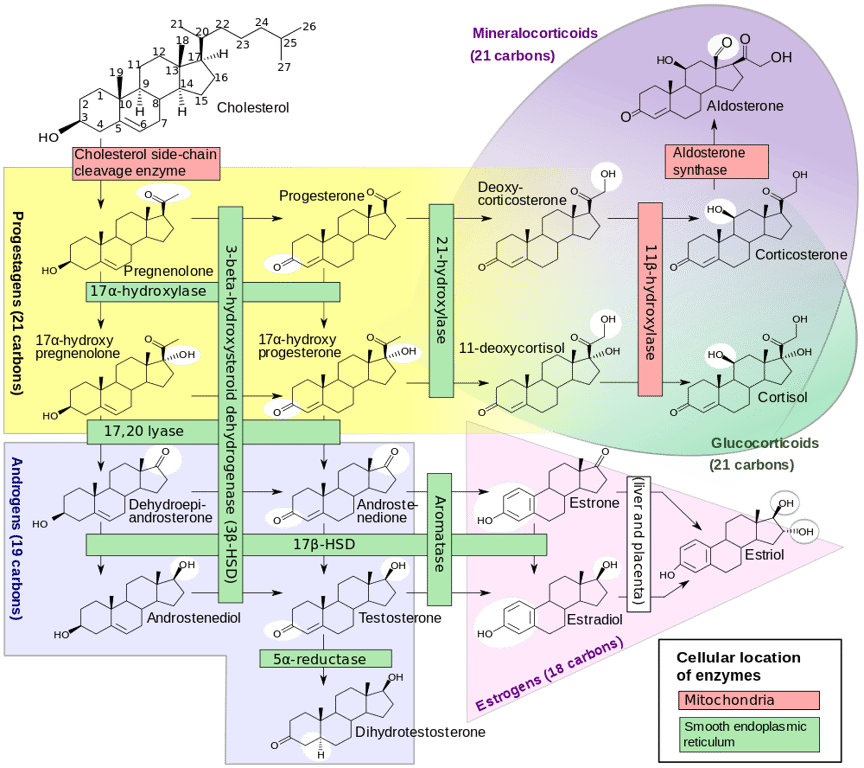
- zona glomerulosa (on outside): mineralocorticoids, mainly aldosterone
- zona fasciculata (middle): glucocorticoids, mainly cortisol
- zona reticularis (on inside): androgens, mainly dehydroepiandrosterone (DHEA)
 | |
Renin
- an enzyme that is released by the renal juxtaglomerular cells in response to reduced renal perfusion
- other factors that stimulate renin secretion include hyponatraemia, sympathetic nerve stimulation
- hydrolyses angiotensinogen to form angiotensin I
Angiotensin II
- angiotensin-converting enzyme (ACE) in the lungs converts angiotensin I → angiotensin II
- angiotensin II has a wide variety of actions:
- causes vasoconstriction of vascular smooth muscle leading to raised blood pressure and vasoconstriction of efferent arteriole of the glomerulus → increased filtration fraction (FF) to preserve GFR. Remember that FF = GFR / renal plasma flow
- stimulates thirst (via the hypothalamus)
- stimulates aldosterone and ADH release
- increases proximal tubule Na+/H+ activity
Aldosterone
- released by the zona glomerulosa in response to raised angiotensin II, potassium, and ACTH levels
- causes retention of Na+ in exchange for K+/H+ in distal tubule