Measles
On this page
Background Information
Measles is an acute viral illness caused by the measles virus, an RNA paramyxovirus.It is highly contagious and was a leading cause of childhood mortality globally before the introduction of widespread vaccination.
In the UK, measles was declared eliminated in 2016; however, due to declining vaccination rates, outbreaks have re-emerged in recent years.
Transmission Route
Measles is primarily transmitted via airborne respiratory droplets when an infected person coughs or sneezes. The virus can remain viable on surfaces and in the air for up to two hours, facilitating indirect transmission.Measles is one of the most contagious infectious diseases, with a basic reproduction number (R₀) estimated between 12 and 18.
Incubation Period
The incubation period for measles is typically 10 to 12 days (but it can vary from 7 to 21 days).Relation of rash onset to infectivity
Individuals with measles are considered infectious from four days before the onset of the rash to four days after its appearance. This period encompasses the prodromal phase, during which nonspecific symptoms occur, increasing the risk of transmission before diagnosis.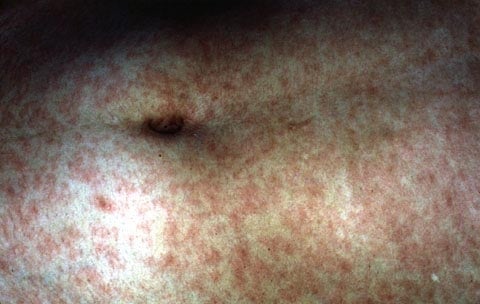 | |
| © Image used on license from DermNet NZ | |
The rash typically starts behind the ears and then spreads to the whole body
Immunity following Infection
Infection with measles typically confers lifelong immunity. This is due to the robust immune response elicited by the virus, which provides long-term protection against reinfection.
Natural infection with measles is typically followed by lifelong immunity.
Clinical features
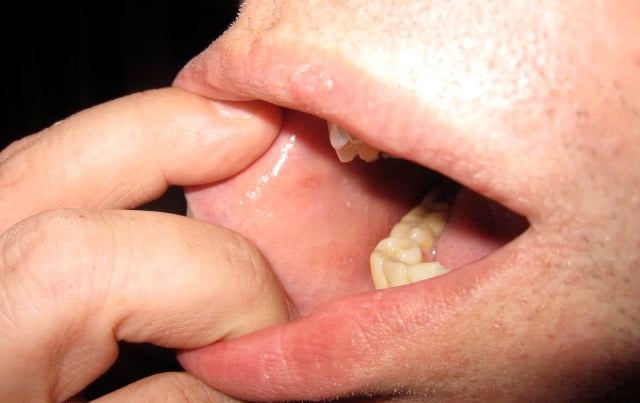
Measles progresses through distinct stages:- Prodromal Phase (2–4 days): Characterised by fever, malaise, cough, coryza, and conjunctivitis. Koplik spots may appear during this phase.
- Exanthem Phase: A maculopapular rash develops, typically starting on the face and behind the ears, then spreading to the trunk and limbs. The rash usually lasts for about 3–5 days.
- Recovery Phase: Symptoms gradually resolve, but a cough may persist for several days.
 | |
| © Image used on license from DermNet NZ | |
Koplik spots (before rash): white spots ('grain of salt') on buccal mucosa.
Diagnosis
Suspected cases should be reported to the health protection team (HPT) who will send an oral fluid testing kit to the affected person for IgM/IgG and/or viral RNA testing.
Complications
Measles is often self-limiting, however complications can occur, particularly in vulnerable populations:Common complications:
- Otitis media (ear infection)
- Pneumonia
- Diarrhoea
- Febrile convulsions
Severe complications:
- Encephalitis: Inflammation of the brain occurring in approximately 1 in 1,000 cases.
- Subacute Sclerosing Panencephalitis (SSPE): A rare, fatal degenerative disease of the central nervous system that can develop 7 to 10 years after measles infection. The risk is higher in individuals who contracted measles at a young age.
- Myocarditis
Management
There is no specific antiviral treatment for measles. Management focuses on supportive care:
- Antipyretics (e.g., paracetamol) to reduce fever
- Hydration
- Rest
- Vitamin A supplementation is recommended in some cases, particularly in children, to reduce the risk of complications.
- Isolation (exclusion): To prevent transmission, infected individuals should be isolated for at least four days after the onset of the rash i.e. 4 full days from when the rash first appears where the date the rash appears is day 0)
UK vaccination schedule
The Measles, Mumps, and Rubella (MMR) vaccine is administered as part of the UK routine immunisation schedule:- First Dose: At 12 to 13 months of age
- Second Dose: At 3 years and 4 months to 5 years of age
Two doses are necessary to ensure optimal immunity. The vaccine is highly effective, with one dose providing approximately 90% protection and two doses providing around 99% protection against measles.
Management of non-immune individuals exposed to measles
MMR Vaccination:
- Susceptible contacts aged over 6 months should receive the MMR vaccine within 72 hours of exposure to provide some post-exposure protection.
- Infants aged 6–11 months can be given the MMR vaccine early, but this dose does not count towards the routine schedule.
- Immunisation beyond 72 hours post-exposure may still be beneficial to prevent future measles infections.
Human Normal Immunoglobulin (HNIG):
- Considered for high-risk individuals who are not immune and for whom MMR vaccine is contraindicated (e.g., pregnant women, immunocompromised individuals, and infants under 6 months).
- HNIG should be given ideally within 6 days of exposure to reduce the risk of developing severe disease.
Exclusion from School or Work:
- Non-immune contacts should be excluded from nursery, school, or healthcare work from day 5 to day 21 after the last exposure (assuming they do not develop symptoms).
- If MMR is given within 72 hours, exclusion may not be required.
Monitoring and Public Health Notification:
- All suspected or confirmed cases should be reported to the local Health Protection Team.
- Close contacts should be informed of the potential for symptoms and advised to monitor for fever, malaise, and rash for 7–21 days post-exposure.