Amyloidosis
Overview
Classification
Diagnosis
- amyloidosis is a term which describes the extracellular deposition of an insoluble fibrillar protein termed amyloid
- amyloid is derived from many different precursor proteins
- in addition to the fibrillar component, amyloid also contains a non-fibrillary protein called amyloid-P component, derived from the acute phase protein serum amyloid P
- other non-fibrillary components include apolipoprotein E and heparan sulphate proteoglycans
- the accumulation of amyloid fibrils leads to tissue/organ dysfunction
Classification
- systemic or localized
- further characterised by precursor protein (e.g. AL in myeloma - A for Amyloid, L for immunoglobulin Light chain fragments)
Diagnosis
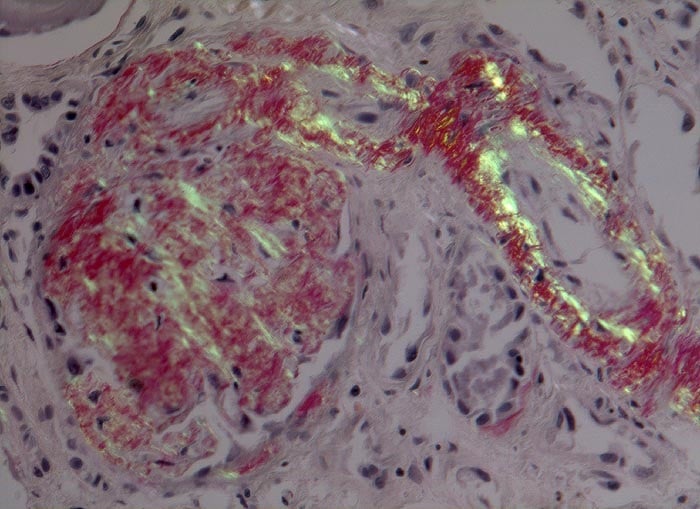
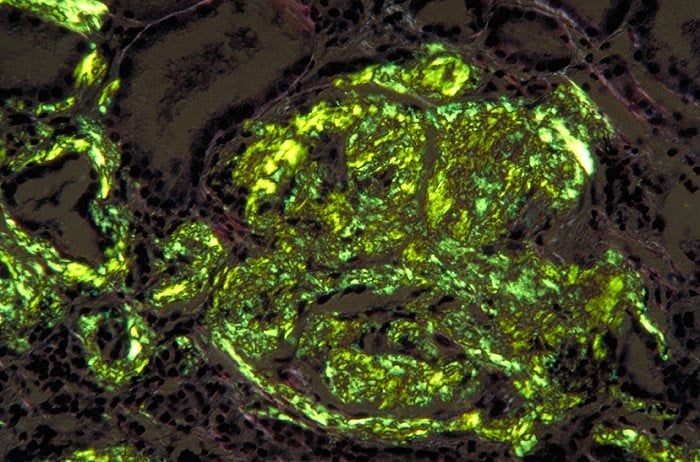
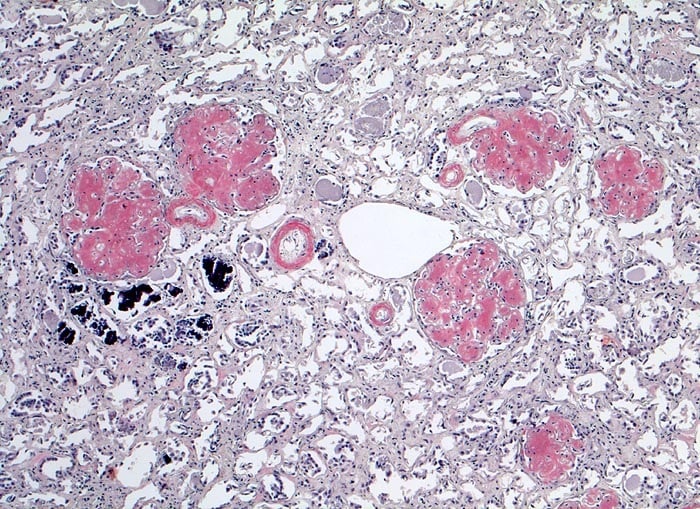
- Congo red staining: apple-green birefringence
- serum amyloid precursor (SAP) scan
- biopsy of rectal tissue
 | |
| © Image used on license from PathoPic | |
Renal amyloid with congo red staining - apple-green birefringence
 | |
| © Image used on license from PathoPic | |
Renal amyloid with congo red staining - apple-green birefringence
 | |
| © Image used on license from PathoPic | |
Congo red staining. Amyloid deposits are seen in both the arteries/arterioles and within the glomerulus. The deposit of amyloid within the mesangium is not dissimilar to the nodular lesions seen in diabetic nephropathy