Membranous glomerulonephritis
Membranous glomerulonephritis is the commonest type of glomerulonephritis in adults and is the third most common cause of end-stage renal failure (ESRF). It usually presents with nephrotic syndrome or proteinuria.
Renal biopsy demonstrates:
Causes
Prognosis - rule of thirds
Good prognostic features include female sex, young age at presentation and asymptomatic proteinuria of a modest degree at the time of presentation.
Management
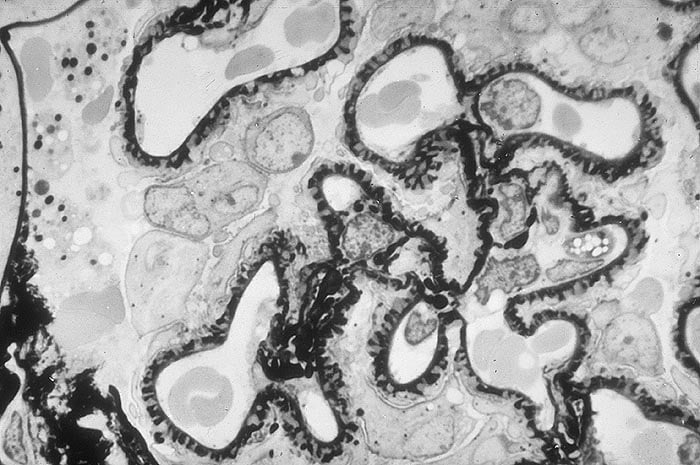
Renal biopsy demonstrates:
- electron microscopy: the basement membrane is thickened with subepithelial electron dense deposits. This creates a 'spike and dome' appearance
Causes
- idiopathic
- infections: hepatitis B, malaria, syphilis
- malignancy: lung cancer, lymphoma, leukaemia
- drugs: gold, penicillamine, NSAIDs
- autoimmune diseases: systemic lupus erythematosus (class V disease), thyroiditis, rheumatoid
Prognosis - rule of thirds
- one-third: spontaneous remission
- one-third: remain proteinuric
- one-third: develop ESRF
Good prognostic features include female sex, young age at presentation and asymptomatic proteinuria of a modest degree at the time of presentation.
Management
- immunosuppression: corticosteroids alone have not been shown to be effective. A combination of corticosteroid + another agent such as chlorambucil is often used
- blood pressure control: ACE inhibitors have been shown to reduce proteinuria
- consider anticoagulation
 | |
| © Image used on license from PathoPic | |
Silver-stained section showing thickened basement membrane, subepithelial spikes