Syphilis
Syphilis is a sexually transmitted infection caused by the spirochaete Treponema pallidum. Infection is characterised by primary, secondary and tertiary stages. The incubation period is between 9-90 days
Primary features
Secondary features - occurs 6-10 weeks after primary infection
Tertiary features
Features of congenital syphilis
Primary features
- chancre - painless ulcer at the site of sexual contact
- local non-tender lymphadenopathy
- often not seen in women (the lesion may be on the cervix)
Secondary features - occurs 6-10 weeks after primary infection
- systemic symptoms: fevers, lymphadenopathy
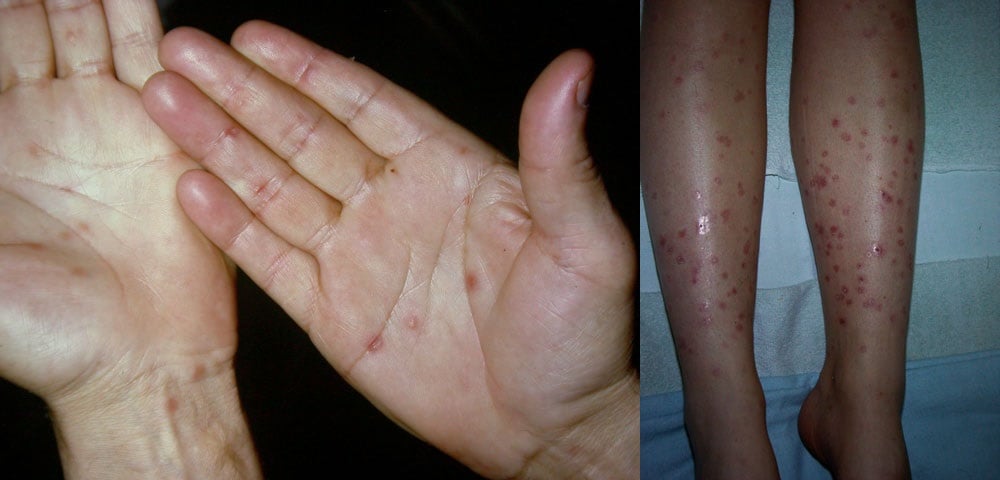
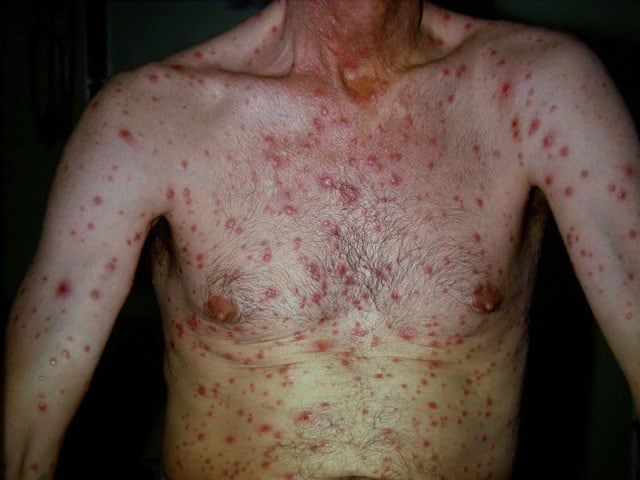
- rash on trunk, palms and soles
- buccal 'snail track' ulcers (30%)
- condylomata lata
 | |
| © Image used on license from DermNet NZ | |
Classical palm lesions of secondary syphilis
 | |
| © Image used on license from DermNet NZ | |
More generalised rash of secondary syphilis
Tertiary features
- gummas (granulomatous lesions of the skin and bones)
- ascending aortic aneurysms
- general paralysis of the insane
- tabes dorsalis
- Argyll-Robertson pupil
Features of congenital syphilis
- blunted upper incisor teeth (Hutchinson's teeth), 'mulberry' molars
- rhagades (linear scars at the angle of the mouth)
- keratitis
- saber shins
- saddle nose
- deafness