Staphylococcal toxic shock syndrome
Staphylococcal toxic shock syndrome describes a severe systemic reaction to staphylococcal exotoxins. It came to prominence in the early 1980's following a series of cases related to infected tampons
Pathophysiology
Caused by toxin-producing Staphylococcus aureus (or occasionally Streptococcus pyogenes) releasing superantigens (TSST-1) which triggers massive cytokine release, leading to shock, rash, and multiorgan involvement.
Supportive measures:
Centres for disease control and prevention diagnostic criteria
- fever: temperature > 38.9ºC
- hypotension: systolic blood pressure < 90 mmHg
- diffuse erythematous rash
- desquamation of rash, especially of the palms and soles
- involvement of three or more organ systems: e.g. gastrointestinal (diarrhoea and vomiting), mucous membrane erythema, renal failure, hepatitis, thrombocytopenia, CNS involvement (e.g. confusion)
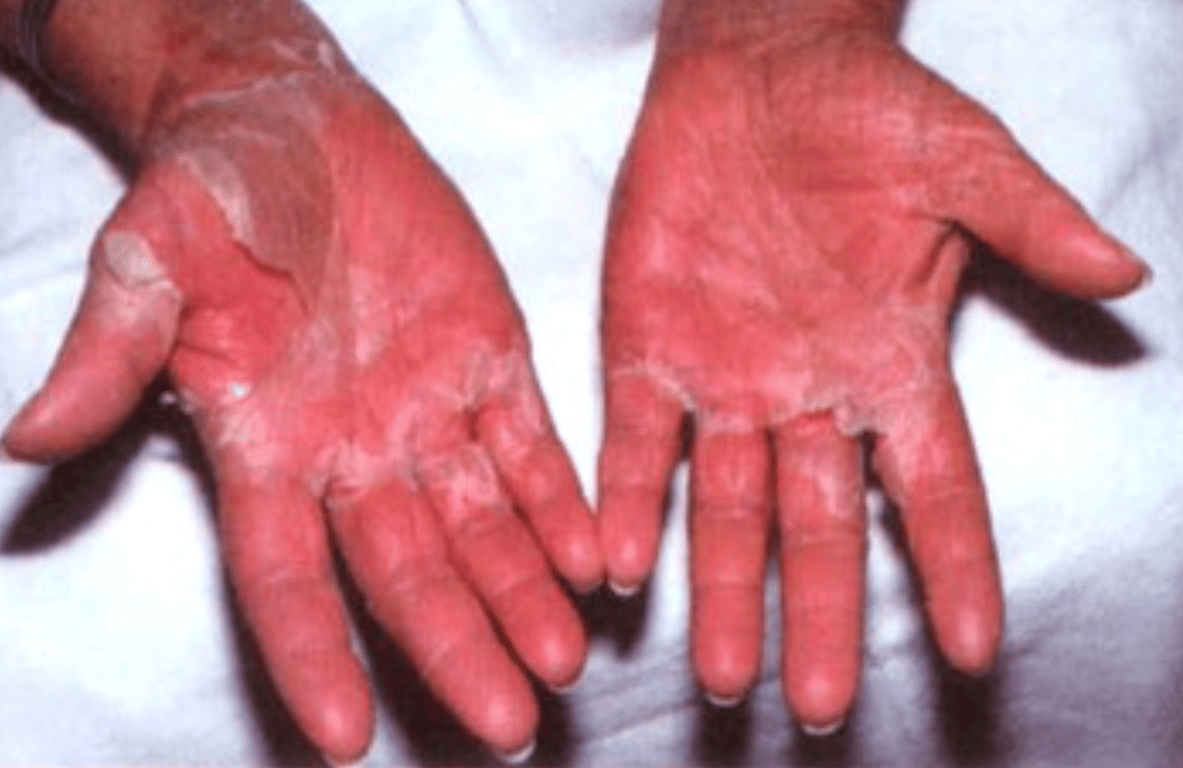 | |
Desquamation of palms in Staphylococcal toxic shock syndrome. Click on image to enlarge
Pathophysiology
Caused by toxin-producing Staphylococcus aureus (or occasionally Streptococcus pyogenes) releasing superantigens (TSST-1) which triggers massive cytokine release, leading to shock, rash, and multiorgan involvement.
Management
Supportive measures:
- Aggressive IV fluid resuscitation
- Vasopressors (if reqiuired)
- IV flucloxacillin (or vancomycin if MRSA risk) + clindamycin to inhibit toxin synthesis.
- Drain pus and/or debride infected tissues