Cytomegalovirus
Cytomegalovirus (CMV) is one of the herpes viruses. It is thought that around 50% of people have been exposed to the CMV virus although it only usually causes disease in the immunocompromised, for example people with HIV or those on immunosuppressants following organ transplantation.
Pathophysiology
Patterns of disease
Congenital CMV infection
CMV mononucleosis
CMV retinitis
CMV encephalopathy
CMV pneumonitis
CMV colitis
Pathophysiology
- infected cells have a 'Owl's eye' appearance due to intranuclear inclusion bodies
Patterns of disease
Congenital CMV infection
- features include growth retardation, pinpoint petechial 'blueberry muffin' skin lesions, microcephaly, sensorineural deafness, encephalitiis (seizures) and hepatosplenomegaly
CMV mononucleosis
- infectious mononucelosis-like illness
- may develop in immunocompetent individuals
CMV retinitis
- common in HIV patients with a low CD4 count (< 50)
- presents with visual impairment e.g. 'blurred vision'. Fundoscopy shows retinal haemorrhages and necrosis, often called 'pizza' retina
- IV ganciclovir is the treatment of choice
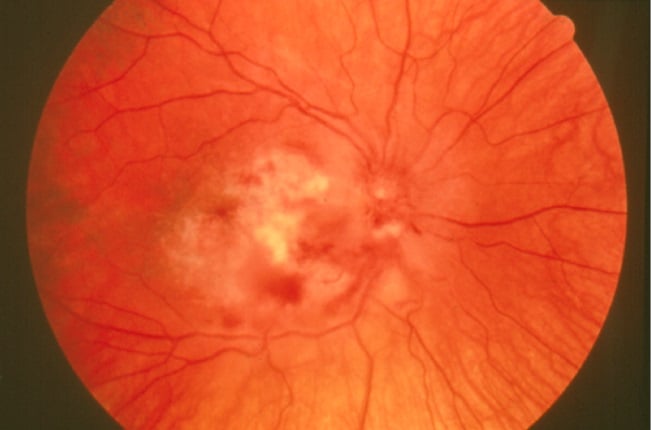 | |
Fundus photograph showing CMV retinitis. Credit: National Eye Institute, National Institutes of Health
CMV encephalopathy
- seen in patients with HIV who have low CD4 counts
CMV pneumonitis
CMV colitis