Scarlet fever
Scarlet fever is a reaction to erythrogenic toxins produced by Group A haemolytic streptococci (usually Streptococcus pyogenes). It is more common in children aged 2 - 6 years with the peak incidence being at 4 years.
Scarlet fever has an incubation period of 2-4 days and typically presents with:
Diagnosis
Management
Complications
Scarlet fever has an incubation period of 2-4 days and typically presents with:
- fever
- malaise
- tonsillitis
- 'strawberry' tongue
- rash - fine punctate erythema ('pinhead') which generally appears first on the torso and spares the face although children often have a flushed appearance with perioral pallor. The rash often has a rough 'sandpaper' texture. Desquamination occurs later in the course of the illness, particularly around the fingers and toes
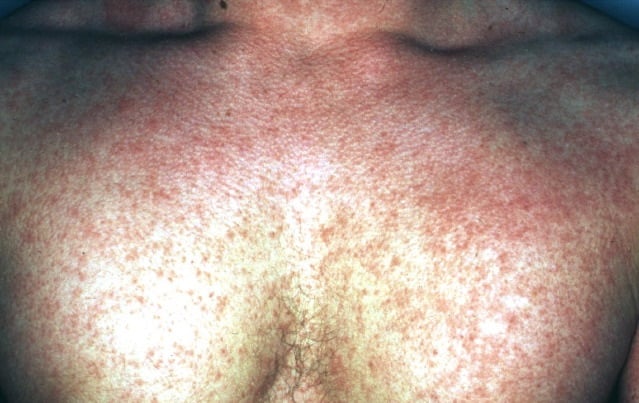 | |
| © Image used on license from DermNet NZ | |
Diagnosis
- a throat swab is normally taken but antibiotic treatment should be commenced immediately, rather than waiting for the results
Management
- oral penicillin V
- patients who have a penicillin allergy should be given azithromycin
- children can return to school 24 hours after commencing antibiotics
- scarlet fever is a notifiable disease
Complications
- otitis media: the most common complication
- rheumatic fever: typically occurs 20 days after infection
- acute glomerulonephritis: typically occurs 10 days after infection