Malaria
On this page
Background & epidemiology
Malaria is a life-threatening disease caused by Plasmodium parasites, transmitted to humans through the bites of infected female Anopheles mosquitoes. Each year there are approximately 250 million malaria cases worldwide, with around 600,000 deaths. Sub-Saharan Africa bears a disproportionately high share of the global malaria burden. In 2023 a total of 2,106 cases of imported malaria were reported in returned travellers in the UK.Malaria parasites are of 5 main types:
- Plasmodium falciparum
- Plasmodium vivax
- Plasmodium ovale
- Plasmodium malariae
- Plasmodium knowlesi (previously identified in monkeys but cases now seen in humans)
Plasmodium falciparum causes nearly all episodes of severe malaria. Of the other types Plasmodium vivax is the most common but typically causes a more 'benign' malaria.
Transmission and lifecycle
The malaria transmission cycle begins when an infected Anopheles mosquito bites a human, injecting sporozoites into the bloodstream. These sporozoites travel to the liver, invading hepatocytes (liver cells) where they replicate and mature into schizonts over 1 to 2 weeks. Schizonts then rupture and release merozoites into the bloodstream, which then invade red blood cells (RBCs). Within RBCs, parasites undergo asexual replication, leading to cell rupture and further merozoite release, perpetuating the cycle.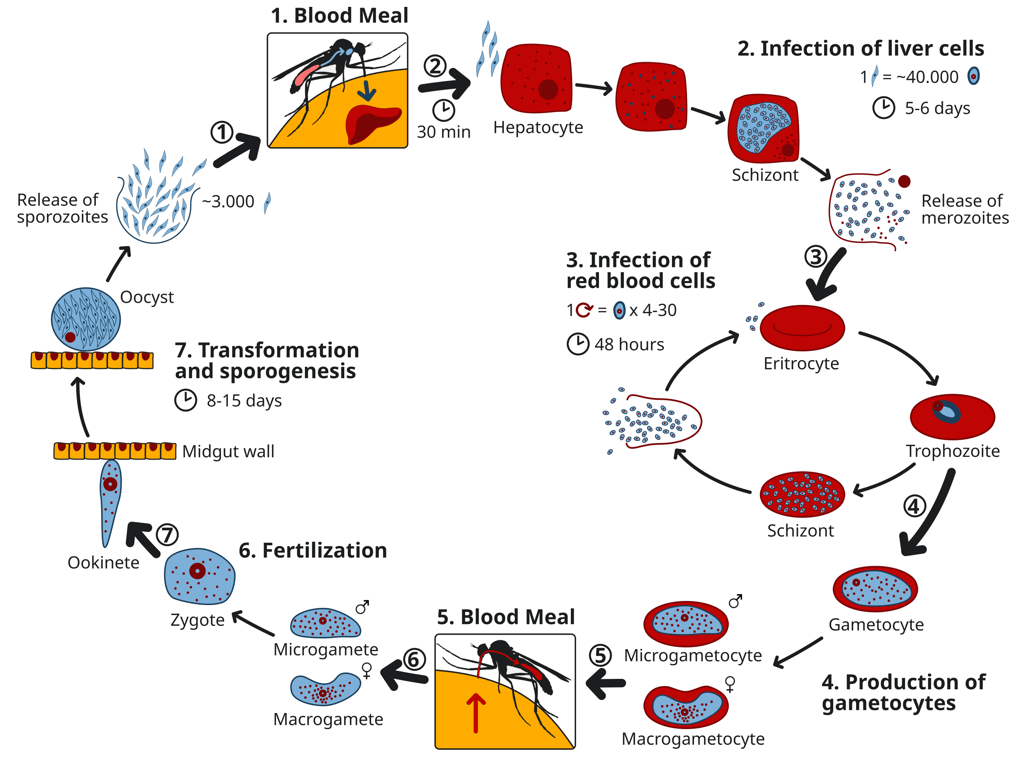 | |
An illustration of the life cycle of the malaria parasite. Click on image to enlarge
Protective factors:
- Sickle cell anaemia
- G6PD deficiency
- HLA-B53
- absence of Duffy antigens
Dormancy in plasmodium vivax and plasmodium ovale
P. vivax and P. ovale have the unique ability to form a dormant liver stage known as hypnozoites. These hypnozoites can reactivate weeks, months, or even years after the initial infection, causing relapses. This dormancy mechanism complicates malaria eradication efforts and necessitates specific treatment strategies.
Clinical features
Clinical features of malaria include:- Fever (often > 39°C)
- Sweats and/or chills
- Headache.
- Malaise, lethargy, and fatigue
- Anorexia
- Gastrointestinal disturbance (such as nausea, abdominal pain, vomiting, diarrhoea), and jaundice.
- Poor feeding in children.
- Myalgia and arthralgia.
- Sore throat, cough, lower respiratory tract symptoms, and respiratory distress.
- Confusion
- Hepatomegaly
- Splenomegaly
Features of severe or complicated malaria in adults include:
- Cerebral malaria: impaired conscious level (Glasgow coma score < 11) or seizures
- Renal impairment (may present with oliguria)
- Acidosis
- Hypoglycaemia (< 2.2 mmol/L)
- Respiratory distress syndrome (ARDS)
- Severe anaemia (may present with pallor).
- Spontaneous bleeding/disseminated intravascular coagulation.
- Shock (BP < 90/60 mmHg).
- Sepsis
- Haemoglobinuria (P. falciparum can cause severe haemolysis with dark red urine known as blackwater fever)
- Parasitaemia > 10%
Malaria in pregnancy:
Severe malaria is more likely in pregnancy, particularly in the second and third trimesters, and is often associated with pulmonary oedema and hypoglycaemia.
Possible complications of malaria in pregnancy include intrauterine growth retardation, premature delivery, and fetal death (stillbirth). Cerebral malaria has a higher mortality rate in pregnant patients (around 50%) compared to non-pregnant patients.
Incubation period
The incubation period usually ranges from 9 to 30 days but depends on the species.For P. falciparum, the incubation period is 7 to 14 days. For P. vivax and P. ovale infection, the incubation period is typically 12 to 18 days, but can be months or years in some cases due to a longer liver stage.
Considerations for returning travellers
Clinicians should maintain a high index of suspicion for malaria in individuals presenting with febrile illnesses after returning from malaria endemic areas.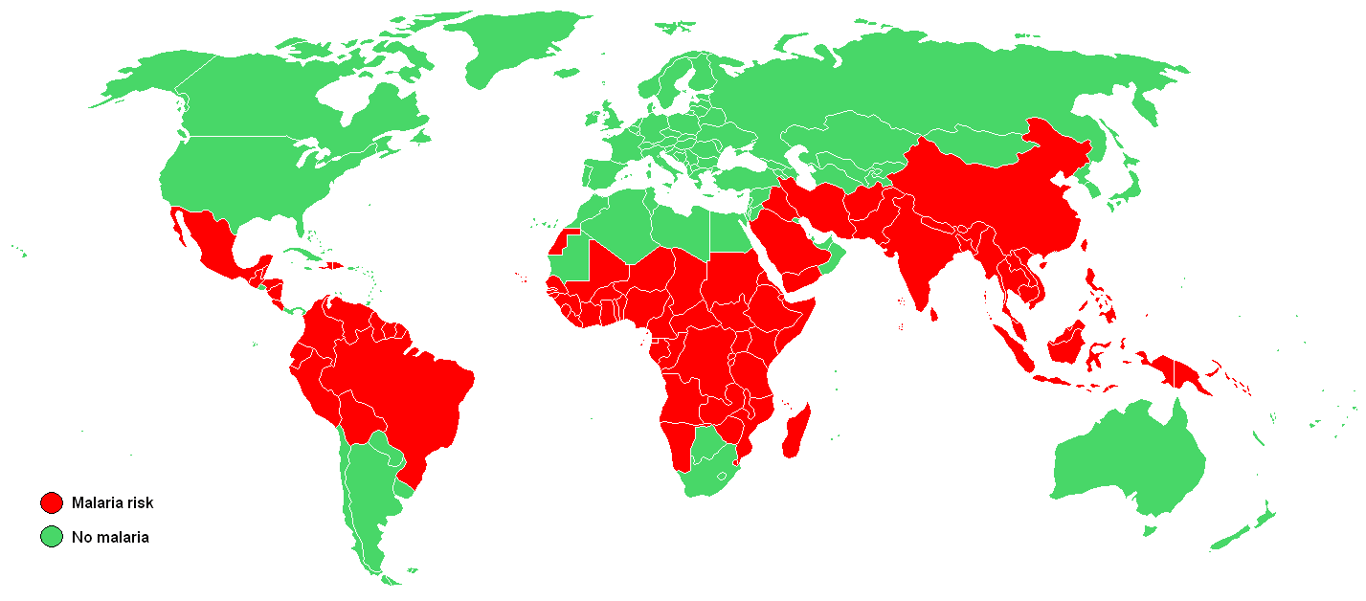 | |
World map of malaria endemic areas. Click on image to enlarge
Severe malaria: Plasmodium falciparum
Plasmodium falciparum is associated with the most severe form of malaria, potentially leading to:
- Cerebral malaria (altered consciousness, seizures)
- Severe anemia
- Acute respiratory distress syndrome (ARDS)
- Renal failure
- Hypoglycemia
Diagnosis
Malaria diagnosis relies on the detection of parasites in the blood. Microscopic examination of blood smears remains the gold standard. Given the cyclical nature of parasitemia, serial blood films every 12-24 hours over 2-3 days may be necessary to detect the parasite. Rapid diagnostic tests (RDTs) detecting specific antigens are also available but may vary in sensitivity and specificity.Microscopy of Giemsa-stained thick and thin blood smears is the gold standard test for diagnosis
Classification of severity:
| Category | Features |
|---|---|
| Uncomplicated |
|
| Severe and/or complicated |
|
Management
Malaria is a notifiable disease in the UK.
Treatment depends on the Plasmodium species, severity of infection, and local drug resistance patterns. A summary of the drugs used is shown in the table below. Note severe malaria requires intravenous antimalarial medications and supportive care.
Summary of drugs used to treat malaria
| Drug | Notes |
|---|---|
| Artesunate | Parenteral artesunate is used to treat severe or complicated malaria |
| Quinine | Used to treat severe or complicated malaria if artesunate is unavailable |
| Artemisinin combination therapy (ACT) | May be used to treat uncomplicated malaria and is the preferred treatment for mixed infection |
| Atovaquone-proguanil | May be used to treat uncomplicated falciparum malaria if ACT is unavailable |
| Quinine plus doxycycline | May be used to treat uncomplicated falciparum malaria if ACT is unavailable Note: Doxycycline should not be given to children younger than 12 years of age |
| Chloroquine | May be used to treat uncomplicated P. malariae, P. ovale, P. knowlesi, and most cases of P. vivax malaria depending on resistance and tolerance |
| Primaquine | The only effective drug for the eradication of hypnozoites (dormant parasites which persist in the liver after treatment of P. vivax and P. ovale) Can cause haemolysis in G6PD-deficient individuals and is contraindicated in pregnancy and breastfeeding |