Ectopic pregnancy
On this page
Definition
An ectopic pregnancy is a fertilised ovum implanting and maturing outside the uterine cavity.Statistics
Approximately 1 in 90 pregnancies in the Uk is an ectopic. Mortality is approximately 0.2%Risk factors
Risk factors for an ectopic pregnancy are:- Maternal age of 35-44 years old
- Previous ectopic pregnancy
- Previous history of pelvic inflammatory disease
- Previous pelvic or abdominal surgeries
- Smoking
- Endometriosis
- Black ethnicity
- History of infertility or use of assisted reproduction techniques
- Intrauterine contraception (IUC)
- Sterilization
Site
The vast majority of ectopic pregnancies (>95%) occur in the fallopian tube. Non-tubal ectopics account for <5% of all ectopic pregnancies.
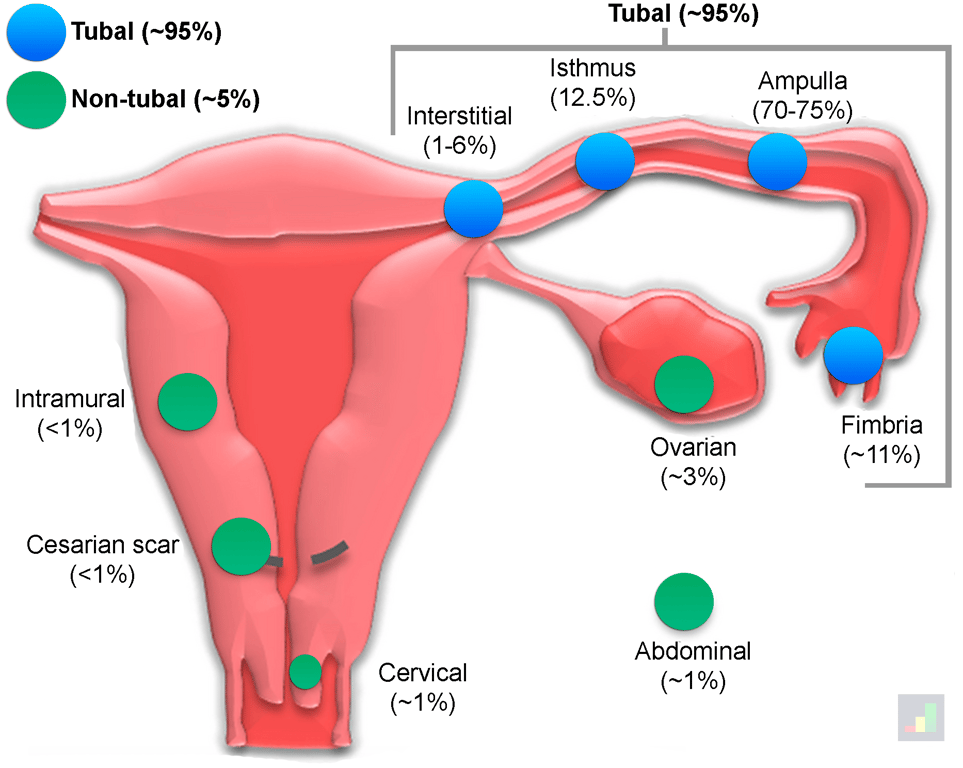 | |
Click on image to enlarge
Tubal:
- ampulla (70-75%)
- isthmus (12.5%)
- Fimbria (11.5%)
- Interstitium and cornua (2-3%).
- Ovary (3%).
- Abdomen (1%).
- Cervix (<1%).
- Caesarean section scar (<1%).
- Interstitial part of the fallopian tube (junction of the uterus and proximal part of the fallopian tube 1–6%).
- heterotopic pregnancy (<1%)
A heterotopic pregnancy is the coexistence of both an intrauterine pregnancy and an ectopic pregnancySites of Ectopic Pregnancy
Presentation
Ectopic pregnancy can have a varied presentation ranging from asymptomatic to an acute abdomen with circulatory collapse. Ectopic pregnancy can also mimic more trivial pathology such as UTI or gastrointestinal upset. Symptoms generally appear 6–8 weeks after the last normal menstrual period but may be later espically in non-tubal ectopics.
Common symptoms:
- Abdominal or pelvic pain
- History of amenorrhoea or missed period
- Vaginal bleeding
- Abdominal tenderness
- Pelvic tenderness
- Adnexal tenderness
- Cervical motion tenderness
- Pallor
- May have features of shock if blood loss is significant e.g. tachycardia and hypotension
- Breast tenderness.
- Gastrointestinal symptoms e.g. diarrhoea and/or vomiting
- Dizziness, fainting, or syncope.
- Shoulder tip pain.
- Urinary symptoms.
- Rectal pain
Pallor, tachycardia and hypotension may indicate tubal rupture and severe bleeding with hypovolaemic shock. These patients require prompt resuscitation.
Diagnosis
Transvaginal ultrasound is the diagnostic modality of choice for diagnosing a suspected ectopic pregnancy. No intrauterine pregnancy should be seen (except in rare cases of heterotropic ectopic pregnancy). A complex extra-adnexal cyst/mass is the most common ultrasound finding.
Serum βhCG levels help guide treatment.
Management
Appropriate fluid resuscitation should be initiated depending on the clinical condition of the patient. Definitive management may be expectant, medical or surgical as per the table below:| Management | Patient criteria |
|---|---|
| Expectant management | Suitable for patient who is clinically stable and pain free. Active intervention reconsidered if symptoms worsen or if βhCG levels fail to fall at an acceptable rate |
| Medical management | Parenteral methotrexate used It is offered first line to women who are and able to return for follow up and have all of the following:
|
| Surgery | Salpingectomy or salpingotomy (laparoscopically or open surgery) It is offered first line to women who are:
|
Note a choice of either methotrexate or surgical management is offered to women with an ectopic pregnancy who meet all of the following criteria:
- Serum βhCG levels between 1500 IU/L and 5000 IU/L
- Able to return for follow up
- No significant pain.
- An unruptured ectopic pregnancy with an adnexal mass <35 mm with no visible heartbeat.
- No intrauterine pregnancy (confirmed by ultrasound scan).
Follow up is required to ensure serum βhCG levels decrease at an acceptable rate until non-pregnant levels are reached.
Anti-D immunoglobulin is advised for all rhesus-negative women who have had surgical removal of an ectopic pregnancy.