ACE inhibitors
Mechanism of Action
Angiotensin-converting enzyme inhibitors (ACE inhibitors) inhibit the conversion of angiotensin I to angiotensin II via inhibiting the activity of angiotensin-converting enzyme (ACE).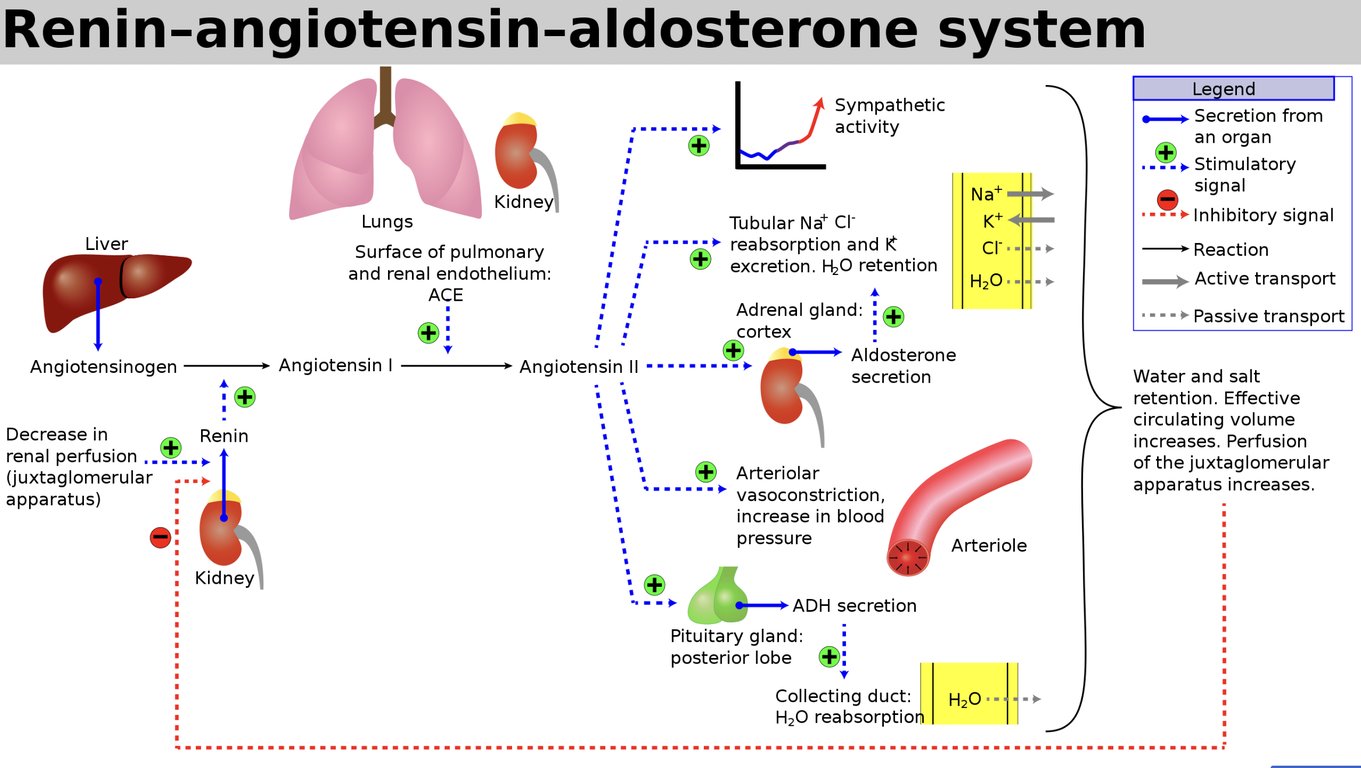 | |
Renin-angiotensin-aldosterone system. Click on image to enlarge
Angiotensin II acts on the central nervous system to increase vasopressin production and also acts on venous and arterial smooth muscle to cause vasoconstriction. Angiotensin II also increases aldosterone secretion. ACE inhibitors inhibit all of these actions.
By reducing angiotensin II levels ACE inhibitors have a vasodilatory effect and reduce blood volume. ACE inhibitors reduce both arterial and venous resistance. ACE inhibitors decrease afterload, preload, and systolic wall stress, which results in increased cardiac output without any increase in heart rate.
Reduced resistance in renal arterioles results in increased renal blood flow which promotes water excretion, reducing blood volume and venous return to the heart. There is also typically a reduction in GFR due to the lower systemic blood pressure and more marked vasodilation of the renal efferent arterioles which lowers intraglomerular pressure.
ACE inhibitors, bradykinin and cough
ACE plays a role in degrading bradykinin. Bradykinin stimulates prostaglandin (also known as cyclo-oxygenase or COX). Elevated bradykinin levels result in increased levels of pro-inflammatory prostaglandins in the upper airways which are thought to cause a dry cough and in some cases angioedema.Indications
- Heart failure
- Hypertension
- Diabetic nephropathy
- Secondary prevention of cardiovascular events
Contraindications
- Hereditary or idiopathic angioedema
- Past ACE inhibitor associated angioedema
- Pregnancy and breastfeeding
Cautions
- Renal impairment
- Concomitant diuretics
- Diabetes (may lower blood glucose, increased risk of hyperkalaemia)
- First dose hypotension (especially in patients taking high doses of diuretics, on a low-sodium diet, on dialysis, dehydrated, or with cerebrovascular disease, ischaemic heart disease, or heart failure)
- Patients of black African or African-Caribbean origin (may respond less well to ACE inhibitors)
- Peripheral vascular disease or generalised atherosclerosis (risk of clinically silent renovascular disease)
- Primary aldosteronism (patients may respond less well to ACE inhibitors)
- Collagen vascular disease (risk of agranulocytosis is possibly increased and blood counts are recommended)
- Aortic or mitral valve stenosis (risk of hypotension)
- Hypertrophic cardiomyopathy
- Hyperkalaemia
- Persistent postural hypotension
Common side effects
- Alopecia
- Altered taste
- Angina pectoris and chest pain
- Angioedema (can be delayed; more common in black patients)
- Arrhythmias (my experience palpitations)
- Asthenia
- Constipation or diarrhoea
- Cough
- Depression
- Dizziness (often secondary to hypotension)
- Drowsiness
- Dry mouth
- Dyspnoea
- Electrolyte imbalance (hyperkalaemia)
- Gastrointestinal discomfort
- Headache
- Hypotension
- Myalgia
- Paraesthesia;
- Renal impairment
- Rhinitis;
- Skin reactions
- Sleep disorder
- Syncope
- Tinnitus
- Vertigo
- Nausea and vomiting