Barriers to infection
The body has several anatomical and physiological barriers to infection that act to prevent microbial invasion. These barriers prevent pathogen entry and create a hostile environment for their survival.
Risk of skin integrity breach
A breach in the skin can compromise its integrity and may arise from any of the following:
Mucociliary clearance in the respiratory tract
Secreted antibacterial compounds
The body secretes various antimicrobial substances to prevent infection including:
Gastric acid as a barrier
Urinary tract
The urinary tract is normally considered a sterile environment. Mechanisms to maintain this include:
Skin as a physical and chemical barrier
- The skin forms a tough, keratinized physical barrier that prevents pathogen entry.
- Tight junctions between epithelial cells reinforce this defence.
- Sebum, secreted by sebaceous glands, contains fatty acids and lactic acid, which create a dry acidic environment (pH 4–6) that inhibits bacterial growth.
- Keratinocytes secrete antimicrobial proteins such as defensins, cathelicidins & antimicrobial proteins eg S100
- Some pathogens can penetrate intact skin, such as Leptospira and Treponema, or enter via insect bites e.g. plasmodium in malaria and Dengue virus.
- The skin surface contains many dead skin cells which are constantly shed removing microbes.
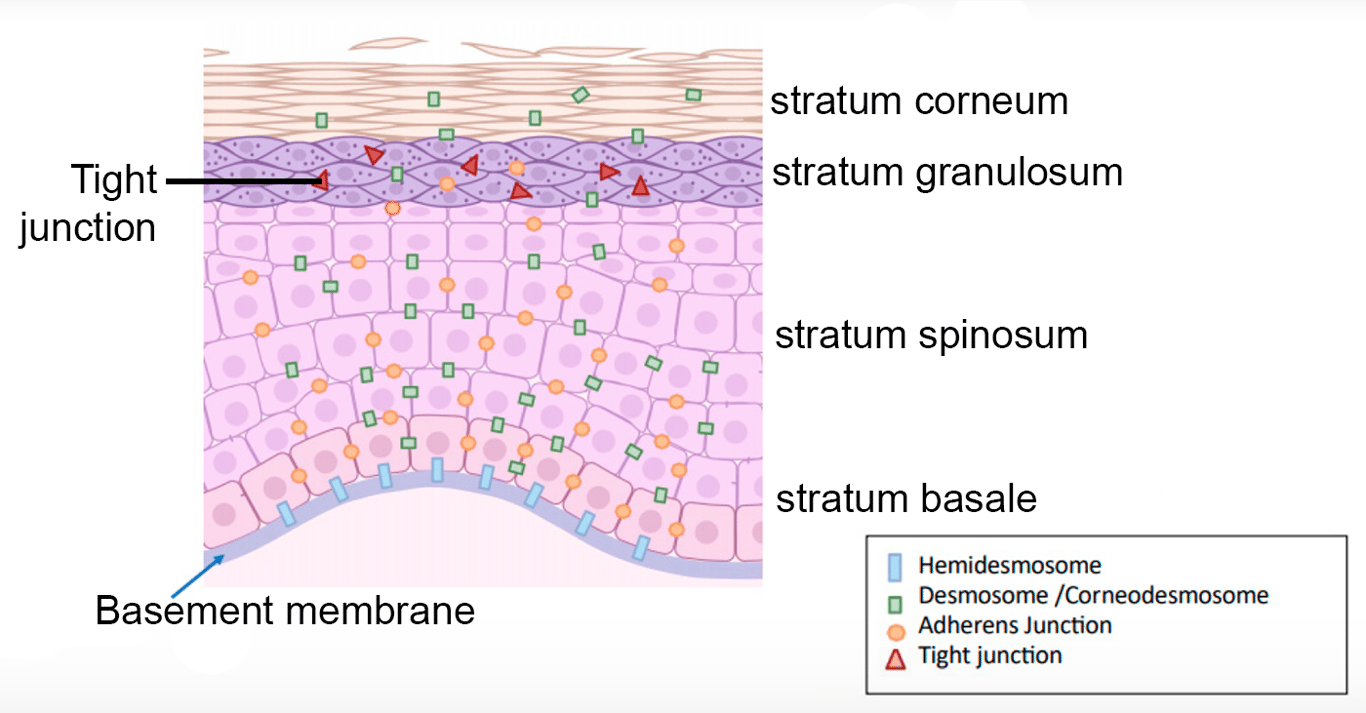 | |
Tight junctions of skin. Click on image to enlarge
Risk of skin integrity breach
A breach in the skin can compromise its integrity and may arise from any of the following:
- Needlestick injuries
- Abrasions or lacerations
- Surgical wounds or IV cannulation sites
- Skin conditions such as burns, eczema, and psoriasis that permit colonisation or invasion
- Invasion with blood borne viruses such as HIV, hepatitis B, and hepatitis C.
- Colonisation and invasion with opportunistic pathogens, e.g. staphylococcus aureus or candida, leading to localised infection, sepsis or other complications e.g. osteomyelitis or septic arthritis
Mucociliary clearance in the respiratory tract
- The mucociliary escalator in the respiratory tract is a critical defence mechanism. Goblet cells produce mucus, trapping inhaled particles and microbes then ciliated epithelial cells move the mucus upwards toward the throat, where it is swallowed or expelled via coughing,sneezing or spitting
- This mechanism helps maintain an effectively sterile lower respiratory tract, preventing infections such as pneumonia.
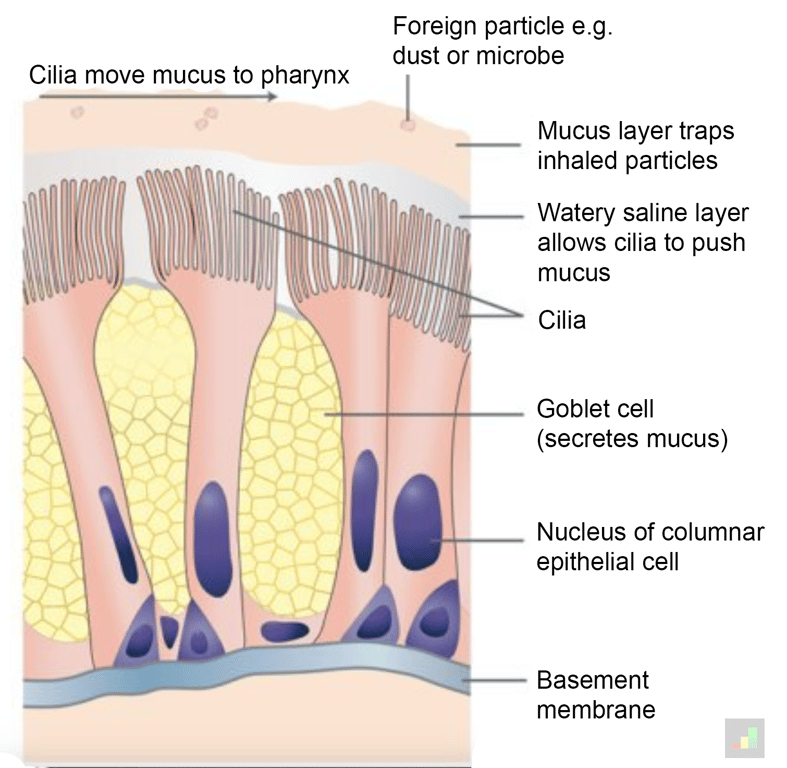 | |
The mucociliary escalator. Click on image to enlarge
Secreted antibacterial compounds
The body secretes various antimicrobial substances to prevent infection including:
- Lysozyme (present in tears, saliva, and sweat): Breaks down bacterial peptidoglycan cell walls particularly those of Gram-positive bacteria.
- Defensins and lactoferrin: Found in mucosal secretions, they disrupt microbial membranes and inhibit iron-dependent bacterial growth.
Gastric acid as a barrier
- The stomach maintains a highly acidic environment (pH 1.5–3.5) via secretion of hydrochloric acid (HCl), which kills most ingested pathogens.
- Pepsin, a digestive proteolytic enzyme, further degrades microbial proteins.
- Some pathogens, such as Helicobacter pylori, have evolved mechanisms to survive the highly acidic environment of the stomach.
Urinary tract
The urinary tract is normally considered a sterile environment. Mechanisms to maintain this include:
- Flushing action of urine which mechanically removes potential pathogens.
- Low pH and presence of urea which creates an inhospitable environment for bacteria.