Gastrointestinal physiology: The stomach & gastrointestinal hormones
On this page
Functions of the stomach
The primary functions of the stomach are to store and digest food (mechanically and chemically) into chyme. The stomach also performs other important functions such as regulating the flow of chyme from the stomach into the duodenum and producing intrinsic factor to facilitate vitamin B12 absorption.Stomach cells and gastric pits
The stomach lining has depressions in its surface containing gastric pits which lead into gastric glands. Each gastric pit contains multiple cell types and the cell type may vary depending on which part of the stomach the gastric pit is in. For instance parietal and chief cells are usually only found in gastric pits within the fundus and body of the stomach but not in the pylorus. G-cells, by contrast, are typically only found in gastric pits within the pylorus.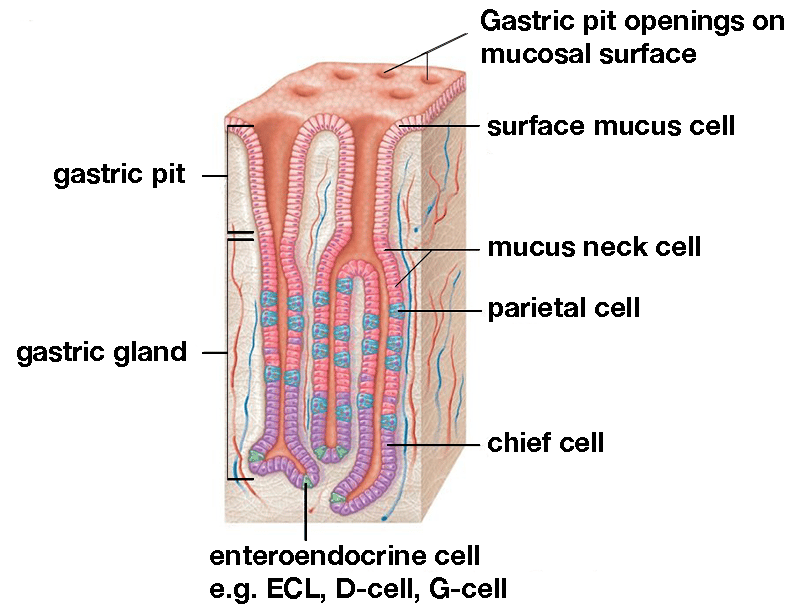 | |
Diagram illustrating typical organisation of a gastric pit. Click on image to enlarge
Cells of the stomach and their secretions
| Cell Type | Secretion |
|---|---|
| Goblet(mucus neck cell) | mucus |
| Chief cell | Pepsinogen |
| Parietal cell | Gastric acid (HCL) and intrinsic factor |
| G-cell | Gastrin |
| D-cell | Somatostatin |
| Enterochromaffin-Like (ECL) Cells (type of enteroendocrine cell) | Histamine |
Gastric fluid
Gastric fluid, or juice, is a combination of the secretions of the different cell types listed above.
Stomach acid
The stomach typically produces around 2L of acid per day. The acid in the stomach is hydrochloric acid (HCL) and is produced by the parietal cells.
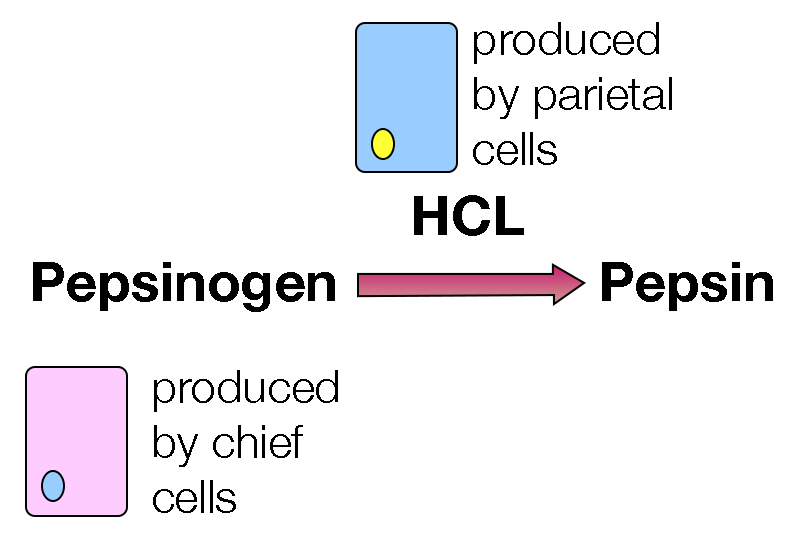
The HCL plays an important role in activating pepsinogen into its active form pepsin. Pepsin is an endopeptidase enzyme that breaks down proteins into smaller peptides.
 | |
To maintain the acidic environment the parietal cells use a hydrogen-potassium-ATPase which exchanges potassium from the intestinal lumen with cytoplasmic hydrogen ions.
- The H+/K+ ATPase is the proton pump of the stomach
Protein digestion begins in the stomach when polypeptides are broken down by enzymes called pepsins. Pepsinogen (inactive precursor of pepsin) is converted into pepsin by hydrochloric acid secretd from chief cells in the gastric mucosa.
Protection against stomach acid
The mucosa of the stomach is protected from acid auto-digestion by the secretions of the gastric glands which are alkaline and mucin rich. These secretions form a protective barrier over epithelial cells.In the event of the cells become irritated local factors stimulate bicarbonate production to neutralise acid and prostaglandins are released which promote mucus layer thickening.
Gastrointestinal hormones
Below is a brief summary of the major hormones involved in food digestion:| Source | Stimulus | Actions | |
|---|---|---|---|
Gastrin | G cells in antrum of the stomach |
| Increase HCL, pepsinogen and IF secretion, increases gastric motility, stimulates parietal cell maturation |
CCK | I cells in upper small intestine | Fatty acids and certain amino acids (products of partially digested proteins and triglycerides) | Increases secretion of enzyme-rich fluid from pancreas, contraction of gallbladder and relaxation of sphincter of Oddi, decreases gastric emptying, trophic effect on pancreatic acinar cells, induces satiety |
Secretin | S cells in upper small intestine | Acidic chyme, fatty acids | Increases secretion of bicarbonate-rich fluid from pancreas and hepatic duct cells, decreases gastric acid secretion, delay gastric emptying, trophic effect on pancreatic acinar cells, increases bile formation & stimulates the release of pepsinogen |
VIP | Small intestine, pancreas | Neural | Stimulates secretion by pancreas and intestines, inhibits acid secretion |
Somatostatin | D cells in the pancreas & stomach | Fat, bile salts and glucose in the intestinal lumen Inhibited by:
| Decreases acid and pepsin secretion, decreases gastrin secretion, decreases pancreatic enzyme secretion, decreases insulin and glucagon secretion inhibits trophic effects of gastrin, stimulates gastric mucous production, inhibits CCK release & inhibits gastric emptying |
Terms
CCK: cholecystokininVIP: vasoactive intestinal peptide