Systematic review
On this page
Systematic review (SR)
A systematic review is a structured and transparent process for identifying, evaluating, and synthesising all available evidence on a clearly defined research question. It is considered the gold standard in the hierarchy of research evidence, especially when accompanied by a meta-analysis.Key Features
- Focused clinical question (e.g., using PICO format)
- Comprehensive and reproducible search strategy
- Predefined inclusion/exclusion criteria
- Critical appraisal of study quality
- Data extraction and synthesis
- Often registered in PROSPERO and reported using PRISMA guidelines
Benefits
- Refines and reduces large volumes of literature into concise, actionable evidence
- Efficient and can prevent unnecessary new studies
- Enhances generalisability by synthesising across populations and settings
- Identifies consistency (or inconsistency) between studies
- Reduces bias and error, increasing reliability
- Meta-analysis improves power and precision
Meta-Analysis
A meta-analysis is the quantitative component of a systematic review. It combines results from similar studies to produce an overall estimate of effect, often displayed using a forest plot. It can:
- Resolve uncertainty when individual studies are inconclusive
- Provide more precise estimates
- Test for and visualise heterogeneity
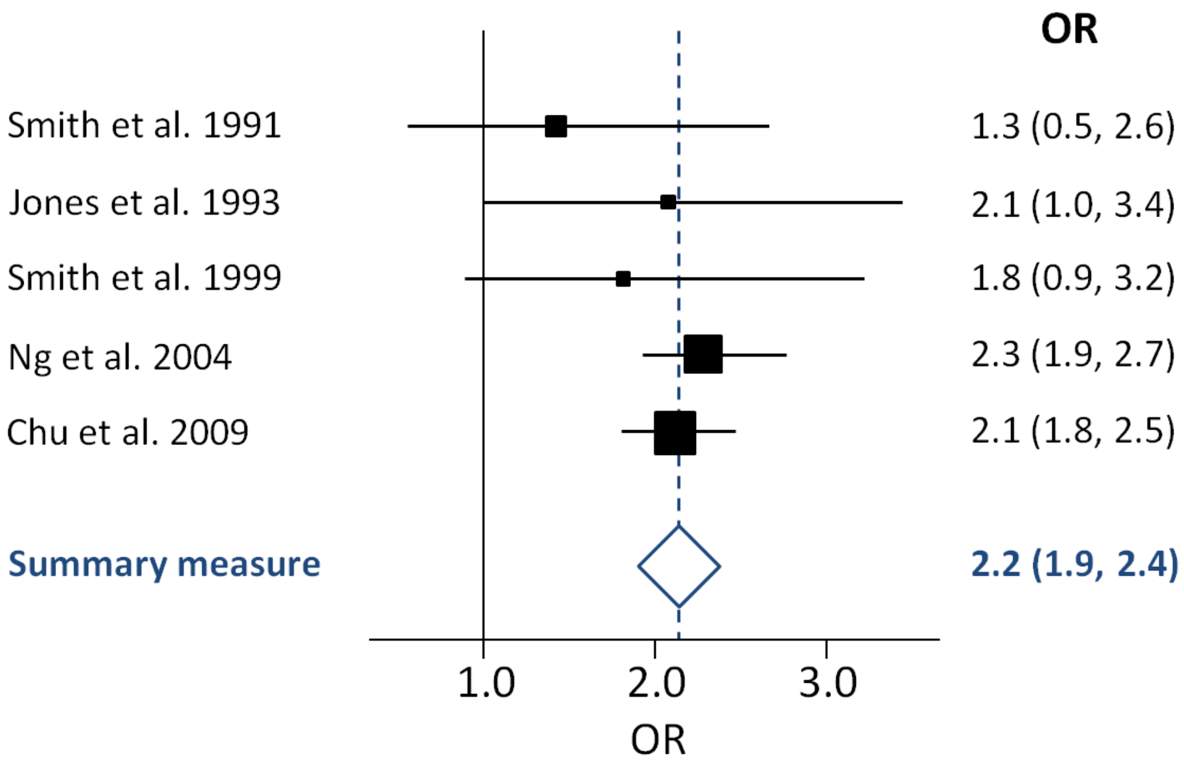 | |
Example forest plot. Click on image to enlarge