Clostridium perfringens: Gas gangrene
On this page
Background
Clostridium perfringens is a Gram-positive, anaerobic, spore-forming, encapsulated bacillus (rod). Clostridium perfringens is an exotoxin-producing bacterium, with alpha toxin being the primary cause of tissue necrosis and haemolysis. Alpha toxin is a phospholipase (or lecithinase) that lyses cell membranes and tissues.Clostridium perfringens is ubiquitous in nature and a normal commensal of human and animal intestines as well as being a component of soil and vegetation.
Clostridium perfringens is associated with acute gastrointestinal infections ranging in severity from diarrhoea to necrotising enterocolitis and clostridial myonecrosis (gas gangrene) in humans.
Causative organism in gas gangrene
Clostridium perfringens is the most common organism implicated in gas gangrene and found in 80-95% of cases (source: Gov.UK)Other Clostridium species that may cause gas gangrene include C. novyi, C. septicum, C. histolyticum, C. bifermentans, C. fallax, and C. sordellii.
Transmission and pathophysiology
Spores may enter devitalised tissue through contaminated wounds (e.g. trauma, surgery), where anaerobic conditions allow for germination and toxin production, as ischaemic or necrotic tissue supports rapid bacterial proliferation. Gas gangrene symptoms may develop rapidly, sometimes within a few hours of contamination, and typically within 24 hours.Severe acute kidney injury is a common problem in patients with gas gangrene. It arises through several mechanisms:
- Bacterial toxins damage myocytes and erythrocytes, leading to the release of myoglobin and haemoglobin, both of which are nephrotoxic when unbound.
- Bacterial toxins through various mechanisms cause vasodilation which results in reduced blood flow to the kidneys.
- Direct bacterial toxicity to renal tubules
Gas gangrene is termed so because as the bacteria metabolise carbohydrates via anaerobic fermentation they produce gases (primarily carbon dioxide and hydrogen) which leads to subcutaneous emphysema and the characteristic crepitus.
Risk factors
Certain patient groups are at increased risk of gas gangrene due to impaired immune response, poor circulation that promotes anaerobic growth or wounds that are at high risk of contamination. Risk factors include:- Diabetes mellitus
- Peripheral vascular disease
- Alcoholism
- Frostbite
- Immunosuppression
- Certain wound types e.g. traumatic open wounds
Clinical Features
Gas gangrene (clostridial myonecrosis) typically presents with:
- Severe localised pain: compartment syndrome can develop in some cases
- Rapidly spreading oedema and tissue destruction
- Crepitus: gas in tissue
- Skin discolouration: typically erythema with purple-black discolouration of affected limb
- Bullae may be present. Foul-smelling discharge may also feature
- Systemic illness: fever, tachycardia & hypotension
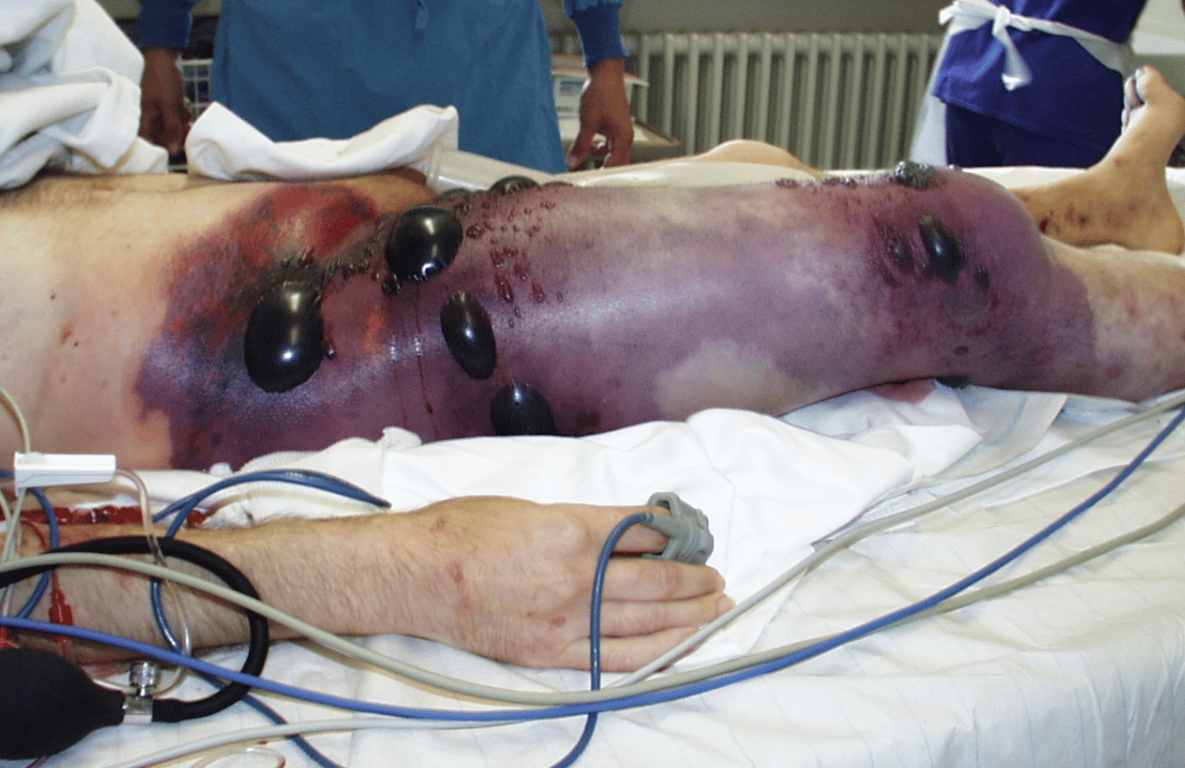 | |
Gas gangrene of the right leg and pelvis, showing swelling and discoloration of the right thigh, bullae. This patient had palpable crepitus. Click on image to enlarge
Diagnosis
Diagnosis of gas gangrene is clinical in the vast majority of cases. Occasionally gas gangrene may be picked up on imaging. CT scan may reveal gas bubbles in tissues.Treatment
- Prompt surgical debridement (or amputation) and washout of tissues is key
- Antibiotics: Benzylpenicillin or clindamycin is often the first choice.
- Supportive care for sepsis
- Hyperbaric oxygen therapy (in selected cases)
Prevention
Prevention involves meticulous wound care, timely surgical intervention and use of prophylactic antibiotics for high-risk wounds.