Naloxone
Opioids (narcotic analgesics) may cause coma, respiratory depression, and pinpoint pupils.
The specific antidote naloxone hydrochloride is indicated if there is coma or respiratory depression, as evidenced by the presence of bradypnoea (see the algorithm below).
Naloxone is a lipophilic compound that acts as a competitive opioid receptor antagonist. Naloxone's binds a number of opioid receptors (μ, δ and κ) with highest affinity for the μ (Mu) opioid receptor.
Naloxone may be given intravenously (IV), intramuscularly (IM), intranasally (IN) or intraosseously (IO). The IV route is preferred as this has the fastest time to peak blood
concentration (approximately 15 mins) and clinical effect (usually within 2 minutes).
Note that naloxone may precipitate symptoms of opioid withdrawal.
Note the effects of some opioids, such as buprenorphine, are only partially reversed by naloxone.
Norpropoxyphene, a metabolite of dextropropoxyphene (the opioid found in co-proximol) also has cardiotoxic effects which may require treatment with sodium bicarbonate or magnesium sulfate, or both. Arrhythmias may occur for up to 12 hours.
The specific antidote naloxone hydrochloride is indicated if there is coma or respiratory depression, as evidenced by the presence of bradypnoea (see the algorithm below).
In acute opioid toxicity, the aim of naloxone administration should be reversal of respiratory depression and maintenance of airway protective reflexes, not full reversal of unconsciousness
Naloxone is a lipophilic compound that acts as a competitive opioid receptor antagonist. Naloxone's binds a number of opioid receptors (μ, δ and κ) with highest affinity for the μ (Mu) opioid receptor.
Naloxone may be given intravenously (IV), intramuscularly (IM), intranasally (IN) or intraosseously (IO). The IV route is preferred as this has the fastest time to peak blood
concentration (approximately 15 mins) and clinical effect (usually within 2 minutes).
Note that naloxone may precipitate symptoms of opioid withdrawal.
Monitoring
Naloxone has a shorter duration of action than many opioids (half life is 30-90 minutes), close monitoring and repeated injections are often necessary. When repeated administration of naloxone is required a continuous intravenous infusion may be used instead and the rate of infusion adjusted according to vital signs.Note the effects of some opioids, such as buprenorphine, are only partially reversed by naloxone.
Patients should be observed for at least four hours after the last dose of naloxone and for at least six hours after the suspected time of opioid use.
The length of the observation period may need to be adjusted from this standard depending on the duration of the effect of the opioid(s) taken. If a patient reports using a longer acting opioid or the clinician suspects this (e.g. methadone, dextropropoxyphene or an NPS opioid), the observation period may need to be extended up to 12 hours
The length of the observation period may need to be adjusted from this standard depending on the duration of the effect of the opioid(s) taken. If a patient reports using a longer acting opioid or the clinician suspects this (e.g. methadone, dextropropoxyphene or an NPS opioid), the observation period may need to be extended up to 12 hours
Norpropoxyphene, a metabolite of dextropropoxyphene (the opioid found in co-proximol) also has cardiotoxic effects which may require treatment with sodium bicarbonate or magnesium sulfate, or both. Arrhythmias may occur for up to 12 hours.
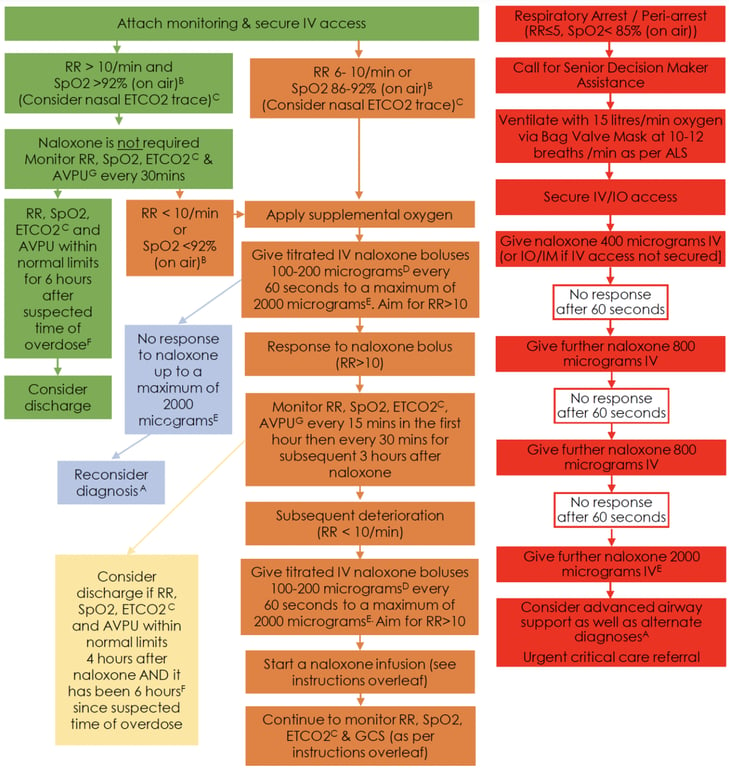 | |
Management of suspected opioid overdose in the ED. Click on image to enlarge