Glycoprotein IIb/IIIa inhibitors
Glycoprotein IIb/IIIa inhibitors prevent platelet aggregation by blocking the binding of fibrinogen to GPIIb/IIIa receptor sites on platelets.
Abciximab is a monoclonal antibody which binds to glycoprotein IIb/IIIa receptors and to other related sites.
Abciximab is licensed as an adjunct to heparin (unfractionated) and aspirin for the prevention of ischaemic complications in certain high-risk patients undergoing percutaneous transluminal coronary intervention (PCI). Abciximab should be used once only (to avoid additional risk of thrombocytopenia).
NICE guidance: Glycoprotein IIb/IIIa inhibitor use in STEMI
There is currently a limited role for the use of glycoprotein IIb/IIIa inhibitors in routine clinical practice. The following are NICE recommendations on GIIb/IIIa inhibitors in STEMI
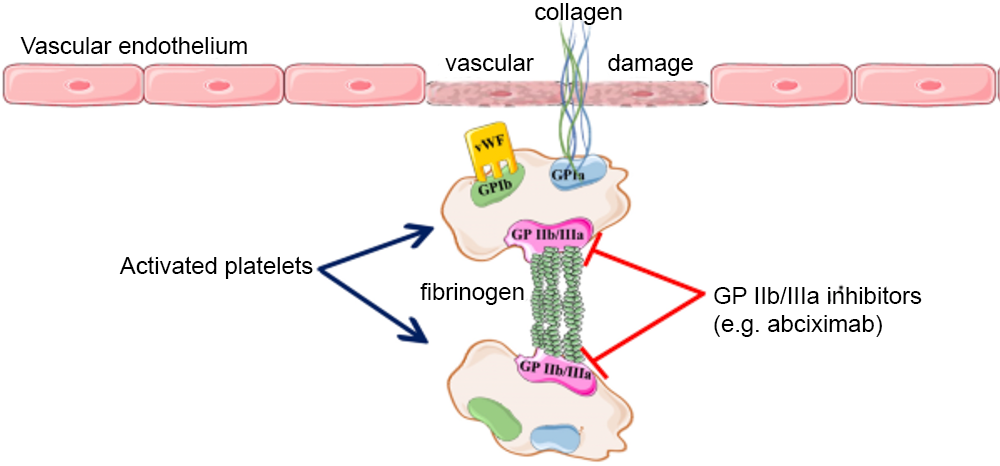 | |
Glycoprotein IIb/IIIa inhibitors mechanism of action. Click on image to enlarge
Abciximab is a monoclonal antibody which binds to glycoprotein IIb/IIIa receptors and to other related sites.
NICE guidance and RCEM
The RCEM basic sciences curriculum advises candidates should be familiar with the role of Abciximab in the management of NSTEMI however the 2020 NICE guidance on management of NSTEMI removed all recommendations supporting glycoprotein IIb/IIIa inhibitors use in NSTEMI.Abciximab is licensed as an adjunct to heparin (unfractionated) and aspirin for the prevention of ischaemic complications in certain high-risk patients undergoing percutaneous transluminal coronary intervention (PCI). Abciximab should be used once only (to avoid additional risk of thrombocytopenia).
NICE guidance: Glycoprotein IIb/IIIa inhibitor use in STEMI
There is currently a limited role for the use of glycoprotein IIb/IIIa inhibitors in routine clinical practice. The following are NICE recommendations on GIIb/IIIa inhibitors in STEMI
- Offer unfractionated heparin with bailout glycoprotein IIb/IIIa inhibitor in combination with dual antiplatelet therapy to people with acute STEMI undergoing primary PCI with radial access. [2020]
- Consider bivalirudin with bailout glycoprotein IIb/IIIa inhibitor in combination with dual antiplatelet therapy for people with acute STEMI undergoing primary PCI when femoral access is needed.