White blood cells
On this page
White blood cells (leucocytes) play a key role in immunity. There are three main types:
The process of forming these cellular components of the blood is termed haematopoiesis or haemopoiesis and as can be seen from the diagram below these cells start as multi potential stem cells before differentiating into the different classes of blood cell.
Granulocytes
Granulocytes encompass the following cell types:
Neutrophils migrate to sites of infection via chemotaxis and destroy bacterial by engulfing them in a process called phagocytosis. The chemotaxis response is typically very fast with neutrophils arriving at infection sites within minutes. Neutrophils live for around 6 hours in blood but survive longer in tissues.
Eosinophils have a number of functions. They are involved in phagocytosis of some parasite infections such as helminth (worms) and protozoa. They play a role in allergic response via release of inflammatory mediators. Eosinophils are longer lived than neutrophils.
Basophils play a role in inflammation via the release of histamine and heparin. They play a similar role to mast cells.
- Granulocytes
- Monocytes
- Lymphocytes
The process of forming these cellular components of the blood is termed haematopoiesis or haemopoiesis and as can be seen from the diagram below these cells start as multi potential stem cells before differentiating into the different classes of blood cell.
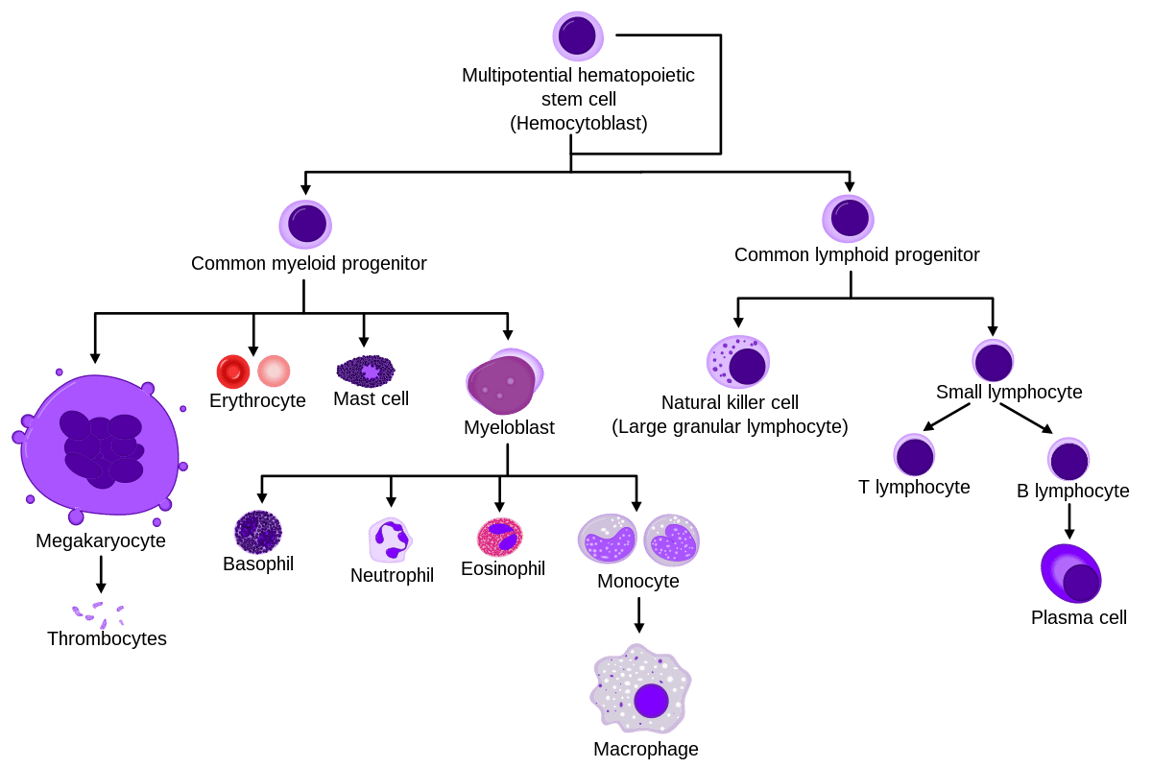 | |
Haemopoiesis. click on image to enlarge
Granulocytes
Granulocytes encompass the following cell types:
- Neutrophils (neutral staining granules)
- Eosinophils (acid staining granules)
- Basophils (basic staining granules)
Neutrophils migrate to sites of infection via chemotaxis and destroy bacterial by engulfing them in a process called phagocytosis. The chemotaxis response is typically very fast with neutrophils arriving at infection sites within minutes. Neutrophils live for around 6 hours in blood but survive longer in tissues.
Neutrophils are a major component of pus.
Eosinophils have a number of functions. They are involved in phagocytosis of some parasite infections such as helminth (worms) and protozoa. They play a role in allergic response via release of inflammatory mediators. Eosinophils are longer lived than neutrophils.
Basophils play a role in inflammation via the release of histamine and heparin. They play a similar role to mast cells.
Lymphocytes
There are 3 main types of lymphocyte:- B-cell (produce antibodies)
- T-cell (Directly kill infected cells via cytotoxic CD8 T-cells or mediate immune response against infected cells via CD4 T-cells)
- Natural killer cells (kill cancerous or infected cells via secretory cytotoxic lysosomes)