Cardiovascular physiology: Coronary circulation
On this page
Blood flow through the heart
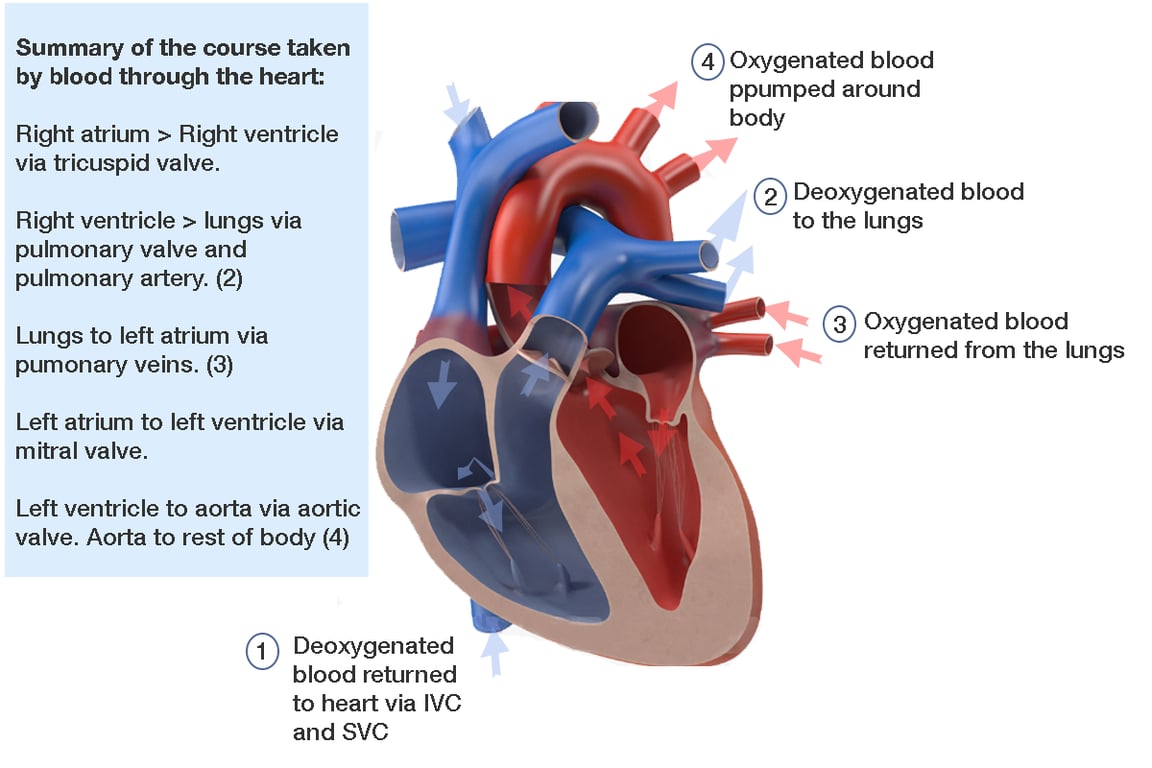 | |
Blood flow through the heart Click on image to enlarge
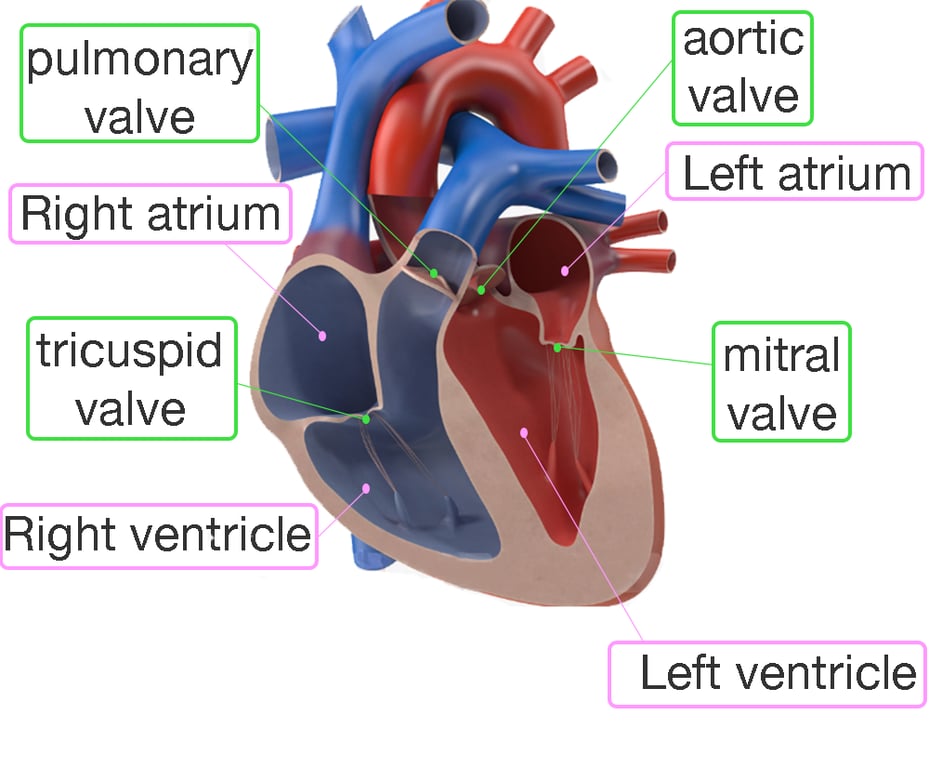 | |
Chambers and valves of the heart. Click on image to enlarge
Coronary flow
The heart has a substantial metabolic demand which requires a rich blood supply. The heart's blood supply is derived from the left and right coronary arteries arising from the aortic sinus. Heart muscle tissue is supplied by a dense capillary network that allows it to extract approximately 70% of the oxygen from the blood.
During periods of increased metabolic demand, e.g. during exercise, there is an increased oxygen requirement of the heart. Increased heart rate during these periods shortens diastole and perfusion time. The heart responds by significantly increasing blood flow via
metabolic hyperaemia
Coronary metabolic hyperaemia is the basis for high oxygen extraction
In coronary metabolic hyperaemia the following stimulate vasodilation:
- Adenosine
- K+
- Hypoxia
This vasodilatory effect over-rides the resting sympathetic nervous system vasoconstrictive effect. Circulating adrenaline also assists coronary vasodilation via stimulation of β2 adrenergic receptors.