Liver: surfaces
The liver is considered to have 2 surfaces. A diaphragmatic surface and a visceral surface.
Diaphragmatic surface
Most of the liver is covered by the right dome of the diaphragm. This diaphragmatic surface encompasses the anterior, superior and right surfaces of the liver as well as some of the posterior surface of the liver.
Unlike the diaphragmatic surface which is divided into two lobes the visceral surface is divided into four lobes with the quadrate and caudate lobes sitting between the left and right lobes.
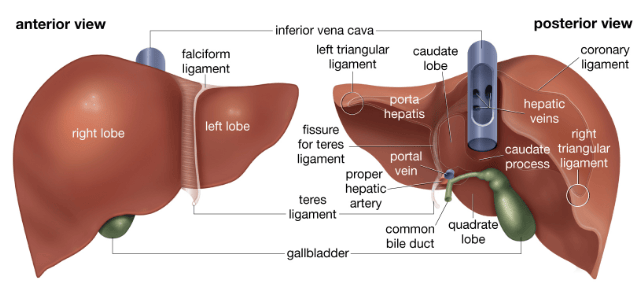 | |
Anterior and posterior views of the liver
Diaphragmatic surface
Most of the liver is covered by the right dome of the diaphragm. This diaphragmatic surface encompasses the anterior, superior and right surfaces of the liver as well as some of the posterior surface of the liver.
Visceral surface
The visceral surface refers to the postero-inferior surface of the liver. It is irregular in shape and moulded for the viscera that lie against it.Unlike the diaphragmatic surface which is divided into two lobes the visceral surface is divided into four lobes with the quadrate and caudate lobes sitting between the left and right lobes.
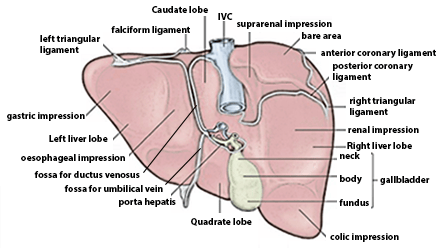 | |
Visceral surface of liver. Impressions labelled. Note the caudate and quadrate lobes separated by the porta hepatis.
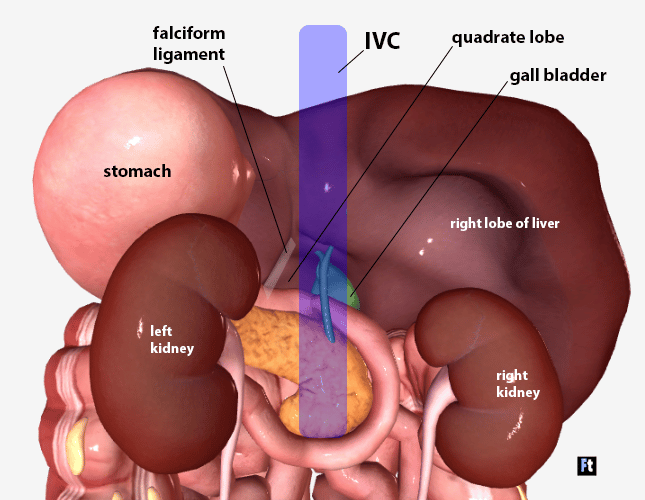 | |
Posterior view of the liver in 3D. Highlighting some key relations