Tonsils
The different tonsil groups form a ring of lymphoid tissue in the oropharynx and nasopharynx called Waldeyer's ring. It is comprised of the paired palatine tonsils, the adenoid tonsils, tubal tonsils and lingual tonsil.
*knowledge of the tubal tonsils isn't a requirement of the exam. It is worth knowing that they are paired lymphoid structures that sit around the opening of the auditory (eustachian) tube in the nasopharnyx.
Vascular supply of the Palatine tonsils
When discussing the tonsils and tonsillectomy people (including medics) are usually referring to the palatine tonsils. It is important to be aware of the vascular supply and close relations of the palatine tonsils.
The palatine tonsils receive arterial supply from a vascular network supplied by 5 arteries that branch from the external carotid. Venous drainage is via the external palatine vein (commonly referred to as the paratonsillar vein). These are illustrated below:
Important points
*knowledge of the tubal tonsils isn't a requirement of the exam. It is worth knowing that they are paired lymphoid structures that sit around the opening of the auditory (eustachian) tube in the nasopharnyx.
| Tonsil Group | Location | Lymph drainage |
|---|---|---|
| Palatine | Tonsilar fossa (lateral wall oropharynx) between the palatoglossal and palatopharyngeal arches of the oral cavity | Jugulodigastric then deep cervical nodes |
| Adenoid | Roof of nasopharynx | deep cervical nodes retropharyngeal nodes |
| Lingual | Base of tongue | deep cervical nodes |
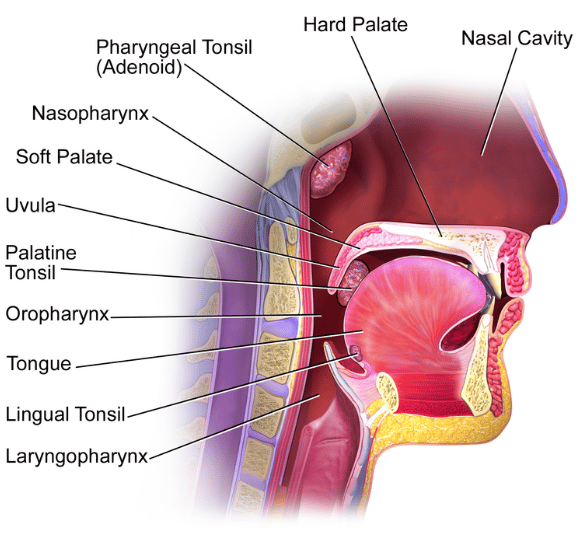 | |
Lateral view of the different tonsil groups
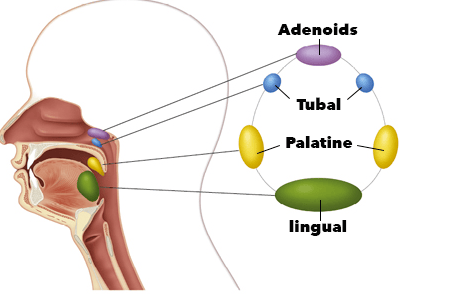 | |
Illustration of tonsils forming Waldeyer's tonsil ring
Vascular supply of the Palatine tonsils
When discussing the tonsils and tonsillectomy people (including medics) are usually referring to the palatine tonsils. It is important to be aware of the vascular supply and close relations of the palatine tonsils.
The palatine tonsils receive arterial supply from a vascular network supplied by 5 arteries that branch from the external carotid. Venous drainage is via the external palatine vein (commonly referred to as the paratonsillar vein). These are illustrated below:
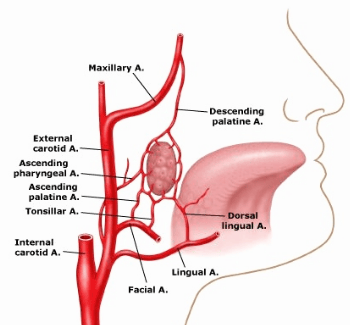 | |
Arterial supply of the palatine tonsils. Demonstrating vascular anastomosis
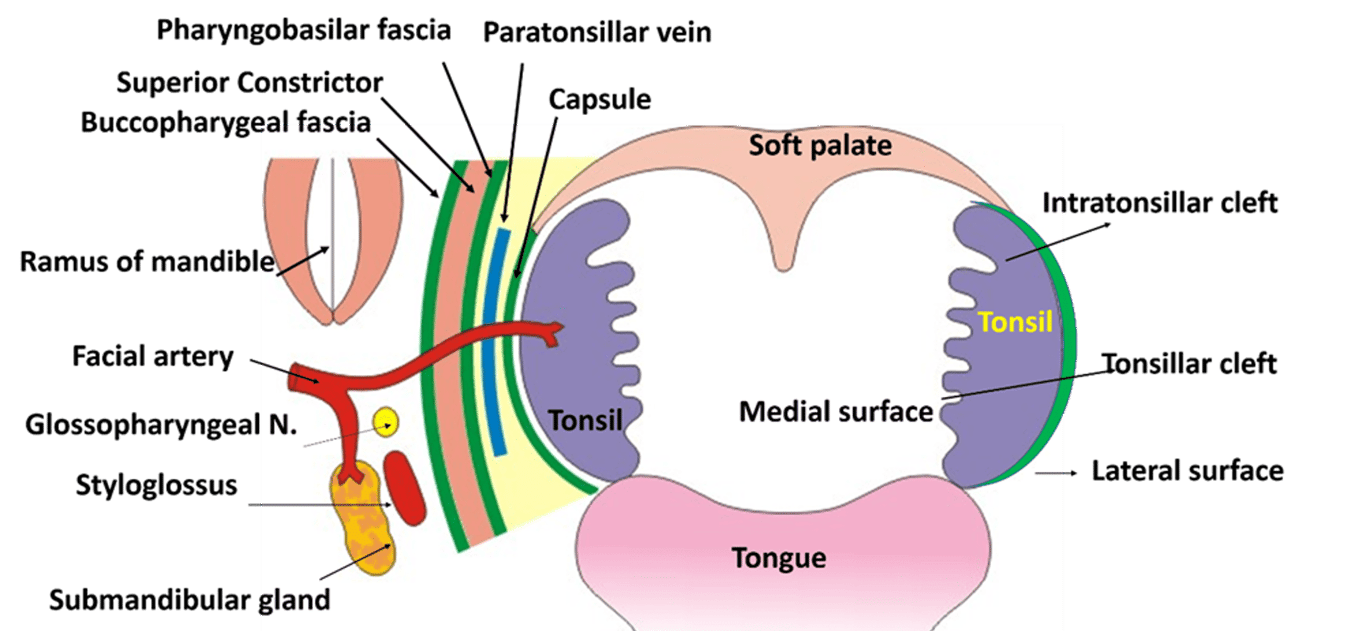 | |
Venous drainage of the palatine tonsils. Note the position of the paratonsillar vein (external palatine vein)
Important points
- The external palatine vein (AKA paratonsillar vein) is typically the source of haemorrhage post tonsillectomy
- The facial artery and internal carotid artery (ICA) lie in close proximity to the tonsil. Care is needed when performing aspiration in quinsy not to go too deep or too lateral. The ICA is approximately 1 inch behind the palatine tonsil (shown below)
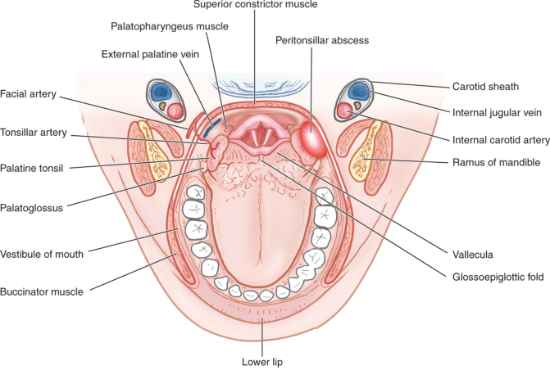 | |
Relations of the palatine tonsils