Preoxygenation
Preoxygenation Key Points
- Aim is to replace the nitrogen in the FRC with Oxygen
- Room air is 78% nitrogen and 21% Oxygen
- Preoxygenation 'washes out' the nitrogen' replacing it with oxygen
- Sometimes referred to as denitrogenation
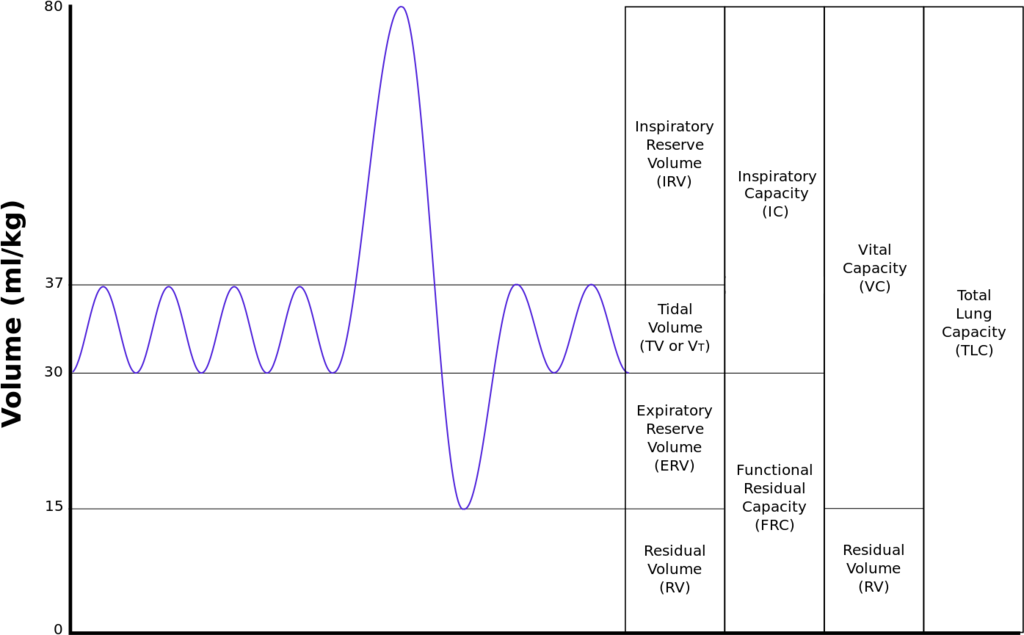
Importance of functional residual capacity
- FRC is the largest store of oxygen
- The greater the oxygen content in the FRC the longer apnoea can be tolerated before critical hypoxia
- For an average adult breathing room air the oxygen content in the FRC will be consumed within 1 minute of apnoea (this equates to approximately 270mls of oxygen)
The figures
- FRC is typically 2100ml
- Breathing room air: using the alveolar gas equation (PAO2 = PiO2 - [PACO2/R] ) we can calculate the volume of oxygen in the FRC to be 273ml (13% of the FRC volume)
Note the alveolar fraction of oxygen is NOT the same as the oxygen fraction of room air. The alveolar fraction of oxygen is around 0.13 as opposed to the oxygen fraction of room air which is 0.21
- The remaining gas is 75% nitrogen, 7% water vapour and 5% CO2
- Following pre-oxygenation with 100% O2: the oxygen content rises to 88% of FRC or 1800ml
 | |
| Wikipedia | |
Lung volumes