Respiratory physiology: Dead space
On this page
Dead Space
Dead space is the volume of air that is in the airways but does not take part in gas exchange. The total dead space is made up of two components:
- Anatomical dead space
- Alveolar dead space
The total dead space is the sum of the anatomical dead space plus the alveolar dead space.
Total (physiological) dead space = anatomical dead space + alveolar dead space
Total dead space may also be referred to as physiological or physiologic dead space
Total (physiological) dead space = anatomical dead space + alveolar dead space
Total dead space may also be referred to as physiological or physiologic dead space
Anatomical dead space
Anatomical dead space is the portion of the airways from the mouth to the terminal bronchioles which conducts gas to the alveoli. No gas exchange is possible in these spaces.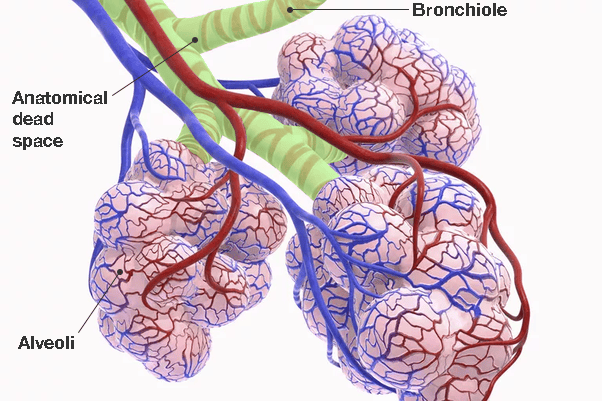 | |
Anatomical dead space includes the air within the pharynx, larynx, trachea, bronchi and bronchioles (highlighted in green in the image above).
Anatomical dead space can be measured using a nitrogen washout test (also known as Fowler's method). Anatomical dead space is around 150ml (approximately 25-30% tidal volume) in adults. Anatomical dead space changes little with bronchoconstriction or exercise.
Alveolar dead space
Alveolar dead space refers to the volume of air within the alveoli that is not able to take part in gas exchange i.e. those alveoli that are ventilated but not perfused.Lung Volumes
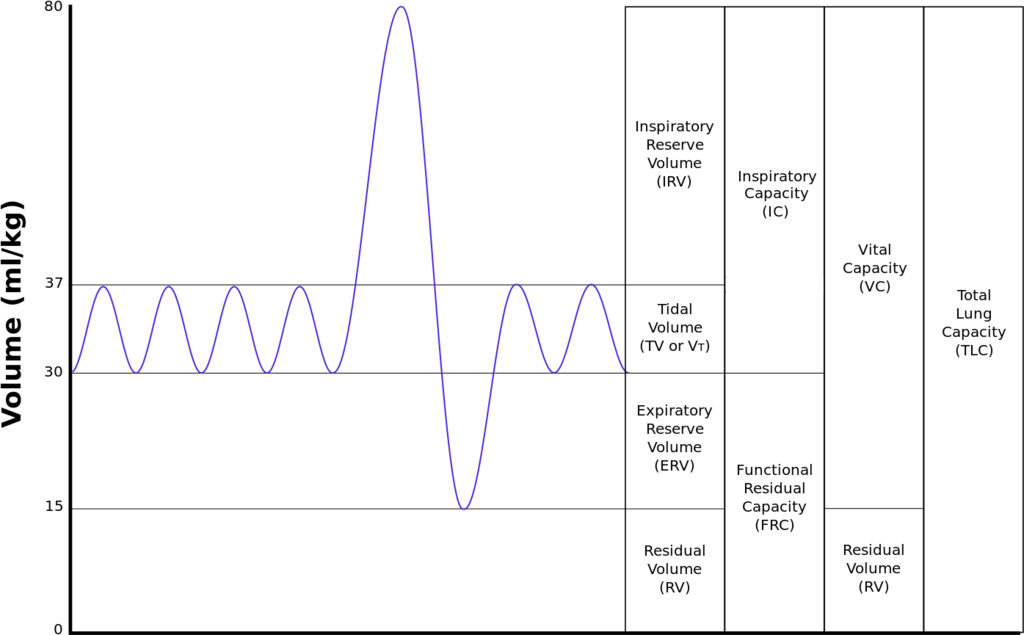 | |
Click on image to enlarge. Terms: Tidal volume (TV), Inspiratory reserve volume (IRV), Expiratory reserve volume (ERV), Inspiratory capacity (IC), Functional residual capacity (FRC), Reserve volume (RV), Vital capacity (VC), Total lung capacity (TLC)