Paracetamol
Paracetamol, also known as acetaminophen, is a non-opioid analgesic with anti-pyretic properties but has no demonstrable anti-inflammatory activity. Paracetamol has very few side effects and is generally considered sage in pregnancy and breastfeeding. Paracetamol in overdose can result in significant hepatic injury.
During an overdose these conjugation systems become saturated leading to:
N-acetylcysteine (NAC) is used in the management of paracetamol overdose as it is a precursor of glutathione which can increase hepatic glutathione production and conjugate excess NAPQI.
Paracetamol metabolism & poisoning
The liver normally metabolises paracetamol by conjugation with glucuronic acid and sulphuric acid. A small amount of paracetamol is metabolised by cytochrome p450 oxidases into the toxic metabolite N-acetyl-p-benzoquinone imine or NAPQI. Under normal circumstances NAPQI will be conjugated by glutathione into the non-toxic mercapturic acid.During an overdose these conjugation systems become saturated leading to:
- More paracetamol being metabolised by cytochrome p450 oxidases and increased production of NAPQI
- Increased NAPQI exhausts glutathione stores
- NAPQI forms covalent bonds with cell proteins denaturing them and causing cell death in hepatocytes and renal tubules
N-acetylcysteine (NAC) is used in the management of paracetamol overdose as it is a precursor of glutathione which can increase hepatic glutathione production and conjugate excess NAPQI.
Paracetamol poisoning key points
- Paracetamol poisoning is a common presentation to ED.
- Levels should be taken at 4 hours post ingestion. Before this serum levels are not helpful.
- Patients are at increased risk of hepatic damage if they are on enzyme inducing drugs.
- Liver damage is maximal at 3-4 days after ingestion.
- Significant acute overdose is considered as >75mg/kg all taken within 1 hour and >8 hrs since ingestion OR therapeutic excess, repeated (staggered) overdose taken over 1 hour or more.
- Activated Charcoal (50g) treatment is advised if patient has taken >150mg/kg paracetamol within the last hour
- Treatment with N-acetylcysteine infusion is typically based on the plasma paracetamol levels and if these fall above or below the treatment line (see below)
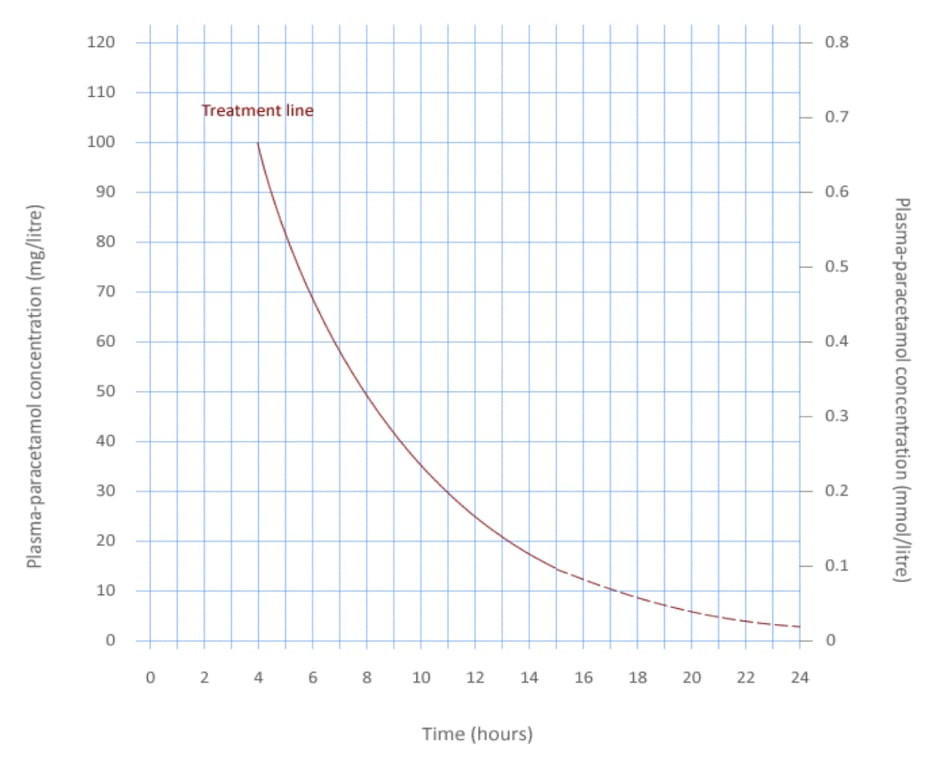 | |
- The nomogram is unreliable if timing of OD is uncertain. If in doubt treat.
- For pregnant women the NPIS advises that the toxic dose be calculated using the patients pre-pregnancy weight and the antidote dose be calculated using the patients’ actual pregnant weight.
- NPIS advises that for any adult patient weighing more than 110kg the toxic dose in mg/kg sh
Patients at risk of liver damage, and therefore requiring acetylcysteine, can be identified from a single measurement of the plasma-paracetamol concentration related to the time from ingestion, provided this time interval is not less than 4 hours; earlier samples cannot be interpreted.