Legionella
Background
Legionnaires' disease (AKA Legionella pneumonia) is a severe form of acute pneumonia caused by the intracellular bacterium Legionella pneumophila. Legionella pneumophila is a gram negative aerobic bacillus (rod shaped bacteria). Legionella typically colonises water systems and will actively multiply when temperatures are between 20°C and 45°C. Prevention of Legionella involves keeping cold water below 20°C (when they are dormant) and hot water above 60°C (temperatures above 50°C begin to kill Legionella). In 2023, the estimated crude fatality rate (CFR) of Legionnaires' disease cases in England and Wales with onset of symptoms was 3.1%.Transmission
Transmission is via inhalation of droplet or aerosolised water containing active Legionella bacteria with contaminated water systems such as air conditioning units, showers, and hot water tanks common sources. Person-to-person transmission is not seenRisk Factors
Individuals with certain previous morbidity are at increased risk. These include:- Older adults (over 50)
- Male sex
- Smokers
- Chronic lung diseases
- Diabetes mellitus
- Renal failure
- Alcohol misuse
- Organ transplant recipients and individuals on immunosuppressive therapy
Clinical Features
Symptoms typically develop 2–10 days after exposure and include:
- Flu-like symptoms present in > 95% of patients
- Dry cough
- Pyrexia
- Muscle aches
- Headache
- Shortness of breath and chest pain
- Gastrointestinal symptoms like nausea, vomiting, and diarrhoea
- Neurological symptoms such as confusion
- Lymphopaenia
- Hyponatraemia
- Deranged liver function tests
- Pleural effusion (seen in around 30% of patients)
Incubation period 2-10 days (average 5 to 6 days)
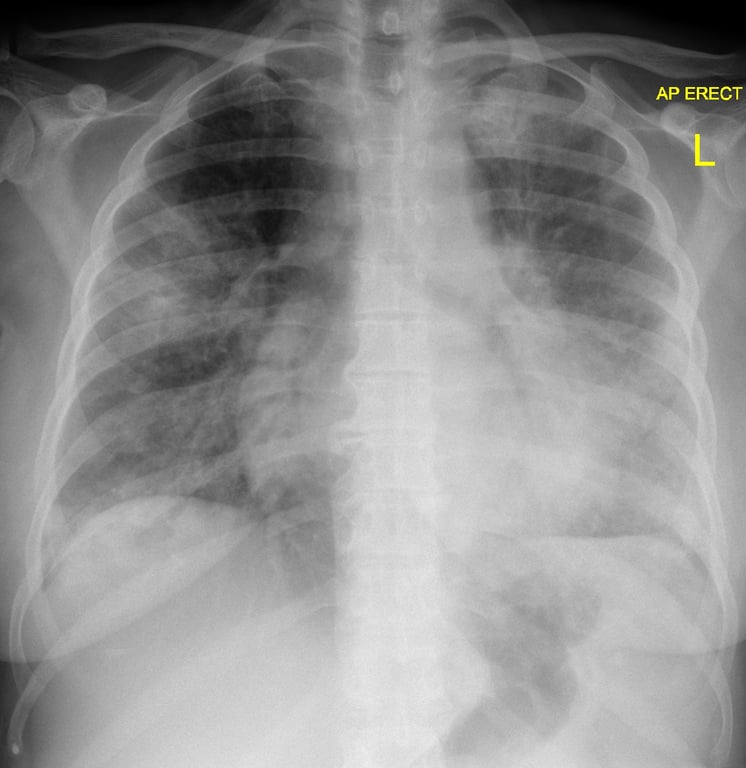 | |
| © Image used on license from Radiopaedia | |
Chest x-ray features of legionella pnuemonia are non-specific but includes a mid-to-lower zone predominance of patchy consolidation. Pleural effusions are seen in around 30%.
Diagnosis
- Urinary antigen test: detects Legionella antigens and provides rapid result
- Culture: Sputum or bronchoalveolar lavage fluid considered gold standard
- PCR and Serology: may be used for confirmation and in outbreak investigations
Treatment
Fluoroquinolones, such as levofloxacin and ciprofloxacin, or new generation macrolides, such as azithromycin, are typically first choice.
Antibiotics are not required for the non-pneumonic self-limiting form of legionellosis called