Hepatic portal vein and portosystemic anastomosis
The hepatic portal vein (portal vein) is a continuation of the splenic vein and superior mesenteric vein. It supplies approximately 75% of hepatic blood flow, the remainder comes from the hepatic artery.
The primary purpose of the portal vein is to transport nutrients absorbed from the GI tract to the liver to be metabolised. 100% of blood flow from the portal system should drain into the liver but in situations of raised portal pressure (eg in liver cirrhosis) blood will instead flow through sites where portal and systemic venous systems meet. These sites are known as sites of portosystemic anastomosis. Varices may form at these sites as a result of the high pressure blood flow through these vessels.
There are five sites of portosystemic anastomosis:
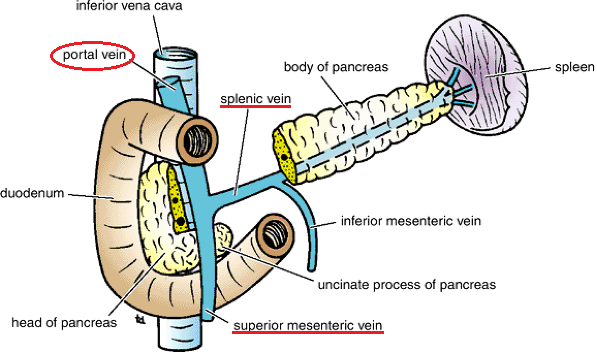 | |
Diagram illustrating formation of Portal Vein
The primary purpose of the portal vein is to transport nutrients absorbed from the GI tract to the liver to be metabolised. 100% of blood flow from the portal system should drain into the liver but in situations of raised portal pressure (eg in liver cirrhosis) blood will instead flow through sites where portal and systemic venous systems meet. These sites are known as sites of portosystemic anastomosis. Varices may form at these sites as a result of the high pressure blood flow through these vessels.
There are five sites of portosystemic anastomosis:
- Oesophageal
- Rectal
- Intrahepatic
- Retroperitoneal
- Paraumbilical.
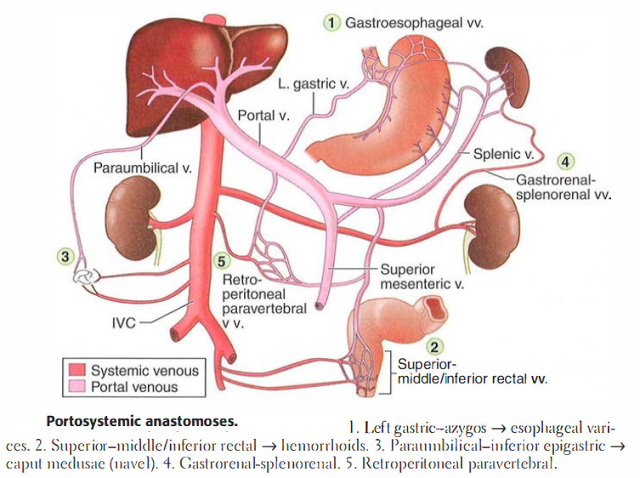 | |
Diagram illustrating paraumbilical varices (caput medusae)