Gastrointestinal physiology: Gastric emptying
Gastric emptying: Secretion patterns
The secretion patterns of gastric emptying can be divided into 3 phases:- Cephalic
- Gastric
- Intestinal
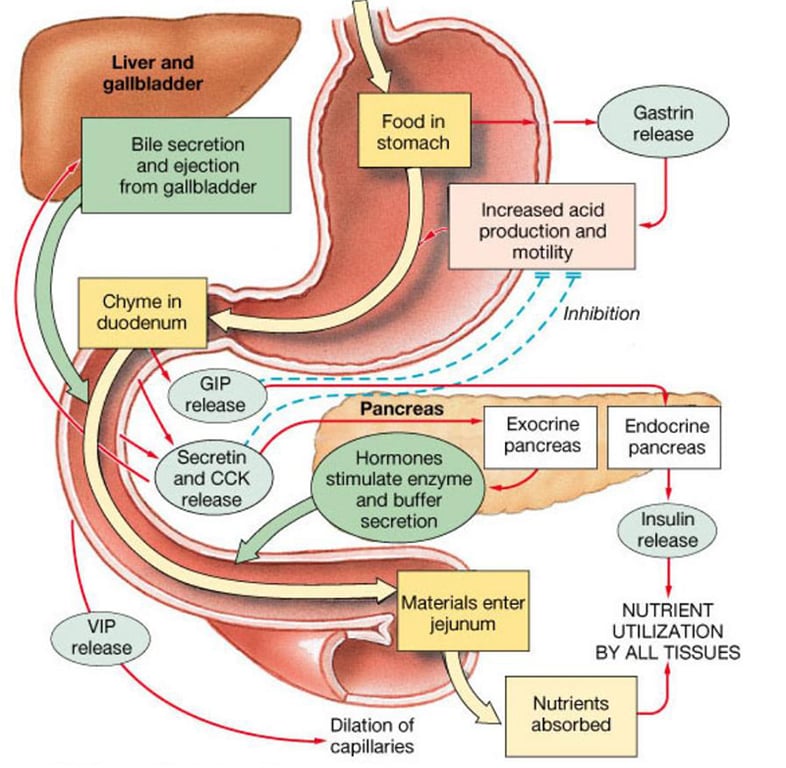 | |
| Phase | Description |
|---|---|
| Cephahlic | Sight, smell or taste of food trigger vagal stimulation of enteric plexus. Postganglionic parasympathetic fibres in the myenteric plexus release acetylcholine (Ach) which promotes release of digestive gastric juices from gastric glands. Gastrin is released from stomach G-cells in response to vagal stimulation which in turn triggers the release of acid and pepsinogen. Gastrin and vagal stimulation cause mast cells to release histamine which further stimulates parietal cells to produce stomach acid. The cephalic phase is the shortest phase and occurs before food even enters the stomach |
| Gastric | The arrival of food in the stomach marks the start of the gastric phase. The molecules that comprise the ingested food and the distension of the stomach caused by ingesting food stimulates the secretion of:
Stretching of the stomach wall stimulates mechanoreceptors which send impulses via local myeneteric reflexes and vagal fibres which results in the release of acetylcholine (Ach) and gastrin-releasing peptide (GRP). GRP acts on G-cells causing gastrin release whilst, as described above, Ach triggers the release of:
Gastrin secretion is also stimulated by the presence of peptides and amino acids which are breakdown products of ingested proteins. An acidic environment inhibits gastrin secretion. As food enters the stomach triggering gastrin and acid release. The acid builds up reducing the pH which after sometime has a negative feedback effect on further acid production. The gastric phase lasts around 3 hours and the end result is ingested food being transformed into chyme. |
| Intestinal | The intestinal phase begins when chyme passes the pyloric sphincter to enter the duodenum. The chyme triggers a number of responses:
The rate at which chyme is supplied is the intestines is controlled by the rate of gastric emptying. A number of factors effect the rate of gastric emptying as summarised in the boxes. As chyme moves through the duodenum its consistency changes. When chyme enters the stomach it is acidic and hypertonic. Movement of water by osmosis and the action of bicarbonate and bile salts change chyme to an isotonic neutralised composition |
Factors increasing gastric emptying:
- Stomach distension
- High liquid content
- Smaller particles
- Stimulation of parasympathetic nervous system
- Drugs (anticholinesterases, metaclopramide, erythromycin, domperidone)
Factors delaying gastric emptying:
- Duodenal distension
- Chyme with high protein and/or fat content
- Highly acidic chyme
- Hormones (Secretin, CCK)
- Sympathetic stimulation
- Pain
- Stress/Anxiety
- Alcohol
- Drugs (antimuscarinics & opioids)
- Obstruction
- Pyloric Stenosis
- Vagotomy