Calcium channel blockers
Classification & mechanism of action
Calcium-channel blockers (CCBs) block the movement of calcium into cells by binding to the L-type (long-acting) voltage-gated calcium channels in the heart, conduction system and vascular smooth muscle.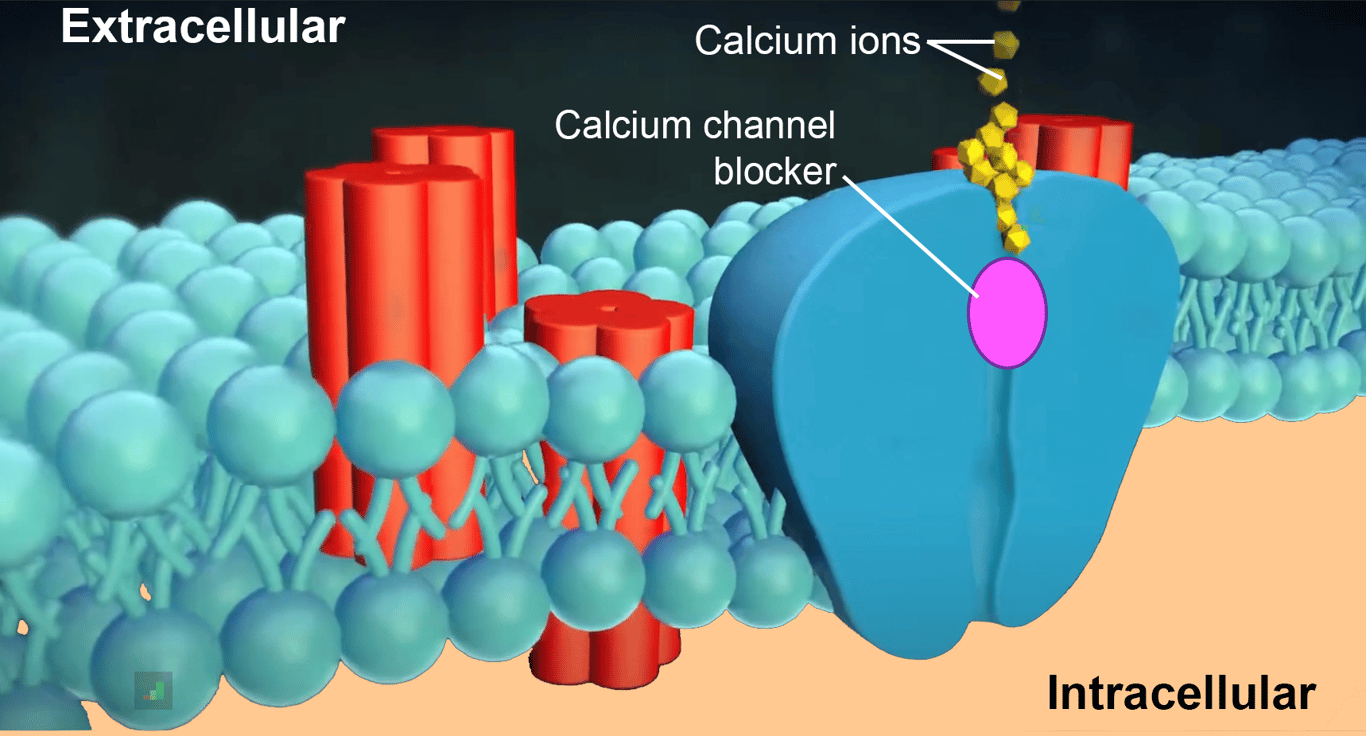 | |
CCB prevent influx of Ca2+ from extracellular fluid into cells. Click on image to enlarge
Calcium-channel blockers (CCBs) differ in their predilection for their various sites of action and, therefore, their therapeutic effects are disparate, with much greater variation than those of beta-blockers.
CCBs are often classified into 2 major categories:
- Non-dihydropyridines e.g. verapamil and diltiazem
- Dihydropyridines e.g. amlodipine, nifedipine, and nimodipine
The two major categories of CCBs are based on their primary physiological effects. The non-dihydropyridines exert inhibitory effects on the SA and AV nodes, thereby slowing cardiac conduction and contractility. This property allows for the treatment of hypertension, reduces oxygen demand, and helps to control the rate of tachydysrhythmias.
The dihydropyridines exert minimal direct effects on the myocardium and are primarily peripheral vasodilators at therapeutic doses. This property renders them useful for conditions such as hypertension, post-intracranial hemorrhage-associated vasospasm, and migraines.
Calcium-channel blockers (less correctly called ‘calcium-antagonists’) interfere with the inward displacement of calcium ions through the slow channels of active cell membranes. They influence the myocardial cells, the cells within the specialised conducting system of the heart, and the cells of vascular smooth muscle. Thus, myocardial contractility may be reduced, the formation and propagation of electrical impulses within the heart may be depressed, and coronary or systemic vascular tone may be diminished.
Indications
Cardiovascular indications include hypertension, coronary spasm, angina pectoris, supraventricular dysrhythmias, hypertrophic cardiomyopathy, and pulmonary hypertension. In addition, CCBs can also be used to treat Raynaud phenomenon, subarachnoid hemorrhage, and migraines.Side effects and cautions
| Examples | Indications & notes | Common or significant side-effects |
|---|---|---|
| Verapamil | Angina, hypertension, arrhythmias Highly negatively inotropic Should not be given with beta-blockers as may cause heart block | Cardiovascular:
|
| Diltiazem | Angina, hypertension Less negatively inotropic than verapamil but caution should still be exercised when patients have heart failure or are taking beta-blockers | Cardiovascular:
|
| Nifedipine, amlodipine, felodipine (dihydropyridines) | Hypertension, angina, Raynaud's Affects the peripheral vascular smooth muscle more than the myocardium and therefore do not typically result in worsening of heart failure | Vasodilation:
|
Contra-indications
Verapamil:
- Acute porphyrias
- Atrial flutter or fibrillation associated with accessory conducting pathways (e.g. Wolff-Parkinson-White-syndrome)
- Bradycardia
- Cardiogenic shock
- Heart failure (with reduced ejection fraction)
- History of significantly impaired left ventricular function (even if controlled by therapy);
- Hypotension
- 2nd or 3rd degree AV block
- Sick sinus syndrome
- Sino-atrial block
- Acute porphyrias
- Cardiogenic shock
- Heart failure (with reduced ejection fraction)
- Left ventricular failure with pulmonary congestion
- 2nd or 3rd degree AV block (unless pacemaker fitted)
- Severe bradycardia
- Sick sinus syndrome
- Significant aortic stenosis
- Acute angina or unstable angina
- Cardiogenic shock
- Significant aortic stenosis
- Within 1 month of myocardial infarction
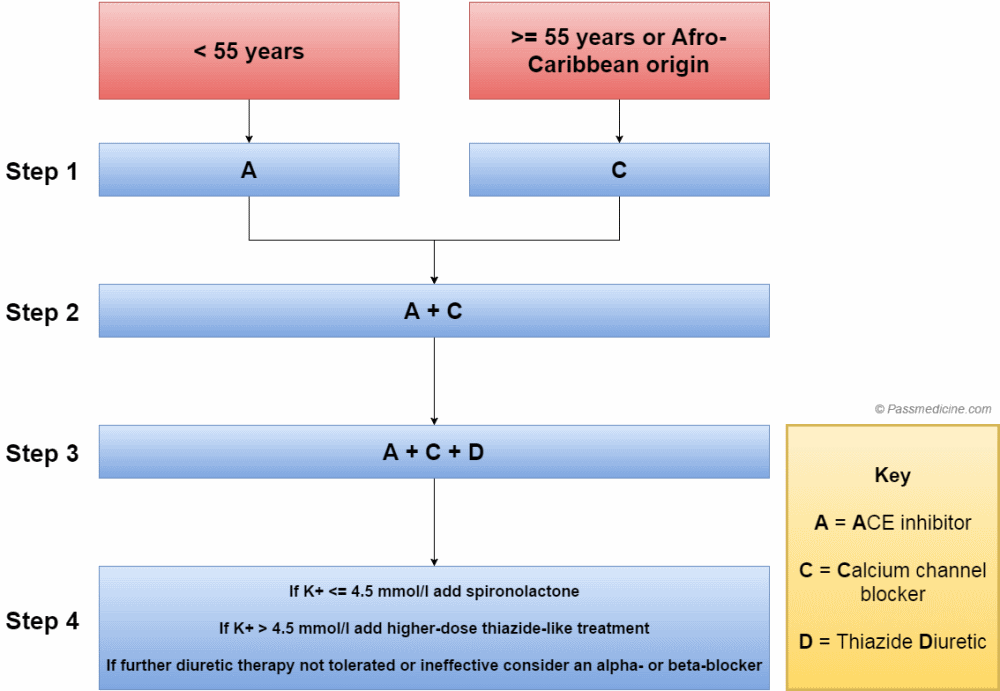 | |
Flow chart showing the management of hypertension as per current NICE guideliness