Extrinsic allergic alveolitis
Extrinsic allergic alveolitis (EAA, also known as hypersensitivity pneumonitis) is a condition caused by hypersensitivity induced lung damage due to a variety of inhaled organic particles. It is thought to be largely caused by immune-complex mediated tissue damage (type III hypersensitivity) although delayed hypersensitivity (type IV) is also thought to play a role in EAA, especially in the chronic phase.
Examples
Presentation
Investigation
*here the terminology is slightly confusing as thermophilic actinomycetes is an umbrella term covering strains such as Micropolyspora faeni
Examples
- bird fanciers' lung: avian proteins
- farmers lung: spores of Saccharopolyspora rectivirgula (formerly Micropolyspora faeni)
- malt workers' lung: Aspergillus clavatus
- mushroom workers' lung: thermophilic actinomycetes*
Presentation
- acute: occur 4-8 hrs after exposure, SOB, dry cough, fever
- chronic
Investigation
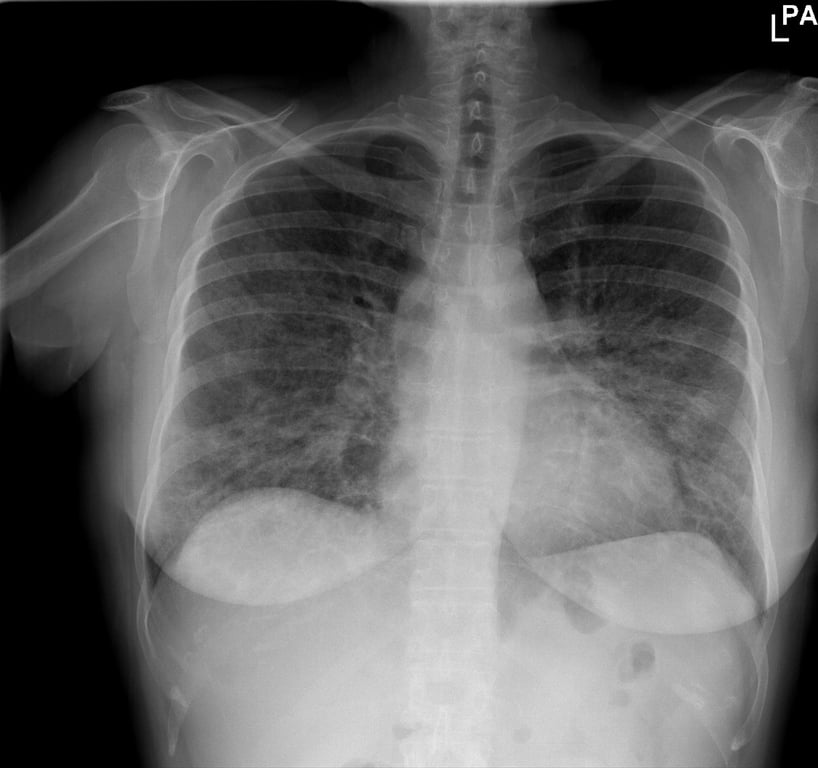
- chest x-ray: upper/mid-zone fibrosis
- bronchoalveolar lavage: lymphocytosis
- blood: NO eosinophilia
*here the terminology is slightly confusing as thermophilic actinomycetes is an umbrella term covering strains such as Micropolyspora faeni
 | |
| © Image used on license from Radiopaedia | |
 | |
| © Image used on license from Radiopaedia | |
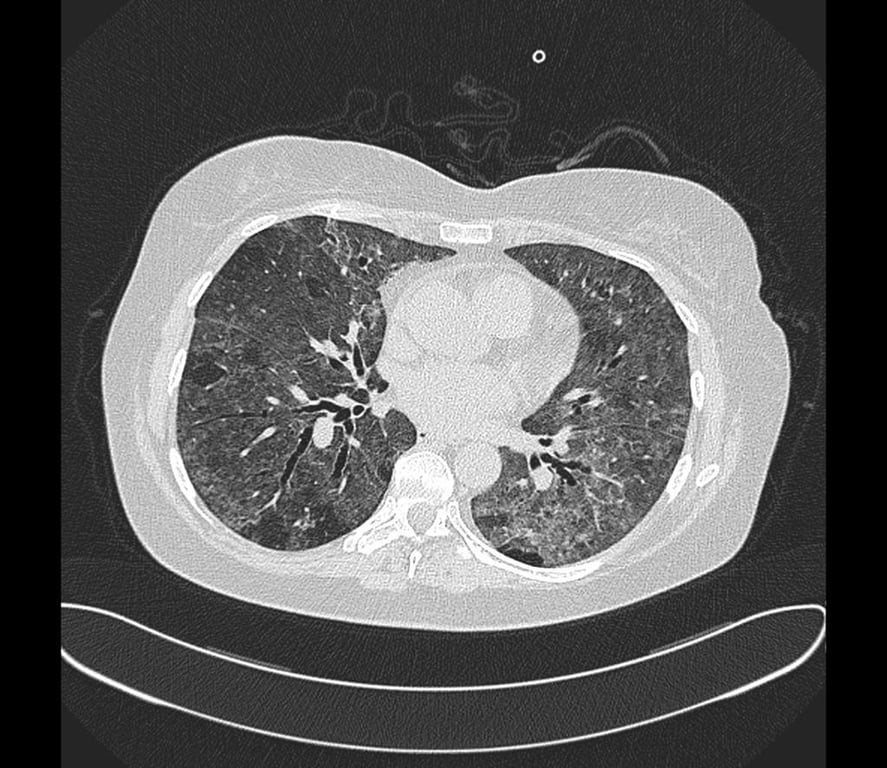
Chest x-ray and CT scan from a middle-aged woman who presented with dyspnoea. The CT demonstrates multuple centrilobular ground glass nodules consistent with hypersensitivity pneumonitis