Antibiotics: gross mechanism of action
The diagram and list below summarises the gross mechanism of action of the commonly used antibiotics. More detailed descriptions are found elsewhere on the site.
Inhibits cell wall formation
Inhibits protein synthesis (by acting on the ribosome)
Inhibits DNA synthesis
Damages DNA
Inhibits folic acid formation
Inhibits RNA synthesis
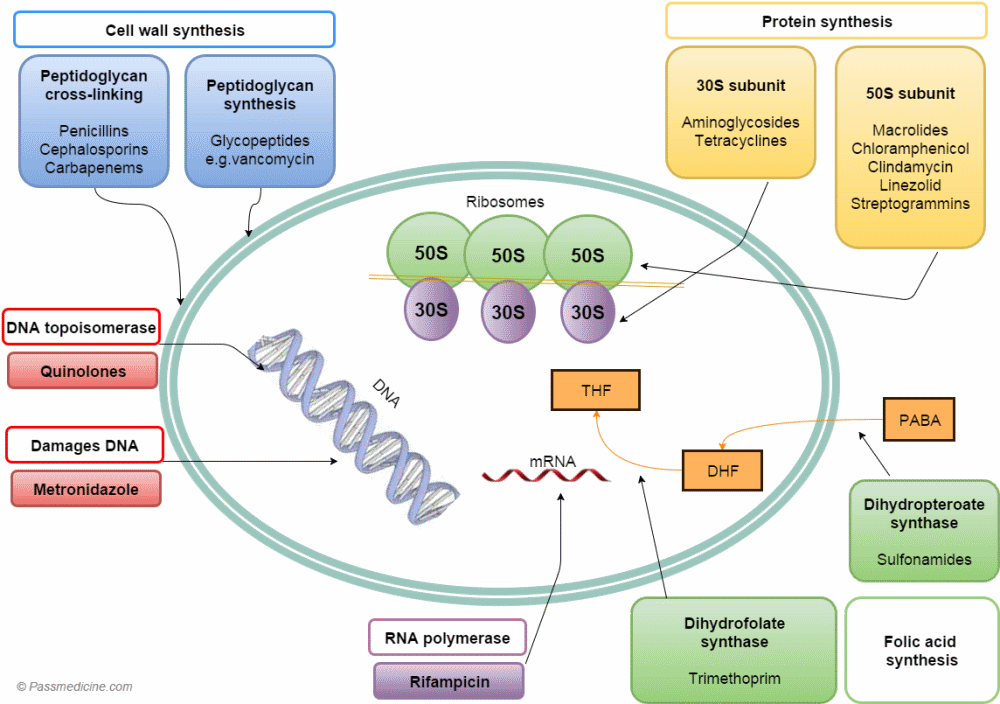 | |
Diagram showing the gross mechanism of action of the commonly used antibiotics
Inhibits cell wall formation
- peptidoglycan cross-linking: penicillins, cephalosporins, carbopenems
- peptidoglycan synthesis: glycopeptides (e.g. vancomycin)
Inhibits protein synthesis (by acting on the ribosome)
- 50S subunit: macrolides, chloramphenicol, clindamycin, linezolid, streptogrammins
- 30S subunit: aminoglycosides, tetracyclines
Inhibits DNA synthesis
- quinolones (e.g. ciprofloxacin)
Damages DNA
- metronidazole
Inhibits folic acid formation
- sulphonamides
- trimethoprim
Inhibits RNA synthesis
- rifampicin