Reactive arthritis: features
Reactive arthritis is one of the HLA-B27 associated seronegative spondyloarthropathies. It encompasses Reiter's syndrome, a term which described a classic triad of urethritis, conjunctivitis and arthritis following a dysenteric illness during the Second World War. Later studies identified patients who developed symptoms following a sexually transmitted infection (post-STI, now sometimes referred to as sexually acquired reactive arthritis, SARA).
Reactive arthritis is defined as an arthritis that develops following an infection where the organism cannot be recovered from the joint.
Features
Around 25% of patients have recurrent episodes whilst 10% of patients develop chronic disease
Reactive arthritis is defined as an arthritis that develops following an infection where the organism cannot be recovered from the joint.
Features
- typically develops within 4 weeks of initial infection - symptoms generally last around 4-6 months
- arthritis is typically an asymmetrical oligoarthritis of lower limbs
- dactylitis
- symptoms of urethritis
- eye: conjunctivitis (seen in 50%), anterior uveitis
- skin: circinate balanitis (painless vesicles on the coronal margin of the prepuce), keratoderma blenorrhagica (waxy yellow/brown papules on palms and soles)
Around 25% of patients have recurrent episodes whilst 10% of patients develop chronic disease
'Can't see, pee or climb a tree'
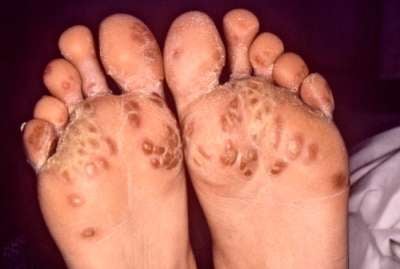 | |
Keratoderma blenorrhagica