HIV: the virus
Basics
Basics structure
Cell entry
Replication
- HIV is a RNA retrovirus of the lentivirus genus (lentiviruses are characterized by a long incubation period)
- two variants - HIV-1 and HIV-2
- HIV-2 is more common in west Africa, has a lower transmission rate and is thought to be less pathogenic with a slower progression to AIDS
 | |
Basics structure
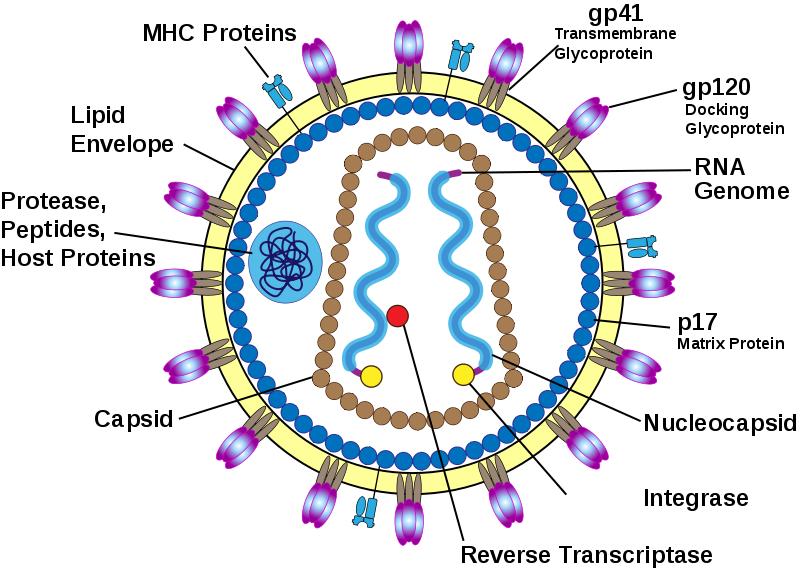
- spherical in shape with two copies of single-stranded RNA enclosed by a capsid of the viral protein p24
- a matrix composed of viral protein p17 surrounds the capsid
- envelope proteins: gp120 and gp41
- pol gene encodes for viral enzymes reverse transcriptase, integrase and HIV protease
Cell entry
- HIV can infect CD4 T cells, macrophages and dendritic cells
- gp120 binds to CD4 and CXCR4 on T cells and CD4 and CCR5 on macrophages
- mutations in CCR5 can give immunity to HIV
Replication
- after entering a cell the enzyme reverse transcriptase creates dsDNA from the RNA for integration into the host cell's genome
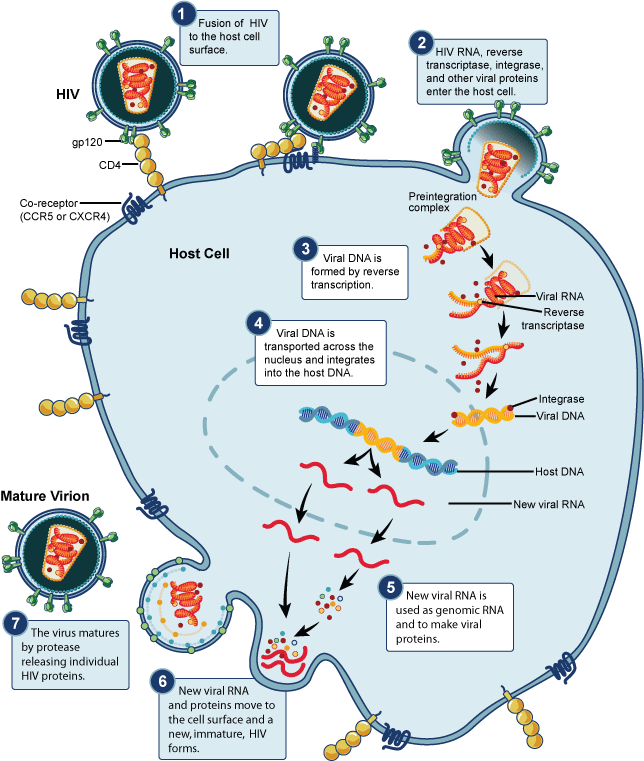 | |
An illustration model of the HIV Replication Cycle. Each step of the cycle is numbered and concisely described. Credit: NIAID