Renal cell cancer
Renal cell cancer is also known as hypernephroma and accounts for 85% of primary renal neoplasms. It arises from proximal renal tubular epithelium
Associations*
Features
Management
*incidence of renal cell cancer is only slightly increased in patients with autosomal dominant polycystic kidney disease
Associations*
- more common in middle-aged men
- smoking
- von Hippel-Lindau syndrome
- tuberous sclerosis
Features
- classical triad: haematuria, loin pain, abdominal mass
- pyrexia of unknown origin
- left varicocele (due to occlusion of left testicular vein)
- endocrine effects: may secrete erythropoietin (polycythaemia), parathyroid hormone (hypercalcaemia), renin, ACTH
- 25% have metastases at presentation
Management
- for confined disease a partial or total nephrectomy depending on the tumour size
- alpha-interferon and interleukin-2 have been used to reduce tumour size and also treat patients with metatases
- receptor tyrosine kinase inhibitors (e.g. sorafenib, sunitinib) have been shown to have superior efficacy compared to interferon-alpha
 | |
| © Image used on license from PathoPic | |
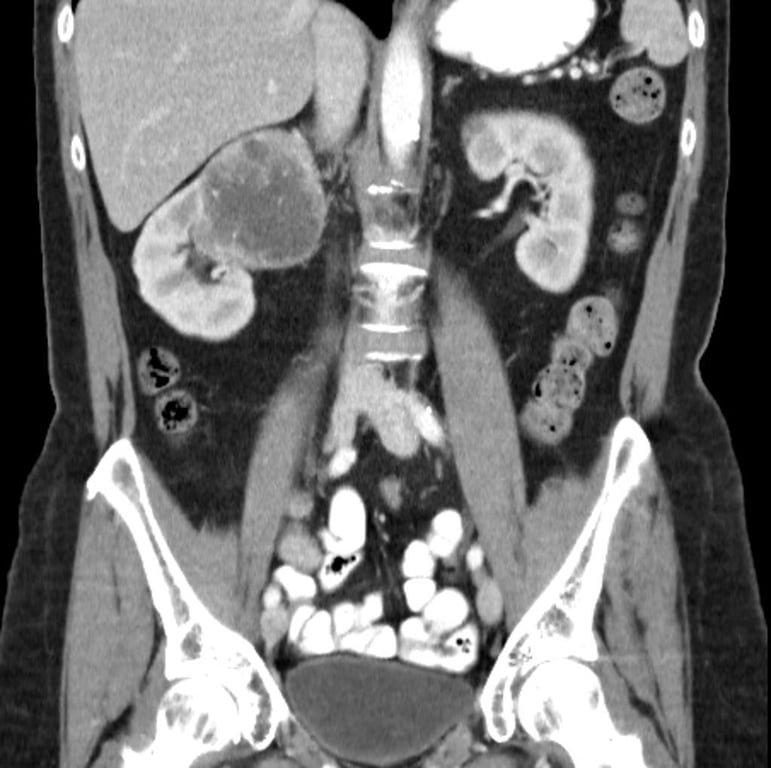
Left: normal kidney. Right: 'clear-cell' pattern of renal cell carcinoma
 | |
| © Image used on license from PathoPic | |
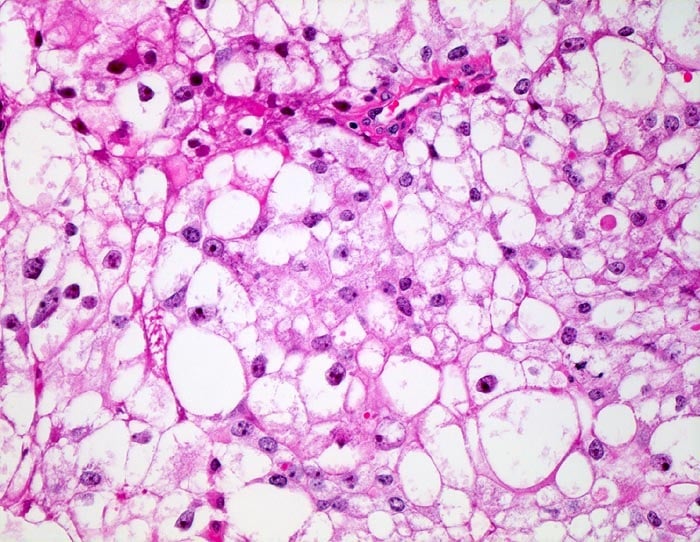
'Clear-cell' pattern of renal cell carcinoma - clear cytoplasm, small nuclei
*incidence of renal cell cancer is only slightly increased in patients with autosomal dominant polycystic kidney disease