Klebsiella
On this page
Background
Klebsiella pneumoniae is a Gram-negative, facultatively anaerobic, rod that is part of the normal human gastrointestinal tract flora. It can cause a number of infections in humans including pneumonia (typically following aspiration), urinary tract infections, bloodstream infections, wound or surgical site infections and meningitis. Klebsiella has a prominent polysaccharide capsule, which contributes significantly to its virulence and ability to evade host immune responses.Epidemiology
Klebsiella species are well-recognised opportunistic pathogens. In the UK, Klebsiella infections are particularly associated with nosocomial (hospital-acquired) infections, especially in critical care settings such as intensive care units (ICUs). Ventilator-associated pneumonia and catheter-associated urinary tract infections are key clinical concerns.Klebsiella is known for its role in outbreaks within healthcare environments and its increasing resistance to multiple antibiotics, including the production of extended-spectrum beta-lactamases (ESBLs) and carbapenemases. This makes its management particularly challenging.
Clinical features of Klebsiella pneumonia
- More common in alcoholic and diabetics
- May occur following aspiration
- 'Red-currant jelly' sputum
- Often affects upper lobes
- Cavitating pneumonia in up to 50% of cases
Prognosis
Klebsiella infections can range from mild UTIs to fulminant pneumonia and sepsis.
Klebsiella pneumoniae pneumonia, particularly when ventilator-associated or in patients with comorbidities, is associated with significant morbidity and mortality. Klebsiella pneumonia commonly causes lung abscess formation and empyema with a high mortality of 20-50%
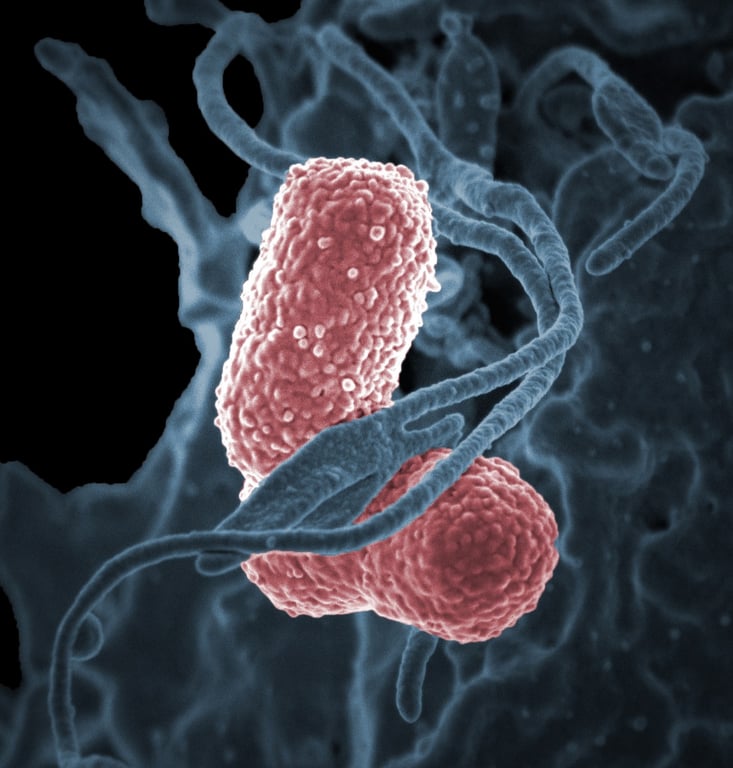 | |
A human neutrophil interacting with Klebsiella pneumoniae (pink), a multidrug-resistant bacterium that causes severe hospital infections. Credit: NIAID