Gonorrhoea
Gonorrhoea is caused by the Gram negative diplococcus Neisseria gonorrhoeae. Acute infection can occur on any mucous membrane surface, typically genitourinary but also rectum and pharynx. The incubation period of gonorrhoea is 2-5 days
Features
Microbiology
Local complications that may develop include urethral strictures, epididymitis and salpingitis (hence may lead to infertility). Disseminated infection may occur - see below
Management
Disseminated gonococcal infection (DGI) and gonococcal arthritis may also occur, with gonococcal infection being the most common cause of septic arthritis in young adults. The pathophysiology of DGI is not fully understood but is thought to be due to haematogenous spread from mucosal infection (e.g. Asymptomatic genital infection). Initially there may be a classic triad of symptoms: tenosynovitis, migratory polyarthritis and dermatitis. Later complications include septic arthritis, endocarditis and perihepatitis (Fitz-Hugh-Curtis syndrome)
Key features of disseminated gonococcal infection
Features
- males: urethral discharge, dysuria
- females: cervicitis e.g. leading to vaginal discharge
- rectal and pharyngeal infection is usually asymptomatic
Microbiology
- immunisation is not possible and reinfection is common due to antigen variation of type IV pili (proteins which adhere to surfaces) and Opa proteins (surface proteins which bind to receptors on immune cells)
Local complications that may develop include urethral strictures, epididymitis and salpingitis (hence may lead to infertility). Disseminated infection may occur - see below
Management
- ciprofloxacin used to be the treatment of choice. However, there is increased resistance to ciprofloxacin and therefore cephalosporins are now used
- the 2011 British Society for Sexual Health and HIV (BASHH) guidelines recommend ceftriaxone 500 mg intramuscularly as a single dose with azithromycin 1 g oral as a single dose. The azithromycin is thought to act synergistically with ceftriaxone and is also useful for eradicating any co-existent Chlamydia infections. This combination can be used in pregnant women as well
- if ceftriaxone is refused or contraindicated other options include cefixime 400mg PO (single dose)
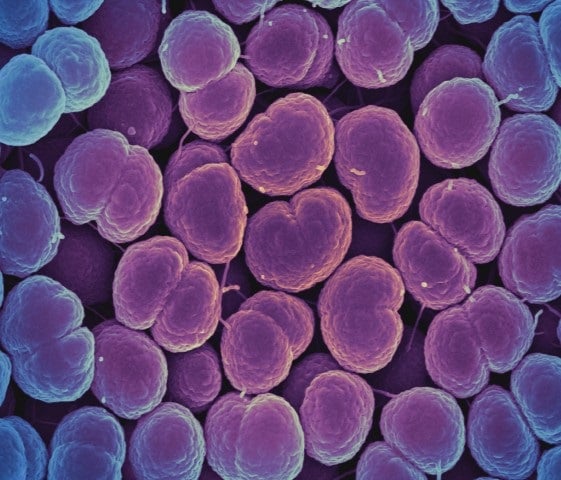 | |
Colorized scanning electron micrograph of Neisseria gonorrhoeae. Credit: NIAID
Disseminated gonococcal infection (DGI) and gonococcal arthritis may also occur, with gonococcal infection being the most common cause of septic arthritis in young adults. The pathophysiology of DGI is not fully understood but is thought to be due to haematogenous spread from mucosal infection (e.g. Asymptomatic genital infection). Initially there may be a classic triad of symptoms: tenosynovitis, migratory polyarthritis and dermatitis. Later complications include septic arthritis, endocarditis and perihepatitis (Fitz-Hugh-Curtis syndrome)
Key features of disseminated gonococcal infection
- tenosynovitis
- migratory polyarthritis
- dermatitis (lesions can be maculopapular or vesicular)