Acute appendicitis
History
Examination
Diagnosis
Management
- peri-umbilical abdominal pain (visceral stretching of appendix lumen and appendix is mid gut structure) radiating to the right iliac fossa due to localised parietal peritoneal inflammation
- vomit once or twice but marked and persistent vomiting is unusual
- diarrhoea is rare. However, pelvic appendicitis may cause localised rectal irritation of some loose stools. A pelvic abscess may also cause diarrhoea
- mild pyrexia is common - temperature is usually 37.5-38oC. Higher temperatures are more typical of conditions like mesenteric adenitis
- anorexia is very common. It is very unusual for patients with appendicitis to be hungry
- around 50% of patients have the typical symptoms of anorexia, peri-umbilical pain and nausea followed by more localised right lower quadrant pain
Examination
- generalised peritonitis if perforation has occurred or localised peritonism
- retrocaecal appendicitis may have relatively few signs
- digital rectal examination may reveal boggy sensation if pelvic abscess is present, or even tenderness with a pelvic appendix
Diagnosis
- typically raised inflammatory markers coupled with compatible history and examination findings should be enough to justify appendicectomy.
- urine analysis may show mild leucocytosis but no nitrites.
- ultrasound is useful in females where pelvic organ pathology is suspected. Although it is not always possible to visualise the appendix on ultrasound, the presence of free fluid (always pathological in males) should raise suspicion.
Management
- appendicectomy which can be performed via either an open or laparoscopic approach.
- administration of metronidazole reduces wound infection rates.
- patients with perforated appendicitis require copious abdominal lavage.
- patients without peritonitis who have an appendix mass should receive broad spectrum antibiotics and consideration given to performing an interval appendicectomy.
- be wary in the older patients who may have either an underlying caecal malignancy or perforated sigmoid diverticular disease.
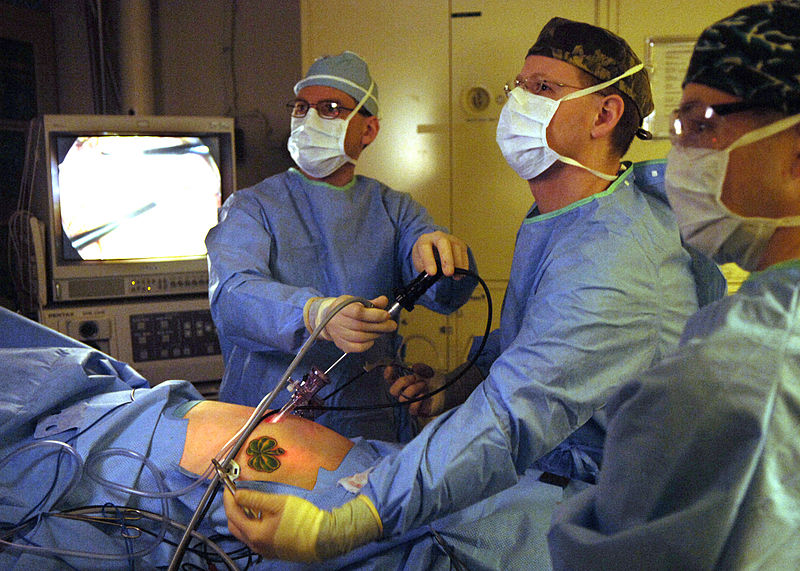 | |
Laparoscopic appendicectomy is becoming increasing popular as demonstrated above