IgA nephropathy
Basics
Presentations
Differentiating between IgA nephropathy and post-streptococcal glomerulonephritis
Associated conditions
Management
Prognosis
- also called Berger's disease or mesangioproliferative glomerulonephritis
- commonest cause of glomerulonephritis worldwide
- thought to be caused by mesangial deposition of IgA immune complexes
- there is considerable pathological overlap with Henoch-Schonlein purpura (HSP)
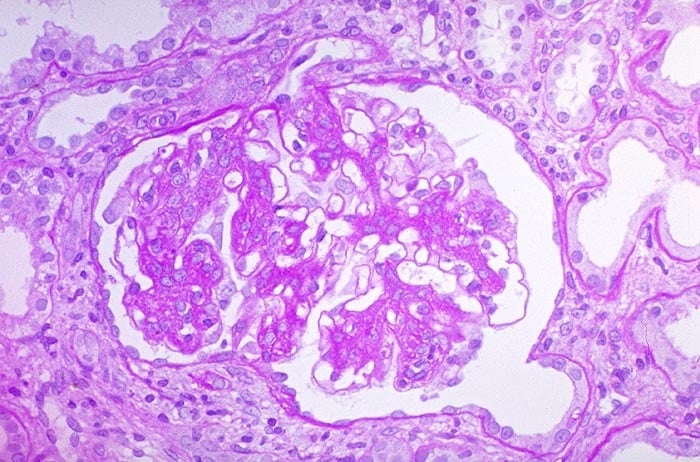
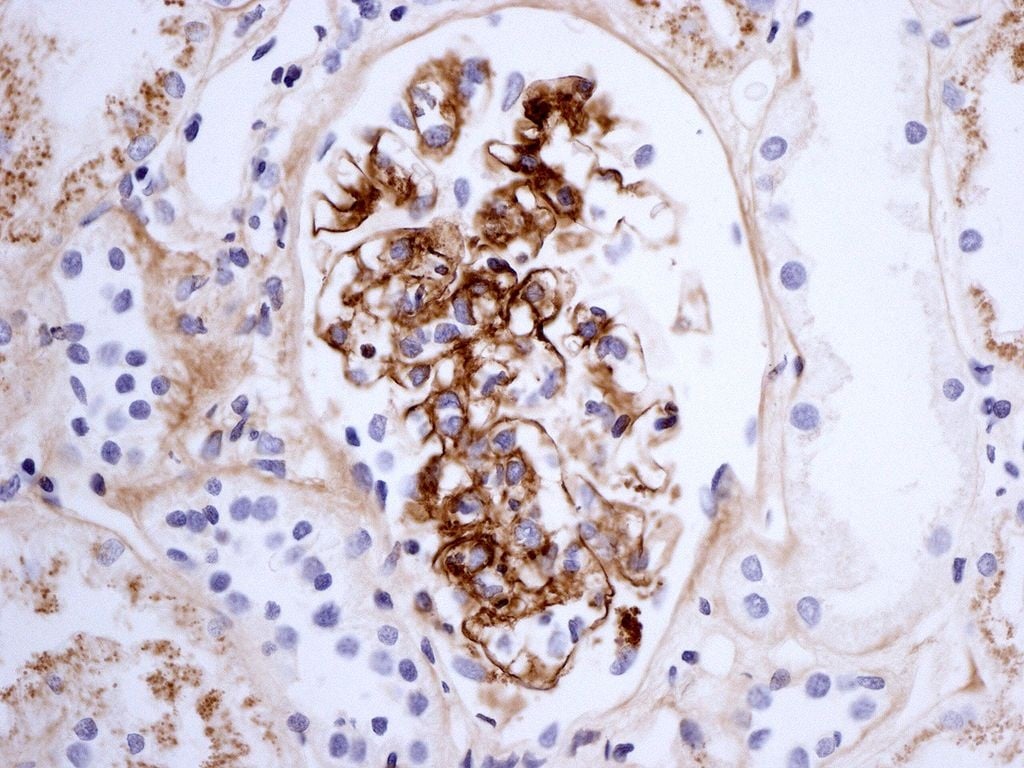
- histology: mesangial hypercellularity, positive immunofluorescence for IgA & C3
Presentations
- young male, recurrent episodes of macroscopic haematuria
- typically associated with mucosal infections e.g., URTI
- nephrotic range proteinuria is rare
- renal failure
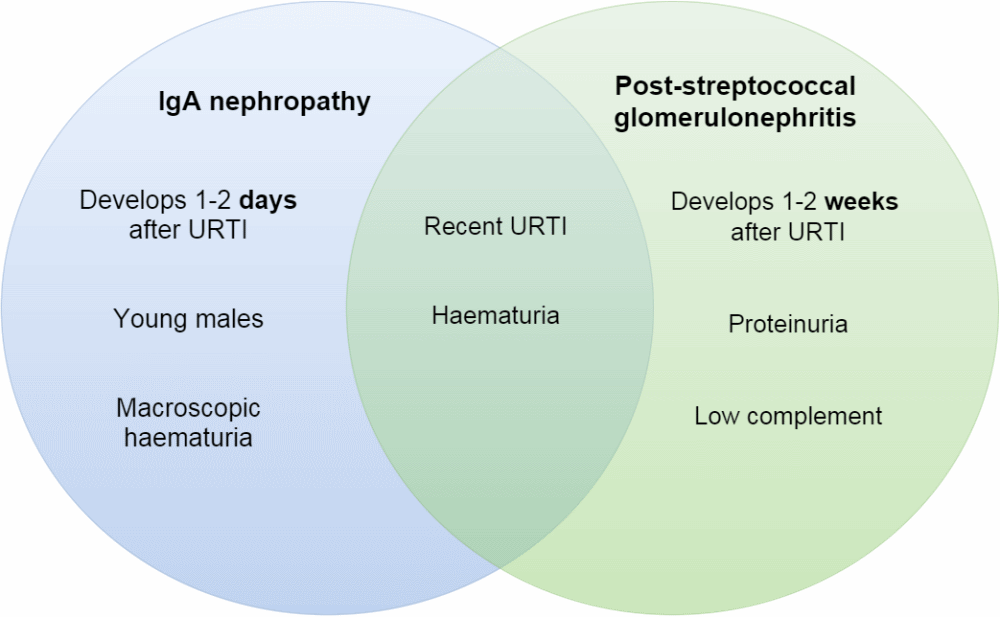
Differentiating between IgA nephropathy and post-streptococcal glomerulonephritis
- post-streptococcal glomerulonephritis is associated with low complement levels
- main symptom in post-streptococcal glomerulonephritis is proteinuria (although haematuria can occur)
- there is typically an interval between URTI and the onset of renal problems in post-streptococcal glomerulonephritis
 | |
Associated conditions
- alcoholic cirrhosis
- coeliac disease/dermatitis herpetiformis
- Henoch-Schonlein purpura
Management
- steroids/immunosuppressants not be shown to be useful
Prognosis
- 25% of patients develop ESRF
- markers of good prognosis: frank haematuria
- markers of poor prognosis: male gender, proteinuria (especially > 2 g/day), hypertension, smoking, hyperlipidaemia, ACE genotype DD
 | |
| © Image used on license from PathoPic | |
Proliferation and hypercellularity of the mesangium is seen in the glomerulus
 | |
| © Image used on license from PathoPic | |
Immunostaining for IgA in a patient with HSP